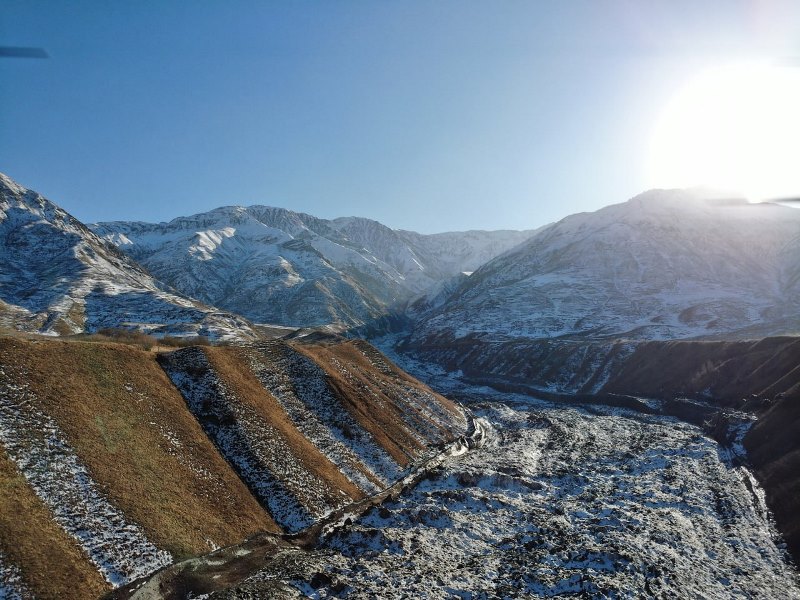
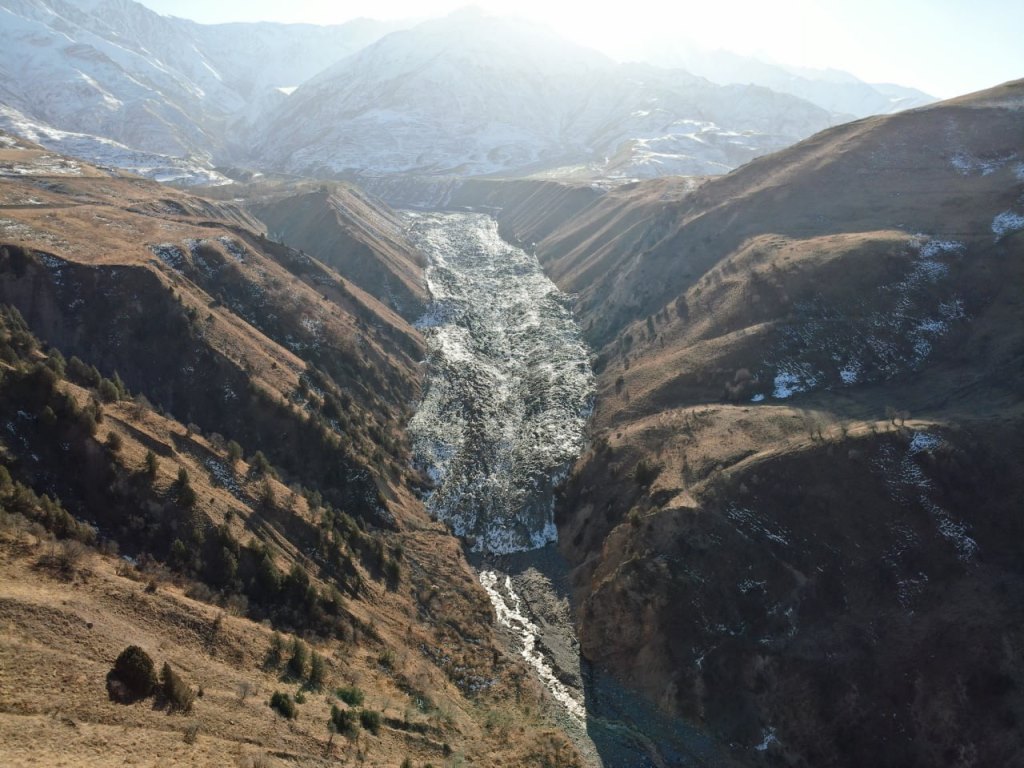
Tajikistan’s Agency for Hydrometeorology (Hydromet) has recorded renewed movement of the Dehdal Glacier, located in the Surkhob River basin near the village of Safedob in the Tojikobod district (Rasht Valley).
A field expedition conducted from December 1 to 5 confirmed that the glacier is sliding rapidly down the valley — at a rate of up to 20 meters per day.
The expedition was carried out as part of the national glacier monitoring and protection program, and in support of the UN’s international glacier preservation initiative.
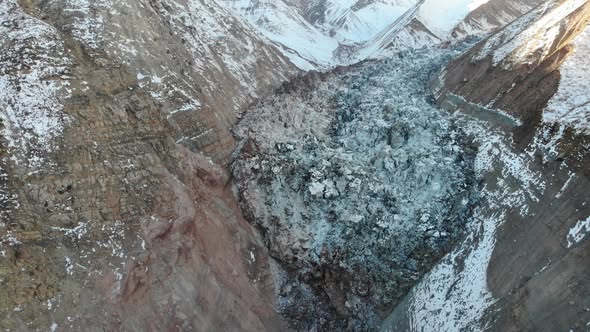
According to specialists, the glacier’s front section currently reaches a height of 25–30 meters and a width of 80 to 120 meters. These dimensions point to significant natural processes occurring within the glacier. Scientists continue to monitor its movement, size, and deformation to assess potential risks.
Glaciers are a critical source of fresh water for Tajikistan. Their accelerated melting is one of the most pressing consequences of climate change. Rapid glacier movement can lead to environmental hazards — including sudden river level increases, glacial lake formation, and mudslides.
On October 25, a large ice mass up to 1.5 kilometers long and 50 meters high broke off the Dehdal Glacier — an event witnessed by local residents. According to the Committee of Emergency Situations, no casualties or damage were reported.
At a press conference on October 31, hydrometeorology experts revealed that the glacier had shifted over 5 kilometers in just 15 minutes. The phenomenon was attributed to unusually high air temperatures and a prolonged dry period.
In November alone, the glacier advanced by approximately 520 meters — an average of about 20 meters per day, according to Hydromet.
Officials emphasized that this event reflects the ongoing impact of climate change, which is accelerating glacier degradation in the country’s mountainous regions. Researchers are preparing a detailed report and will continue monitoring the glacier’s condition.