The digital world, intended as a space for connection and opportunity, has become an increasingly hostile environment for women and girls, with online abuse now manifesting in severe real-world consequences. In Tajikistan, where young people are highly engaged on social media platforms and messengers, such as Telegram and WhatsApp, this digital threat, known as Technology-Facilitated Gender-Based Violence (TFGBV), is a pressing concern that undermines fundamental human rights, says an article released by UNFPA Tajikistan.
The United Nations Population Fund, UNFPA, asserts that violence against women, whether online or offline, is a direct impediment to its mission to ensure that every young person can fulfil their potential. The agency has identified the eradication of gender-based violence and harmful practices as one of its core goals.
The urgency of digital safety
TFGBV encompasses a range of abuses, including cyberbullying, online harassment, non-consensual sharing of images, and digital exploitation. Research across the Europe and Central Asia region indicates that more than half (53.2%) of women have experienced some form of technology-facilitated violence. (Source: UN Women)
For young women in Tajikistan, the consequences are not confined to the digital screen. Victims of TFGBV have experienced severe social and psychological harm, which in some documented cases has led to job loss, exclusion from family and community, and an inability to form relationships. This trauma can drive victims to self-censor or withdraw entirely from online spaces, thereby curtailing their safe and meaningful participation in public and political life and exacerbating gender inequality.
UNFPA's position is that the fight for bodily autonomy and freedom of choice is intrinsically linked to digital safety. When a person cannot access the digital sphere with safety and dignity, their ability to lead an informed and empowered life is compromised.
Transforming bystanders into agents of change
To address this pervasive issue during the global 16 Days of Activism against Gender-based Violence campaign, UNFPA in Tajikistan conducted an innovative and interactive event.
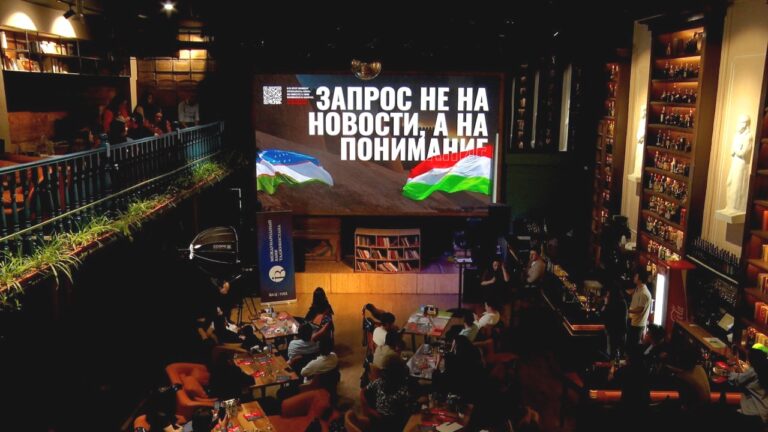
Moving beyond conventional approaches, UNFPA in Tajikistan partnered with the Committee on Women and Family Affairs under the Government of the Republic of Tajikistan, the OSCE Programme Office in Dushanbe, and the British Embassy Dushanbe to organize an Interactive Forum: Digital Theatre.
This format engaged approximately 70 young participants, state representatives, and development partners by transforming the audience from passive spectators into "spect-actors". Participants were encouraged to discuss TFGBV cases and explore methods for self-protection and defending others in online settings. This approach was designed to meet two core objectives in the fight against TFGBV:
· Fostering Active Prevention: Enabling young participants to rehearse social and interpersonal actions necessary to prevent or intervene in digital violence scenarios.
· Empowering the Survivors: Demonstrating concrete, immediate steps for survivors, such as selfcare, securing evidence via screenshots and knowing how to seek help, rather than self-isolating.
A multilateral commitment to future generations
The event and its resulting high-level dialogue underscored a multilateral commitment to challenging harmful social norms, such as those that emphasize bystander unaccountability. UNFPA utilizes such platforms to advocate for the necessity of strong policy and strategy to respond effectively to people's needs, particularly for future generations.
By directly involving youth and high-level partners, UNFPA in Tajikistan has reinforced its mandate to not only deliver essential health and GBV services and information, but also to act as a trusted advocate for women, girls, and young people, ensuring their rights and choices are upheld in all spaces, both online and offline.
The mobilization through the Forum is a demonstrable step towards building population resilience by creating a supportive environment where women, girls, and young people can realize their full potential. The collective goal remains clear: to ensure that every person can access the freedom to make choices about their lives safely and with dignity.