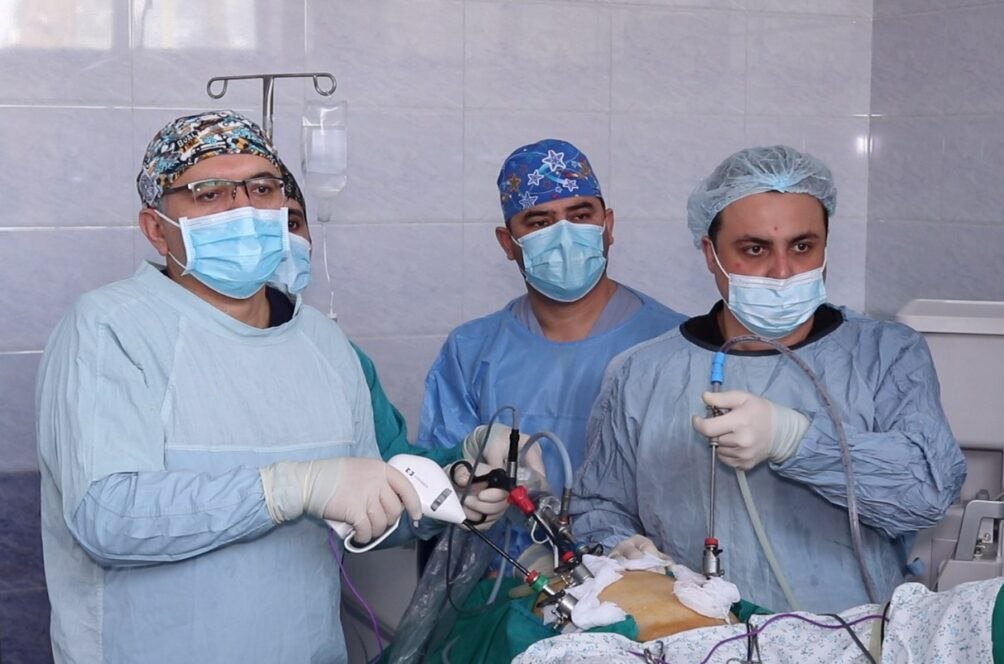
For the first time in Tajikistan, endoscopic treatment for prostate cancer has been successfully performed at the Republican Scientific Center for Oncology Research. Using a new minimally invasive method, five patients with prostate cancer underwent prostatectomy surgery, the Ministry of Health of the Republic of Tajikistan reports.
The surgery is performed through small incisions, which minimizes tissue damage and blood loss, reduces postoperative pain, and shortens hospital stays to 6–7 days. The Ministry of Health notes that the method is highly effective and reduces the risk of complications.
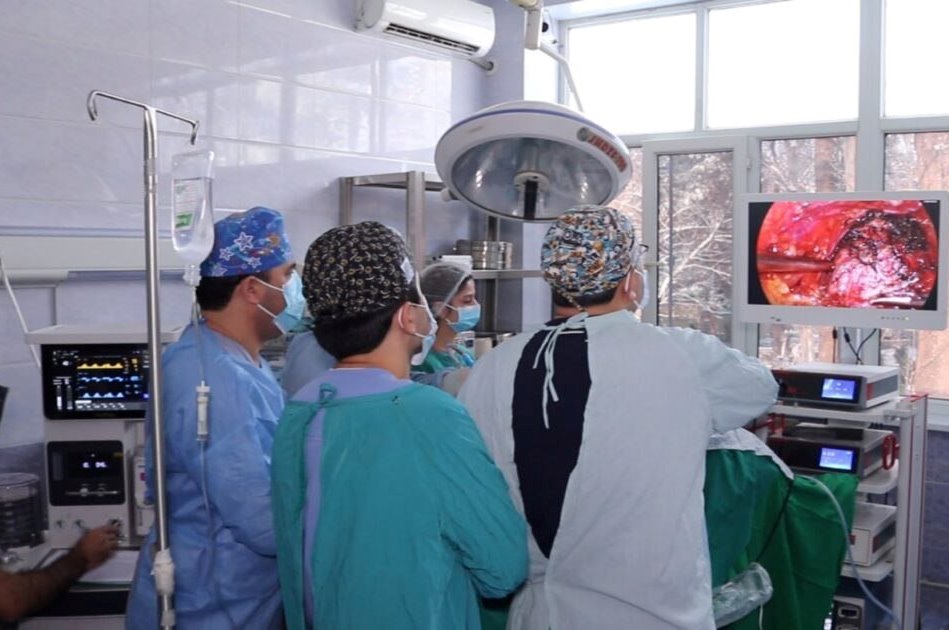
Previously, such operations were only performed using the open method—with a large incision, extensive tissue damage, long recovery times, and a high risk of complications. With the advent of endoscopic surgery, the treatment of prostate cancer has become more effective and less traumatic.
Earlier, at the Republican Scientific Center for Cardiovascular Surgery, a minimally invasive operation to remove a tumor of the pancreatic head was performed for the first time without surgical incisions—using an endoscopic method through the oral cavity.
As the Ministry of Health noted at the time, the treatment of pancreatic tumors in oncology patients was mostly conducted using open surgical interventions, requiring extensive incisions and a long recovery period. Minimally invasive endoscopic methods for such diagnoses had not been previously used in the country.
According to data from the Ministry of Health of the Republic of Tajikistan, a total of 72 innovations were introduced into the country's healthcare sector in 2025, of which 14 were in the field of diagnostics and 58 in the field of treatment.