Tajikistan is focusing on the development of geological exploration and mining of rare metals, which will be one of the priority areas in the country’s mining industry. This was announced by Ilhomjon Oymuhammadzoda, the head of the Main Geological Department under the Government of Tajikistan, at a news conference in Dushanbe on January 27.
According to him, geological exploration activities have significantly increased in the country in recent years, particularly in the field of rare metals.
Existing geological studies indicate that Tajikistan possesses significant deposits of metals such as lithium, tungsten, rare earth elements, as well as other rare and valuable minerals.
“We view these metals as strategically important for the future development of our economy, as they are in high demand in high-tech industries such as electronics, energy, and automotive manufacturing,” Oymuhammadzoda stated.
Furthermore, he added that Tajikistan is actively cooperating with international geological exploration companies to better develop these resources, which will help attract necessary investments and technologies.
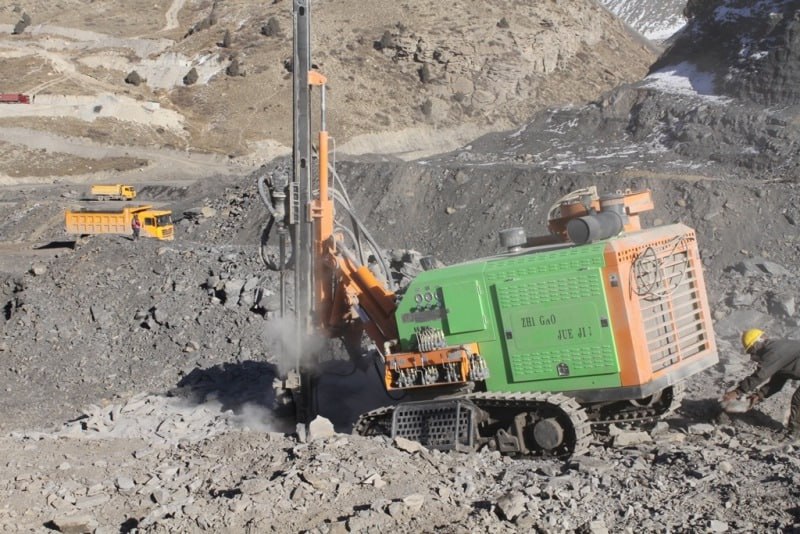
Currently, Tajikistan has already initiated projects for the exploration and extraction of rare metals and is also working on improving the infrastructure and environmental safety of its mining industry.
Over the reporting period, geological exploration and assessment work was reportedly completed at the Yosuman and Nazarayloq deposits in the Rasht Valley, as well as in the Shugnan district of the Gorno-Badakhshan Autonomous Region, or GBAO.
During the geological studies, dozens of pegmatite veins with rare metal mineralization were discovered. The primary goal of these works was to assess reserves in categories C2 and P1, as well as identify new promising sites.
In addition to rare metals, the exploration work also covered non-ferrous and precious metals, as well as gem-quality raw materials. As a result, significant ore bodies of antimony and other non-ferrous metals were found.
Specialists note that in the first half of 2025, the work was primarily conducted in Central Tajikistan and GBAO. The geological exploration was carried out as part of the State Program for the Development of the Geological Industry for 2021-2030. Over the reporting period, 32 projects were completed, totaling more than 21.7 million somonis.
"As a result of the work, an updated geological database has been formed, and all reports were approved by the Scientific and Technical Council of the Main Geological Department," a Main Geological Department representative stated at the news conference on January 27.
Geological exploration work is set to continue in 2026, with expanded volumes and new research areas, including additional promising regions.