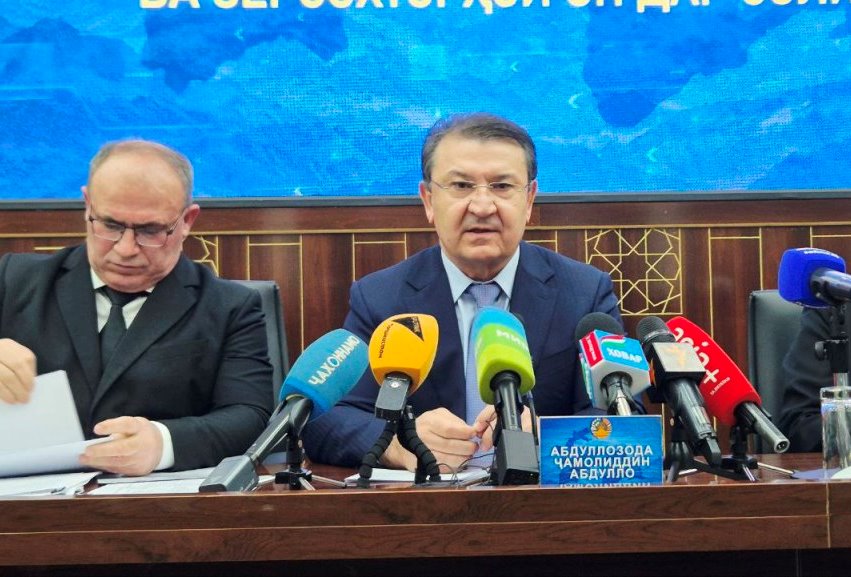
As of early 2026, Tajikistan has 22,419 doctors and 64,909 mid-level medical professionals, representing a 1.9% and 2.3% increase, respectively, compared to the previous year. However, the country is still facing a shortage of 1,432 medical specialists, Jamoliddin Abdullozoda, the Minister of Health and Social Protection, told reporters in Dushanbe on January 28.
Abdullozoda also reported that the staffing rate for doctors is 94.3%, while the mid-level medical staff rate is 99.7%, reflecting an increase of 0.8% and 0.1%, respectively, compared to the previous year.
In July 2025, Abdullozoda had revealed that the country’s healthcare sector was short of 1,600 specialists in the first half of the year. The gap has since reduced by nearly 170 specialists in the second half of 2025.
He pointed out that there is a particular shortage of family doctors, as well as specialists in addiction medicine, tuberculosis, radiology, and in some areas, gynecologists and surgeons. To address this issue, the ministry has compiled lists of district doctors who will work on a rotating basis in remote areas.
“We also suggest that districts facing shortages, for instance, in radiology, could temporarily fill these positions with surgeons or traumatologists, who would undergo additional training and then serve in the area where the need is most pressing,” said Abdullozoda.
Increase in medical students in Tajikistan
The issue of staffing shortages in Tajikistan’s healthcare system is expected to be addressed by medical university graduates. Minister Abdullozoda emphasized that if at least 50% of the medical students graduating from Tajik universities enter the workforce, the shortage problem will be resolved.
In the 2025-2026 academic year, the number of students in Tajikistan's medical universities grew significantly. The Tajik State Medical University, named after Abu Ali ibn Sino, enrolled 13,860 students, while the Khatlon State Medical University had 2,875 students, and the medical faculty at Tajik National University registered 5,759 students. Additionally, the Tajik Medical and Social Institute had 4,417 students, bringing the total number of medical students in these institutions to 26,911—an increase of 2,738 students from the previous year (24,173).
Meanwhile, Tajikistan’s medical colleges also saw a rise in enrollment, with 80,000 students in the 2025-2026 academic year, up by 7,240 from the 2024-2025 year, when 72,760 students were enrolled.