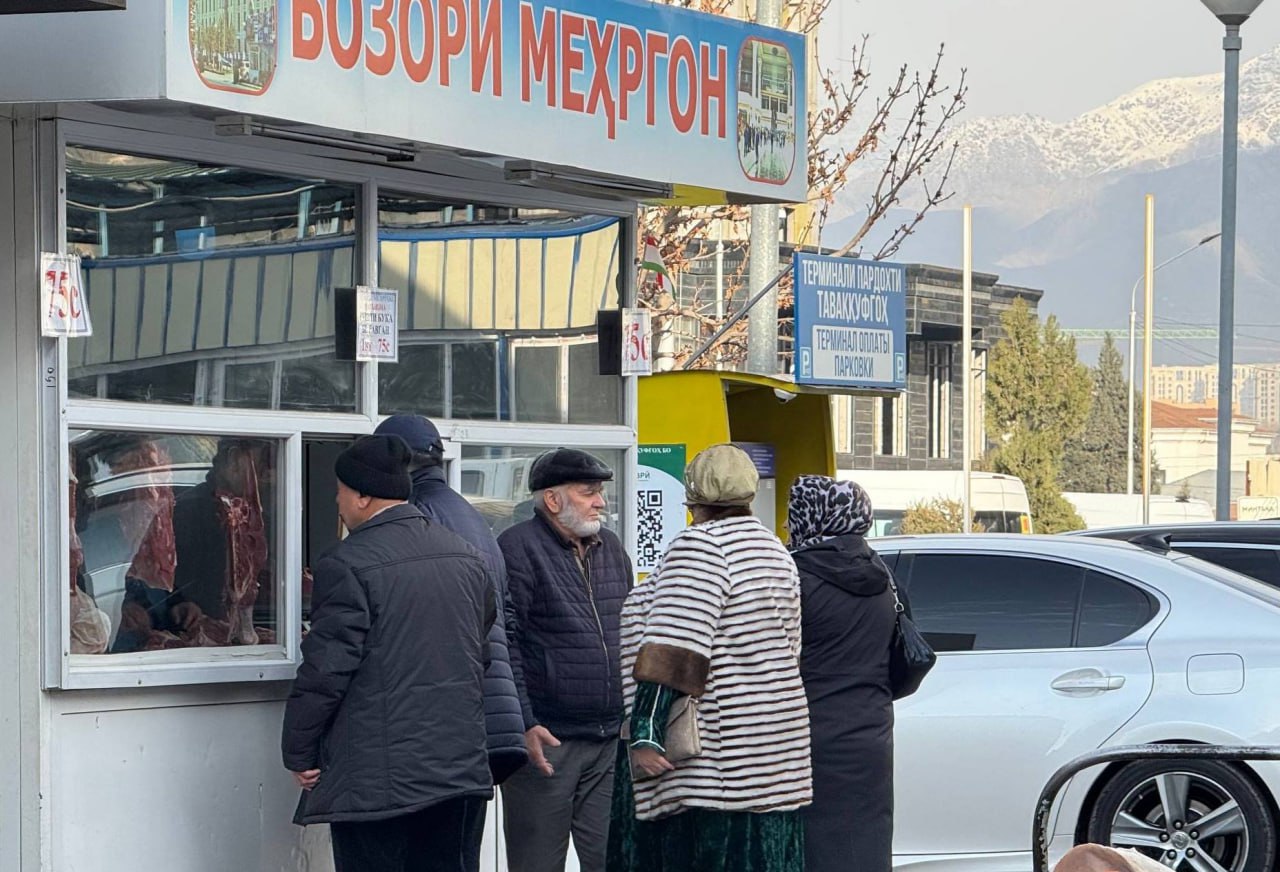
On January 29, Tajikistan’s Minister of Agriculture, Qurbon Hakimzoda, criticized sellers who artificially inflate meat prices, calling them speculators. He emphasized the need for collective action to stabilize prices and address the issue of inflated meat costs, which harms both the economy and consumers.
Meat imports in Tajikistan
The Minister reported that over the past year, Tajikistan imported more than 8,000 tons of meat and 12,000 tons of poultry. He explained that meat is imported from various countries, including Belarus, Kazakhstan, and Russia, as well as small livestock meat from Mongolia. According to Hakimzoda, the misunderstanding surrounding imported meat is linked to debates within the Food Security Committee over the halal status of the products.
“We mainly import meat from Belarus and Kazakhstan, with some from Russia. Small livestock meat comes from Mongolia, and poultry comes from Russia, Belarus, and partly from Kazakhstan,” Hakimzoda clarified. He emphasized the importance of cooperation with Belarus, where the slaughter of meat is conducted according to halal standards.
Meat prices at bazaars and fairs
Regarding prices, the Minister noted that imported meat is sold at prices ranging from 65 to 80 somoni per kilogram, depending on quality. “Currently, the price of imported meat is 75-77 somoni, and at fairs it ranges from 65 to 70 somoni,” said Hakimzoda. Over the past three years, poultry meat prices have remained stable at 27-28 somoni per kilogram.
The issue of speculators
Qurbon Hakimzoda also expressed his displeasure with speculators who artificially raise prices. “Many speculators (sorry for using this term) raise prices unjustifiably for their own gain,” he remarked.
He gave an example of the price of live-weight cattle: “It ranges from 50 to 54 somoni depending on the biological and physiological state of the animal, and then the meat is sold for 110-115 somoni. There should also be a sense of responsibility here?” Hakimzoda emphasized.
Measures to stabilize prices
The Minister stressed that the Ministry of Agriculture is responsible for meat production but does not intervene in retail prices, as other regulatory bodies handle this. He raised an important question: “Why does control work in Dushanbe, but not in other cities and regions?” He highlighted the need for joint efforts to stabilize prices.
Hakimzoda also pointed to the role of bloggers, who show the process of live-weight trade through social media and help monitor the situation. “The entire livestock market is on social networks. Bloggers show how live-weight trade is going. Count if a kilogram of meat is worth 100 somoni or more,” he said.
Recommendations and future outlook
The Minister called for collaboration among all stakeholders to prevent further price hikes: “Let’s work together to stop those who would raise meat prices. I’m sure the price will stabilize.”
Impact on prices
According to data from the Statistics Agency under the President of Tajikistan, since the beginning of 2025, lamb prices have increased by 17%, and beef prices by 14.4%.
Meanwhile, media outlets in Kyrgyzstan reported that Tajikistan has the highest meat prices among CIS countries, with the average price of 1 kilogram of meat in Tajikistan being $13.
For comparison, in Uzbekistan, the price is $11.89, in Russia — $11.72, in Armenia — $10.87, in Belarus — $10.58, in Kazakhstan — $7.43, and in Kyrgyzstan — $7.78.