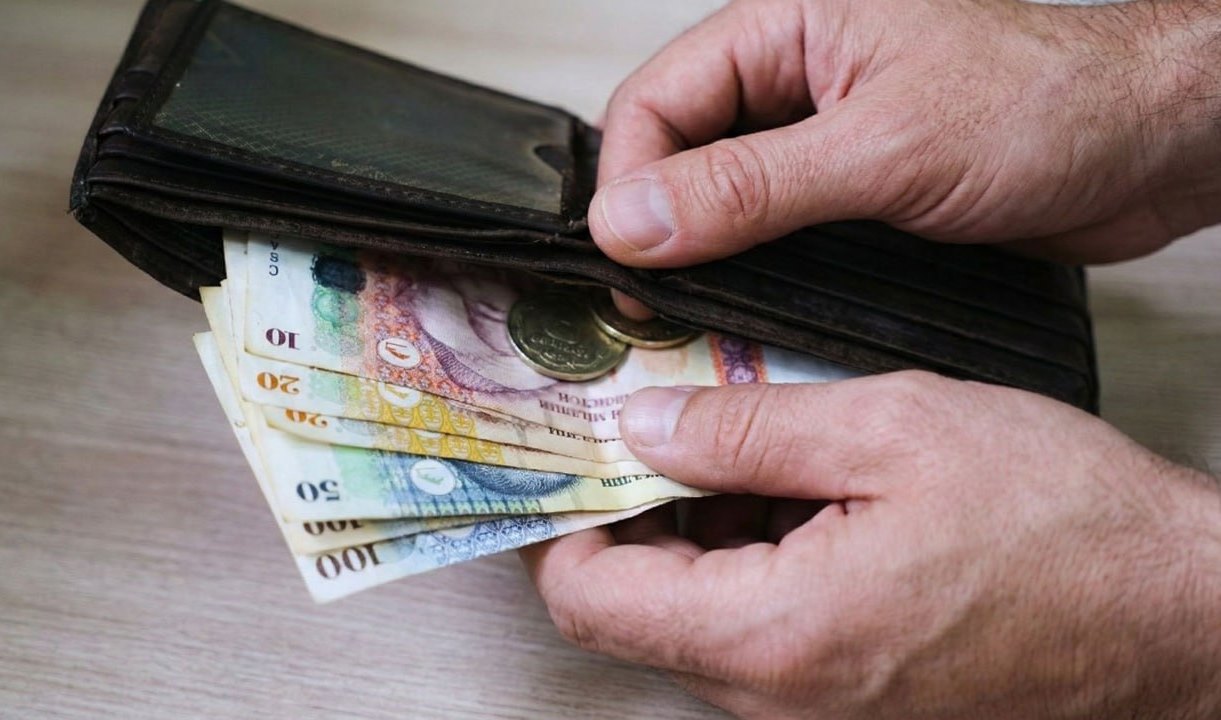
Tajik authorities claim that over the past decade, the country's population income has increased sixfold. But does this really translate into an improvement in the standard of living for most citizens, or is it just an increase in statistics?
The government of Tajikistan states that the total monetary income of the population grew from 26 billion somoni in 2015 to 165 billion somoni in 2025 — a sixfold increase. Official figures also show that the poverty rate in the country dropped from 32% to 19% over the same period. Additionally, the National Development Strategy until 2030 aims to reduce poverty to 10% and increase the share of the middle class to 50% in the next five years.
To understand whether income growth has truly impacted citizens' well-being, it’s essential to examine the sources of these income increases and how they have changed over the past decade.
What makes up the population's income
Simply put, population income refers to all the money people earn throughout the year. The primary sources of income are well-known:
· Salaries
· Pensions and social benefits
· Income from entrepreneurial activities
· Remittances from abroad
· Other payments and receipts
We analyzed the main sources of monetary income for Tajikistan's population, based on official and international data, and compared how they have changed over the past ten years.
In November 2025, the average nominal salary in the country was 3,136 somoni, compared to 921 somoni in November 2015 — a 3.4-fold increase. The minimum wage during this period grew from 400 somoni to 1,000 somoni (a 2.5-fold increase). The average pension in late 2025 was 512 somoni, up from 230 somoni in 2015 — a growth of about 2.2 times. Benefits for low-income families rose from 400 somoni in 2015 to 825 somoni in 2025 — slightly more than double.
However, the largest source of income for many citizens continues to be remittances from labor migrants, a topic the authorities prefer not to discuss. According to the World Bank, remittances to Tajikistan reached $5.8 billion in 2024, compared to around $3 billion in 2015 — a 1.9-fold increase. Data for 2025 is not yet available.
To grasp the scale of migrant remittances, consider that the total government budget expenditures in 2024 amounted to 45.5 billion somoni. At the average exchange rate for 2024, this equals $4.2 billion. In other words, remittance inflows exceeded the total government budget by nearly a third in 2024.
Nominal growth doesn't equal real growth
It’s important to note that all the above figures are nominal. In simple terms, this refers to the growth of income in current prices, without considering how much goods and services have increased in price over the same period.
Nominal income tells us how much money a person earns in somoni, but real income answers a more crucial question: how many goods and services can be purchased with that money? If salaries have increased but prices have risen almost as much, technically, a person is wealthier, but in reality, they may not be.
Salary differentiation
However, average figures alone provide a general sense of income trends and don’t address the key question: who really benefits from this growth?
To understand how income changes have impacted people's lives, it's crucial to look at how income is distributed across different sectors of the economy and regions of the country. Even with official data showing an increase in nominal income, this growth has been highly uneven and has impacted different groups of the population in varying ways. The average figures conceal significant disparity — both across economic sectors and regions.
For example, in traditional sectors where a significant portion of the population works, wages remain significantly lower than the average.
Wage levels by sector
Agriculture and Forestry: the lowest wage level –1,342 somoni
Healthcare and Social Services: the average wage level – 2,337 somoni
Education: the highest wage level – 3,099 somoni
Workers in agriculture earn more than two times less than the national average, while those in the social sector only approach the average wage.
On the other hand, wages in some sectors of the economy are notably higher.
Wage Levels by industry
Construction: the lowest wage level – 3,799 somoni
Mining of Mineral Resources: the average wage level – 4,761 somoni
Telecommunications: the high wage level — 5,998 somoni
Financial Intermediaries: the highest wage level – 7,547 somoni
The wage gap between low- and high-paid sectors can reach five to six times, indicating deep social inequality and concentration of income growth in a limited number of industries.
Average nominal monthly salary by region in Tajikistan
Dushanbe: the capital of Tajikistan with the highest salary — 3588 somoni
Sughd Province: northern region with moderate salary — 2591 somoni
Districts Subordinate to the Center: central regions with below-average salary — 2366 somoni
GBAO (Gorno-Badakhshan Autonomous Region): mountainous region with the lowest salary — 2313 somoni
Khatlon Province: southern region with the lowest salary — 2238 somoni
Regional inequality is also pronounced. In January-November 2025, the average nominal salary in Dushanbe was significantly higher than in the lowest-paying regions, with the gap exceeding 1.5 times. For people in these regions, it means fewer opportunities to cope with rising prices and currency depreciation using their income.
As a result, wage growth in Tajikistan has been mainly felt by workers in certain narrow sectors of the economy and residents of the capital. For much of the population, particularly those working in agriculture, the social sector, and the regions, income growth has primarily offset inflation rather than improved living standards.
Growth driven by external sources
Another crucial factor that influences income levels in Tajikistan but isn’t reflected in official statements about wealth growth is remittances from labor migrants. For a significant portion of households, remittances remain a key source of income, often surpassing domestic earnings.
As noted earlier, according to the World Bank, in 2024, remittances amounted to $5.8 billion, nearly double the level in 2015. This makes Tajikistan one of the most dependent countries on external financial flows.
The scale of this income source is particularly evident when compared to domestic financial indicators. Remittances are comparable to, and in some years even exceed, the government’s budget. A significant portion of domestic consumption is financed not through the internal economy and labor productivity, but through the earnings of citizens abroad.
However, remittances are distributed extremely unevenly. Not all households receive them; they are mostly received by families whose members work abroad. For these families, income growth can indeed be substantial and help offset inflation, the depreciation of the somoni, and rising prices. But households that don’t receive remittances remain much more vulnerable, relying solely on domestic income, which, as shown earlier, grows unevenly and often lags behind price increases.
Thus, remittances distort average income figures: they inflate total numbers and create the impression of rapid wealth growth, even though a significant portion of the population either doesn’t feel this growth or experiences it to a much lesser degree.
Moreover, remittances are an external and unstable income source, directly dependent on the economic situation and migration policies of other countries. Any external shocks can quickly affect household income levels inside the country, making this growth model vulnerable in the long run.
Inflation effect
Over the past decade, Tajikistan has faced various levels of inflation — from a record low of 3.5% to 9.0%. According to official data, consumer prices grew by about 1.8 to 2 times from 2015 to 2025, meaning goods and services that cost 100 somoni in 2015 now cost 180–200 somoni on average.
Inflation rates in Tajikistan (2015-2025)
· 2015: 5.1%
· 2016: 6.1%
· 2017: 6.7%
· 2018: 5.4%
· 2019: 8.0%
· 2020: 8.6%
· 2021: 9.0%
· 2022: 6.6%
· 2023: 3.7%
· 2024: 3.6%
· 2025: 3.5%
While average wages have increased 3.4 times, pensions 2.2 times, and benefits about 2 times, prices have risen nearly twofold over the same period. In reality, this means that the actual growth in well-being is much more modest than what the nominal figures suggest.
For pensioners and benefit recipients, income growth has only slightly outpaced price increases, sometimes barely compensating for inflation. Even wage growth, in real terms, is far lower than the reported figures.
Currency depreciation and dependence on imports
Even with inflation accounted for, growth in income in somoni doesn't provide a complete picture of real prosperity. For Tajikistan, it's essential to consider another factor — the exchange rate of the somoni to the US dollar.
According to the National Bank of Tajikistan, the exchange rate was 5.3 somoni to $1 on January 1, 2015, and 9.25 somoni to $1 on December 31, 2025. This means the national currency has weakened by approximately 1.7 times. As a result, the purchasing power of incomes in somoni has been reduced not only by rising domestic prices but also by the depreciation of the currency.
For a country heavily reliant on imports, this is particularly significant. By the end of 2025, Tajikistan's imports exceeded exports by more than 3.3 times, with imports amounting to $8.3 billion and exports only $2.5 billion. This imbalance means that a significant portion of goods consumed within the country is purchased in foreign currency and directly dependent on exchange rates.
In these conditions, the devaluation of the somoni inevitably impacts the cost of imported goods such as food, daily necessities, fuel, medicines, and household goods. Even with nominal income growth, a significant portion is used not to improve living standards, but to compensate for the rising cost of imported goods.
Why income growth doesn't always mean improved quality of life
Thus, the sixfold increase in nominal income does not provide a clear answer regarding the real improvement in living standards in Tajikistan. After analyzing the main sources of income, doubts have arisen about the sixfold growth.
· Firstly, income growth has been uneven — both across economic sectors and regions. A significant portion of the population continues to work in low-paying industries where income increases have only partially offset price growth.
· Secondly, a substantial part of the "average" figures is driven by remittances from abroad, which are not available to everyone and depend on external factors unrelated to the development of the domestic economy.
· Thirdly, rising prices and the weakening of the somoni have significantly reduced the purchasing power of incomes, particularly for goods and services with a high import component.
As a result, the nominal income growth is real, but the quality of life has improved much more slowly, or not at all, for a significant portion of the population. This is why, when evaluating social and economic successes, it’s essential to look beyond aggregate figures and consider how these changes are felt in people’s daily lives.