The issue of unscrupulous property developers has once again come into focus in Tajikistan. At a series of press conferences held in early 2026, several government agencies disclosed data on fraud cases in the housing sector, revealed details of investigations, and outlined measures aimed at protecting citizens.
Hundreds of complaints and dozens of criminal cases
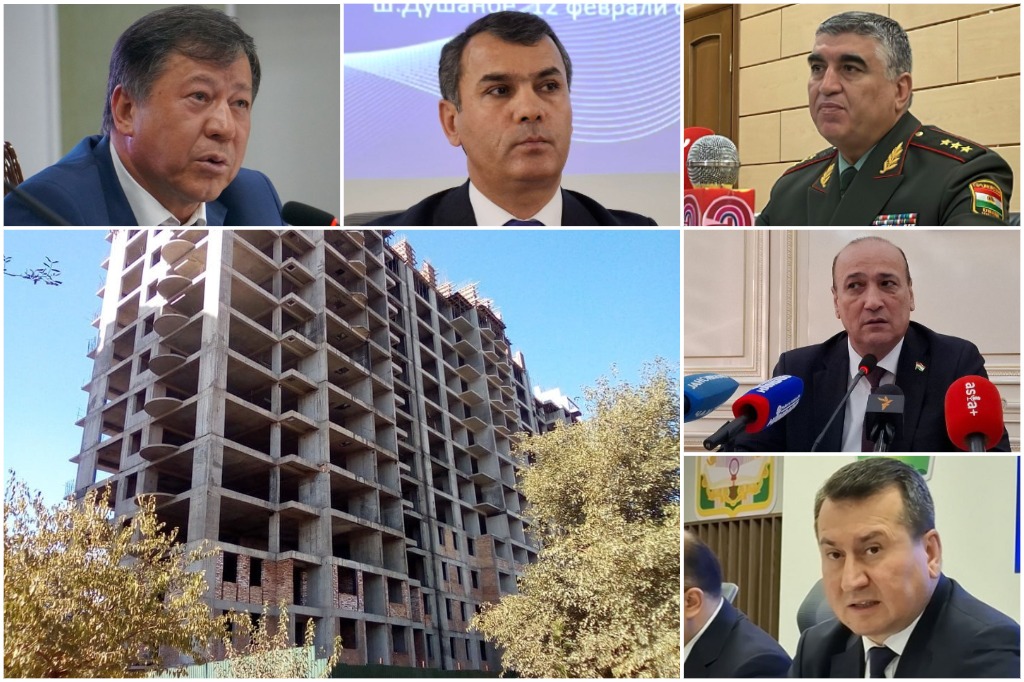
On February 12, Interior Minister Ramazon Rahimzoda reported that 112 crimes related to fraud by construction companies and their intermediaries were registered in 2025. In most cases, developers sold the same apartment to multiple buyers.
According to the minister, more than 250 citizens filed collective complaints with the Interior Ministry in December 2025 and the first ten days of January 2026 alone.
Rahimzoda urged citizens to exercise caution by verifying construction permits and signing contracts in the presence of a lawyer. He also noted that the Dushanbe mayor’s office has developed a special program containing data on all construction projects, their permits, and developers.
The following day, the Prosecutor-General’s Office addressed the issue. Prosecutor-General Habibullo Vohidzoda acknowledged that cases involving multiple sales of the same apartment and unilateral contract terminations continue to generate public dissatisfaction. As a result of inspections, 308 administrative and 37 criminal cases were initiated.
More than 400 cases in court
Supreme Court Chairman Rustam Mirzozoda stated that in 2025, courts across the country received 421 cases involving disputes between citizens and construction companies.
Of these, 106 lawsuits were filed by citizens seeking refunds or resolution of other issues. By the end of the year, 58 cases had been satisfied, 37 were terminated by mutual agreement, and 11 remain under consideration.
Construction companies, in turn, filed 315 lawsuits against citizens, mainly concerning relocation and financial settlements. Of these, 114 were satisfied, 188 were terminated by agreement of the parties, and 13 remain pending.
Municipal oversight and new measures
Dushanbe city officials also acknowledged the problem. Deputy Mayor Bakhtiyor Sharifi described the practice of selling one apartment to several buyers as “unscrupulous” and said the matter is under the personal supervision of the mayor.
As a preventive measure, authorities plan to install QR codes on all high-rise buildings in the capital. These codes will allow residents to access information about the developer and the legal status of the project.
Companies found guilty of fraudulent practices will gradually be excluded from cooperation with municipal authorities, Sharifi added.
Earlier, the head of the Committee for Architecture and Construction, Nizom Mirzozoda, advised citizens to notarize purchase agreements to ensure legal validity and prevent multiple sales of the same property. However, he noted that many companies avoid notarization.
High-profile cases and systemic violations
Problems in the construction sector frequently attract public attention. In 2025, law enforcement authorities reported the detention of executives from several companies, including “Salmon-Inshoot,” “Sokhtmon Palace,” and LLC “Jamol-Basir.” In one case, a company director allegedly sold a single apartment to three to seven buyers, defrauding more than 160 people.
According to the Committee for Architecture and Construction, 7,331 violations were identified in the activities of 1,288 construction companies in 2025. Total fines amounted to 547,350 somoni. In 72 cases, companies began construction without undergoing mandatory state expert review.
Despite stricter construction requirements introduced in Dushanbe about four years ago, the sector’s systemic problems remain unresolved.