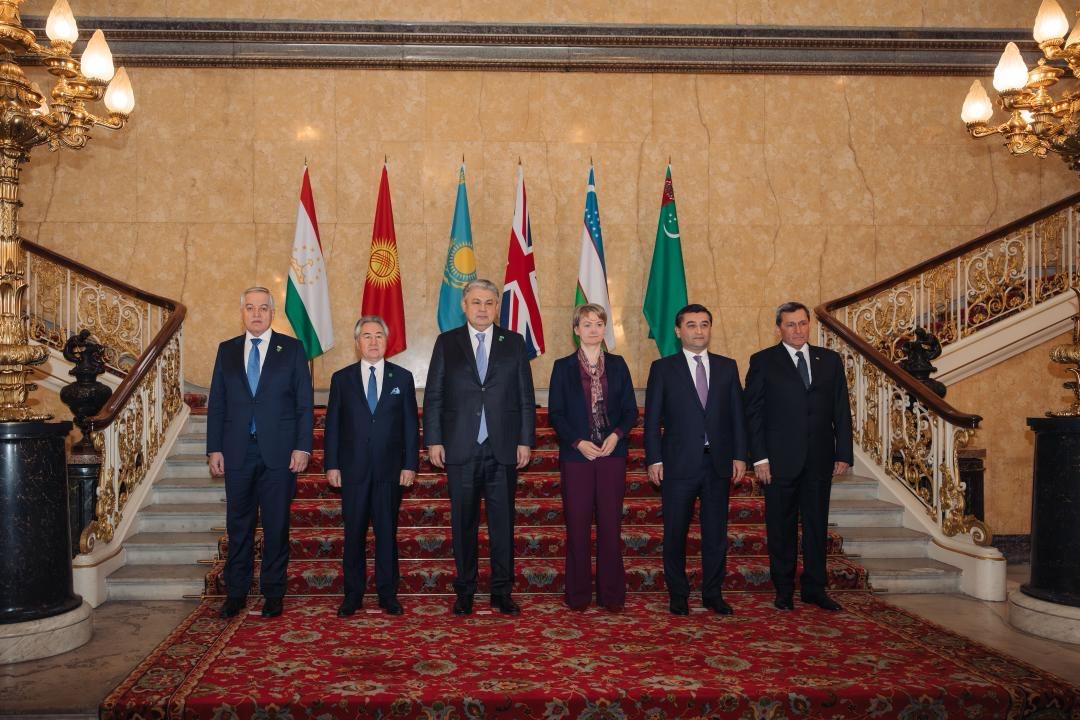
On February 26, 2026, the first meeting of the Foreign Ministers of Central Asian countries and the United Kingdom took place in London under the "C5+1" format. The delegation from Tajikistan, led by Minister of Foreign Affairs Sirojiddin Muhriddin, participated in the event, according to the Tajik Ministry of Foreign Affairs (MFA) information department.
During the meeting, the participants reportedly discussed key international and regional issues, focusing on expanding economic and trade cooperation, attracting investment, enhancing security partnerships, and addressing other areas of mutual interest.
In his address, Minister Muhriddin highlighted the positive development of Tajikistan's cooperation with the United Kingdom in recent years, particularly in the fields of economy, investment, industry, education, and science.
The top Tajik diplomat noted that the meeting underscored the region's commitment to strengthening constructive partnerships with the UK and ensuring sustainable development across Central Asia.
The discussions reportedly also emphasized the importance of collaborative efforts to combat climate change, advance water and climate initiatives, and promote intercultural dialogue.
The parties expressed satisfaction with the establishment of this new format for cooperation and agreed that future meetings will be held regularly to continue fostering collaboration and dialogue, Tajik MFA information department reported.
Kazakhstan’s Foreign Ministry went on to state that the Central Asian foreign ministers praised the CA5+UK platform as important for "structured and results-oriented" dialogue with London, adding that it has proven to be effective in facilitating discussions on regional priorities while also creating additional opportunities to promote economic initiatives and implement joint
Uzbekistan’s Kursiv Media reports that this gathering, hosted by British Foreign Secretary Yvette Cooper, marks the first time since these nations gained independence in 1991 that such a joint meeting has taken place in this format.
The summit reportedly represents a strategic pivot for the UK as it seeks to deepen ties with the rapidly growing economies of Central Asia. The British government aims to bolster regional resilience and economic growth through several key pillars:
· Critical Minerals: Establishing new agreements to secure and diversify global supply chains.
· “Green” Growth: Supporting projects that facilitate a transition to sustainable energy and environmental stability.
· Education: Expanding academic cooperation and English-language programs to enhance skills and professional development.
Politico reported on February 26 that British Foreign Secretary Yvette Cooper told it in a statement that Central Asia is an important region with huge potential to boost economic growth.