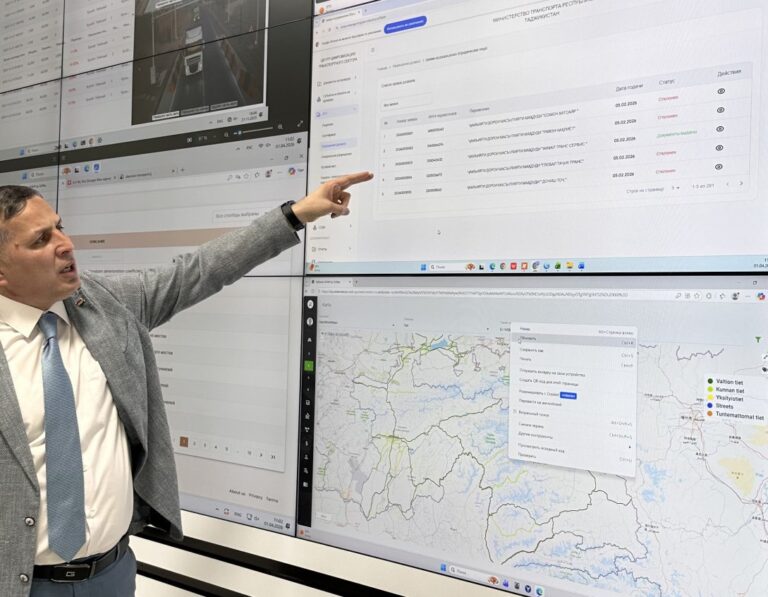
Digital transformation of government services in Tajikistan is gaining momentum, with one of the key developments being the integration of artificial intelligence (AI) within the Tax Committee's operations. In'omjon Saidullayev, a representative of the IT department of the Tax Committee, told about how these technologies are changing tax administration and what benefits they offer to citizens and businesses.
What role does AI play in the Tax Committee's digital transformation?
"AI is primarily a tool for increasing transparency and efficiency in our operations," Saidullayev explains. "We are implementing AI both in external electronic services for citizens and businesses, as well as in internal analytical processes. Our goal is to reduce administrative procedures, speed up data processing, and minimize human error."
What changes have ordinary citizens experienced so far?
One of the most noticeable innovations is the intelligent registration system for individuals in their personal account without the need to visit tax offices. The algorithms automatically verify the data, cross-check it with state registers, and identify any discrepancies. This significantly reduces registration times and simplifies the process.
How is security ensured during online registration or when updating personal information, like phone numbers?
"We use multi-factor authentication and behavioral analysis," Saidullayev explains. "The system tracks the user's activity history and automatically detects any suspicious behavior. This ensures a high level of protection for personal data."
What opportunities has AI provided to businesses?
"Through their personal accounts, legal entities and individual entrepreneurs can obtain duplicates of their state registration documents, register their Taxpayer Identification Numbers (TIN), or carry out re-registration. AI automatically checks the accuracy of the submitted data, analyzes the business structure, and generates decisions without inspector involvement. This speeds up the provision of services considerably."
Balancing security and accessibility in digital services
"As more services shift to mobile platforms, what steps is the Tax Committee taking in this direction?"
"We’ve implemented the ability to register individual entrepreneurs via the mobile app 'Andozi Man,'" said Saidullayev. "Document recognition technologies and intelligent identity verification allow entrepreneurs to set up their businesses fully online. This simplifies the process of starting a business and supports the development of small businesses."
Is AI used in the internal processes of the Tax Committee?
"Yes, it is actively used," Saidullayev confirms. "For example, in property taxation, we apply intelligent algorithms during the inventory and re-registration of individuals' real estate. The system compares data from various government sources, identifies discrepancies, and helps create an up-to-date tax base. This improves tax collection and strengthens financial discipline."
How is data protection and infrastructure secured during these processes?
"We use a hybrid architecture," Saidullayev explains. "Sensitive data and risk analytics are processed within a secure local infrastructure (on-premise). Meanwhile, some online services operate using cloud technologies. This approach strikes a balance between information security and the availability of digital services."
What future developments do you foresee for AI in the tax sector?
"In the future, we plan to expand AI usage to include tax revenue forecasting, automated report analysis, and more extensive use of big data. Digital transformation is an ongoing process, and AI technologies are becoming an essential tool for modern public administration."