In its 25th anniversary year, “MegaFon Tajikistan” summarizes its technological development and outlines future directions. On the key stages of network evolution, prospects for innovation implementation, and professional pride of a telecom operator, Technical Director of the company Alijon Ganiev shared insights.
– What are the main stages you would highlight when talking about the technical development of the company?
– Over a quarter of a century of our history, several generations of mobile communication have changed. Each of them was such a stage. The first, of course, was the launch of the GSM network and the construction of basic infrastructure. In those years, the main and almost the only service of mobile operators was voice communication, and no one even imagined how enormous a leap forward the industry would make.
Then came the introduction of 3G, when mobile internet first became widespread and accessible, and the extensive development of the 4G network, which significantly changed the user experience – essentially, the smartphone became a universal assistant always with you. In parallel, there was a transformation of the transport network, the development of fiber-optic communication lines.
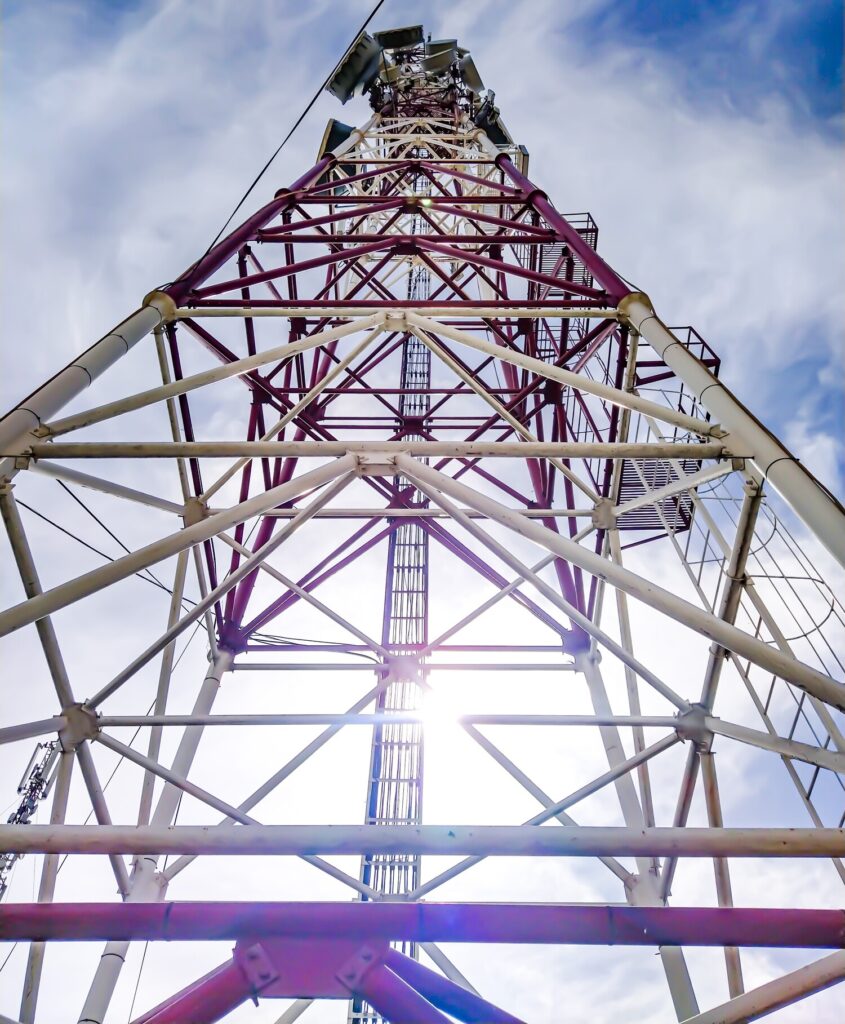
This laid the foundation on which we stand now. But the development of infrastructure does not stop even now. In some sense, our technical projects have become even more extensive.
– Why is this happening – after all, there is already a serious foundation that has been built over so many years?
– It’s about the renewal of equipment, which is becoming more and more advanced, and the pursuit to ensure maximum coverage of the country’s territory. Therefore, construction is carried out in parallel with the modernization of previously installed equipment.
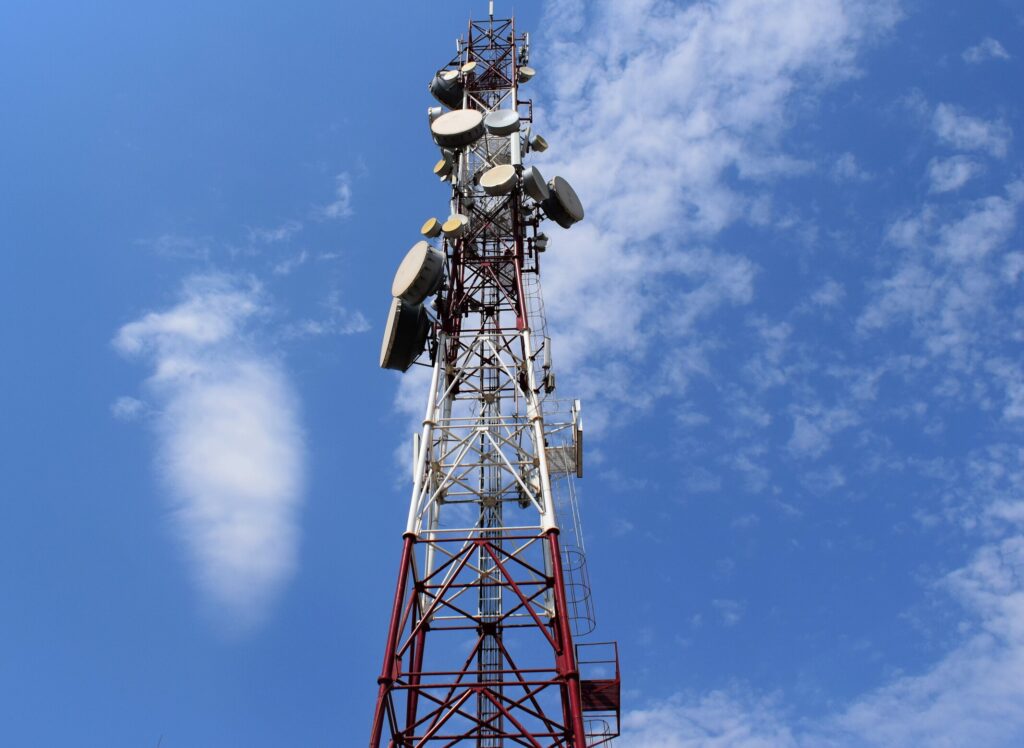
In 2026, we plan to launch about 420 new fourth-generation base stations (BS). They will appear both in places where there was no high-speed internet and in cities where there is a high number of active users and a need to reduce the growing network load. But these tasks can be solved in other ways. For example, during the year we want to replace about 500 radio blocks – thus the network capacity at communication sites can be increased by 2–2.5 times without launching additional base stations.
We are also continuing the sequential re-farming of frequencies: this year about 100 BS will be switched from the 3G band to 4G to speed up data transmission. In addition, 80 4G/LTE base stations will be launched in the 2100 MHz band, which will provide a noticeable increase in coverage and internet quality. To enhance the throughput and resilience of the network, about 180 km of fiber-optic communication lines will be built. Overall, our task this year is not just to build more but to make the network more resilient and capacious, ready for further growth in mobile internet consumption.
One of the most important projects in the 25th anniversary year of our company is the launch of new voice switch equipment. Essentially, it is about updating the “heart” of the network, which directly affects the stability of voice services. So, the basic service with which it all began a quarter-century ago is also evolving.
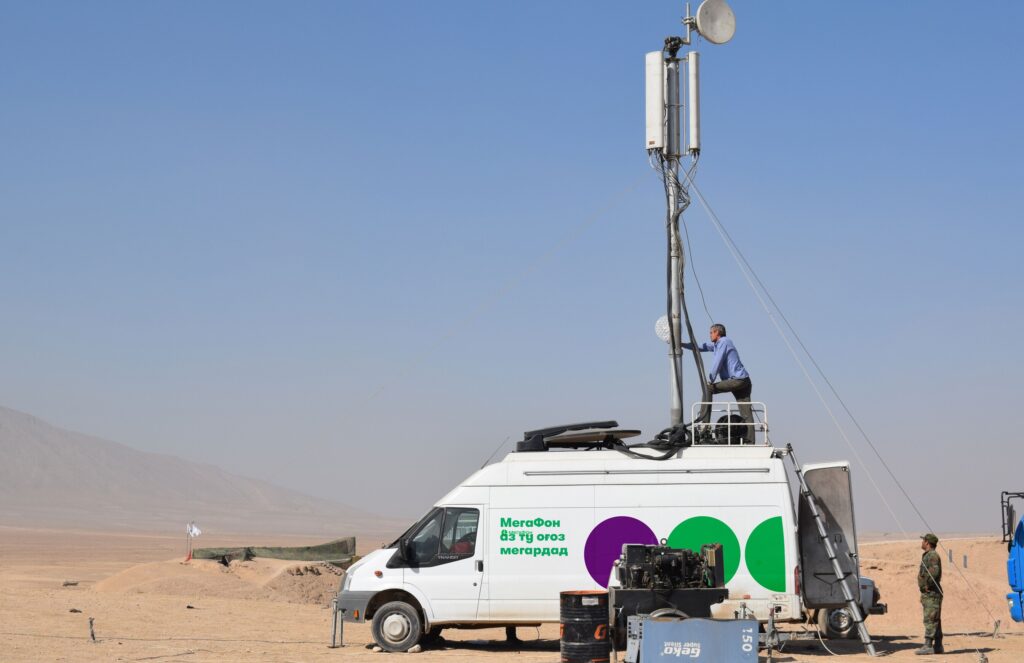
– How, in your opinion, has the development of infrastructure changed the role of telecommunications in the life of the country?
– Most radically! And to realize this, you don’t even need to be a specialist. Just remember which services and functions were not in your phone even not twenty-five but ten years ago. Now we use messengers, digital financial services daily, send work files, and navigate by online maps.
Every year brings new opportunities. And the turning point was precisely the launch of 3G technologies and especially 4G/LTE, with the emergence of reliable internet access. Telecom has gone “digital” and has become one of the leaders in economic development alongside energy and transport.
– This is indeed noticeable to everyone. But what remains “visible” to telecom specialists and “invisible” to subscribers?
– A lot. Essentially, almost completely behind the scenes is the construction and modernization of the network, which we have already discussed. A regular user is content with the fact that there are more and more telecom services and that they all work well. And they often don’t know how complex the technical challenges we solve are. But that’s the way it should be. It’s not necessary to explain in a restaurant how exactly a dish was prepared – the main thing is that it tastes good.
I can talk long and in detail about many technical projects – for example, about the implementation of IP technologies, virtualization of network functions, cloud solutions, network management automation, and power supply projects for communication facilities. But for subscribers, it’s more important that during planned power outages, voice communication and all digital services continue to work – not how we achieve this. Although that is also an interesting topic.
For instance, we can recall how MegaFon Tajikistan began equipping BS in the mountains with solar panels and wind generators. By the way, this work continues in 2026: solutions using solar panels will be implemented at another 50 communication sites.
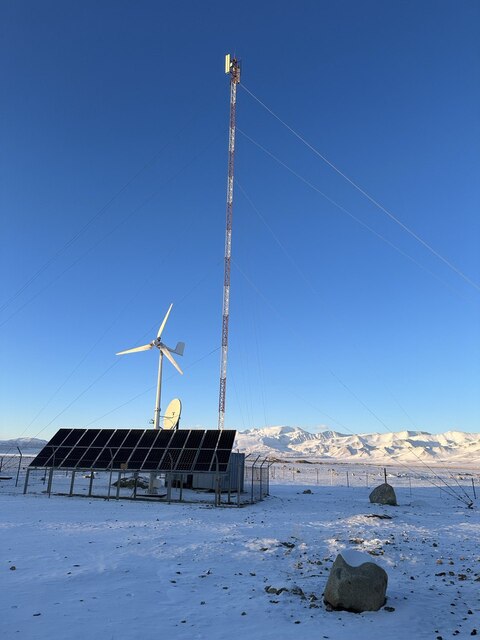
The topic of power supply was and remains one of the most important in our work. Communication must be available to subscribers regardless of the weather or other factors. For this, in 2026 we will install 105 new diesel generator sets at base stations, and engines will be completely replaced on about 100 existing DGUs.
This is essentially equivalent to installing new equipment because it significantly extends the life of the diesels and reduces the risk of failures. Additionally, the replacement of 450 battery units is planned. Can you imagine the volume of work our engineers need to perform annually, especially considering that to reach some BS, you need to drive several hundred kilometers off-road?
Of course, I really want subscribers to know about this. We will also provide reliable power sources to all key switching nodes to minimize downtime during massive power outages.
Each such project is a challenge for a professional. After all, one has to master new software, install equipment that one often encounters for the first time in life. Ensuring that different technologies “get along” with each other is not easy when the infrastructure combines “hardware” from several generations of communication. And we are not just learning something new – we regularly outpace the market and introduce innovations first in the country, as it was with 3G, 4G, and 5G technologies.
If questions arose, there were two options: either consult with foreign colleagues or figure it out yourself. The latter is preferable: for a professional, there is no greater pride than feeling like a pioneer.
– You mentioned 5G. The first fragment was launched a few years ago. When will the continuation be?
– It has already begun. Yes, we built fifth-generation BS back in 2020. It was proactive work: there were no services that really needed “gigabit” mobile internet speeds yet. But if a promising technology appears, it must be mastered – that is our position, which has brought the company the status of a technological leader in telecom.
Now the situation with 5G has changed. For instance, IoT, the Internet of Things, can be used much more widely – the business market is ready for this. Subscribers – individuals already have a need for high-definition streaming video, “ultra-fast” internet for modern online games. Therefore, the phase of active expansion of the 5G network is starting right now. We launched 6 new fifth-generation base stations in 2025.
Further construction will proceed at an increasing pace – over the next two years, we plan to install 200 BS of this standard in major cities of the country. Let me clarify: it’s not just about installing base stations. Alongside, scenarios for using 5G communication are analyzed, services based on this technology are developed, frequency resources are optimized, and a lot of our “invisible” work is done. But technologically and morally, we have been ready to launch 5G since 2020.
– If we summarize the results of all 25 years of the company’s operation, which results would you include in the top 3?
– The most important for me is, firstly, that we managed to build such a large-scale and reliable infrastructure covering absolutely all regions of Tajikistan. Secondly, that we managed to grow from an ordinary telecom operator into a digital company that largely sets the tone in the telecom market, contributing to the evolution of the digital sphere across the country.
I mean including our mobile application “MegaFon Life,” joint projects with banks, retail chains, and government organizations. And thirdly, that we managed to earn the trust of millions of residents of our country. Only knowing the scale of our “invisible” work can one understand how much is done to ensure the reliability and security of our services.
– Today is Telecommunications Day! Tell us, what does it mean to you to be a real telecom specialist?
– It means being aware of your responsibility to those who trust MegaFon Tajikistan’s communication. And understanding that the status of a technological leader, a leader in digitalization, is not just earned – it needs to be constantly proven that we are worthy of still carrying this high title. Which is what we do every day, without holidays or weekends!