In Dushanbe, the results of the informational campaign titled Zireh (Armor/Protection), were summarized, aimed at creating a safe digital environment for teenagers, developing media literacy, and critical thinking.
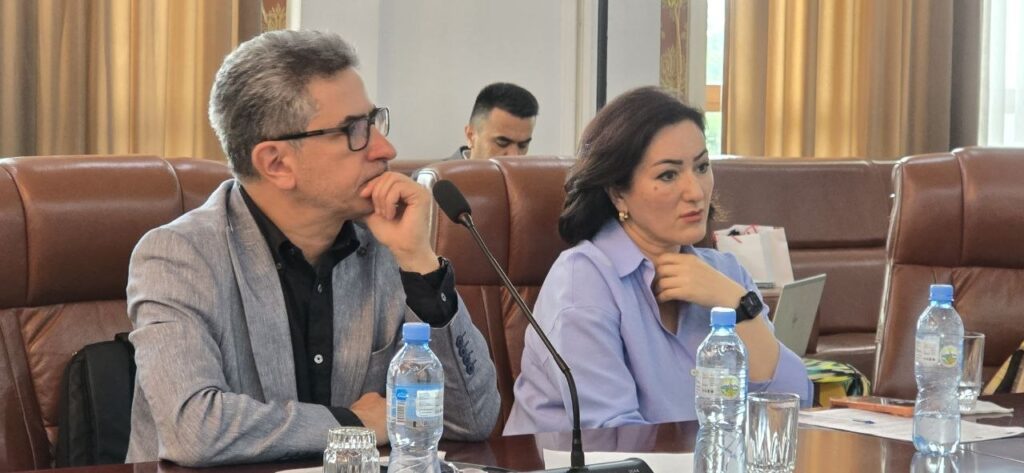
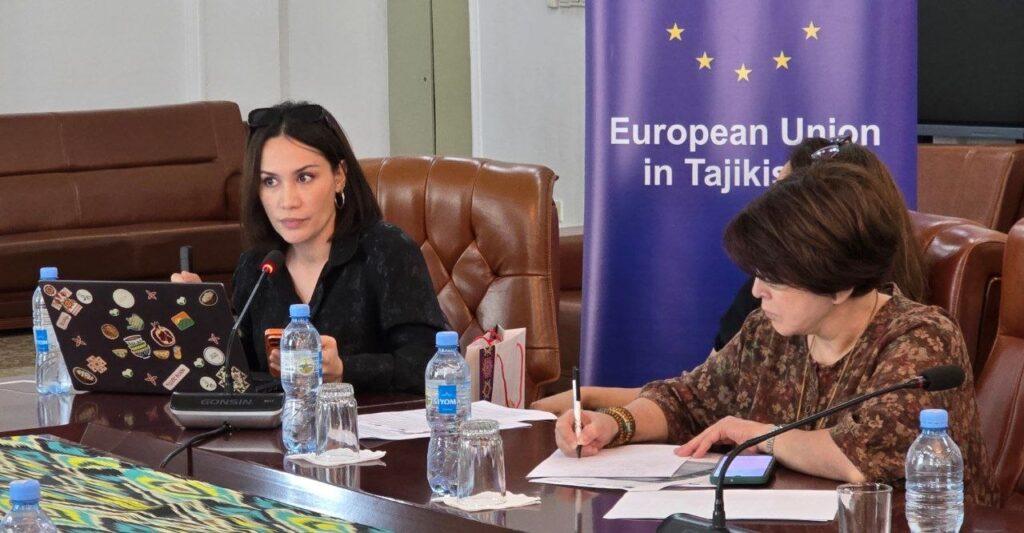
The event was attended by representatives of the Ministry of Education and Science, the Prosecutor-General’s Office, the Committee on family and Women’s Affairs, international organizations, including the European Union (EU) Delegation to Tajikistan, as well as experts, journalists, psychologists, and parents of teenagers.
As part of the Zireh informational campaign, which lasted 10 months, the digital habits, risks, and experiences of teenagers and their parents were studied, and 30 interviews were conducted with residents of Dushanbe, as well as Sughd, and Khatlon provinces.
Ms. Manizha Anvari, Executive Director of the Asia-Plus Media Group, noted that the Zireh campaign is aimed at protecting teenagers from false and fake information and has to some extent contributed to the development of media literacy, psychological support, and strengthening cooperation between the family, school, society, and the state.
“Zireh is not a final solution to all problems, but it is a step towards hearing the voice of teenagers,” she said.
Cyberbullying, distrust, and loneliness: what teenagers shared
Mahpora Kiromova, project coordinator, spoke about the informational campaign and the issues identified during its implementation.
She noted that during individual interviews with teenagers, it was revealed that they have more virtual friends than real ones with whom they communicate personally. According to her, teenagers know almost nothing about approximately 70% of their online friends, which indicates a low level of media literacy.
“Teenagers said it is easier for them to talk about their problems and share their experiences with strangers. Because a stranger does not judge or criticize. This indicates teenagers’ distrust of their parents,” she said.
She suggested that parents understand that for teenagers, the world is not divided into real and virtual, and therefore isolating them from the digital space is wrong.
Mehrangiz Sultonzoda, responsible for promoting the informational campaign on social networks, noted that during the 10 months of the project’s implementation, 52 materials were published, which attracted the attention of more than 3 million viewers. More than 400 teenagers participated in the project’s events.
She said that the most popular section of the project was the “Teenager’s Diary”, in which 10 heroes shared stories about the problems they encountered on the internet.
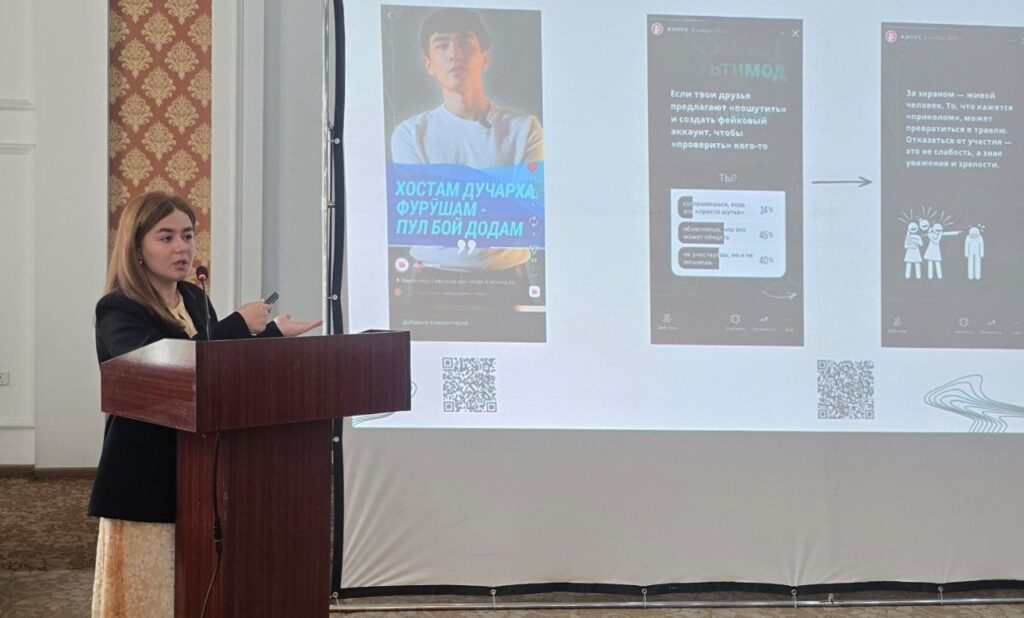
“Our interviews showed that only 30% of teenagers are willing to turn to adults when faced with internet threats. However, most adults also do not have a sufficient level of media literacy and cannot timely help their children,” said Sultonzoda.
The messages prepared within the project received a wide response on social networks, and even parents did not remain indifferent to the issues of internet risks, making the project interesting for an adult audience as well.
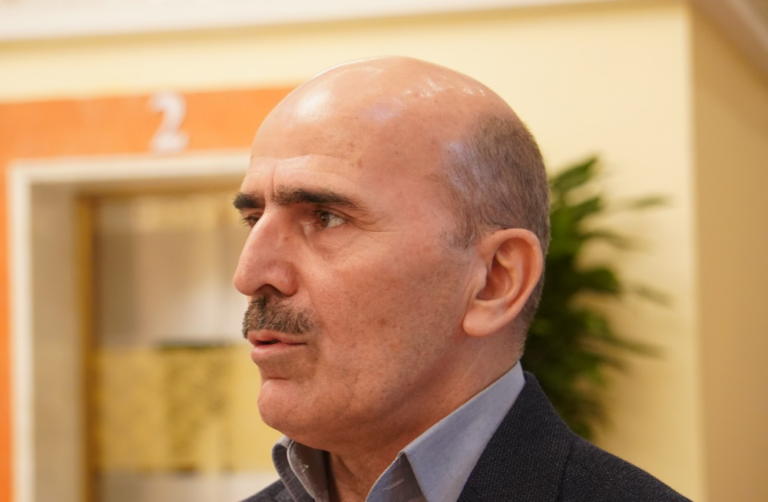
One of the project’s heroes, whose son was subjected to cyberbullying, said he learned about “Zireh” through social networks and decided to share his story so that other children would not find themselves in a similar situation. He expressed hope that other parents will hear his message and pay more attention to their children.
Experts called for the introduction of media literacy into the school curriculum
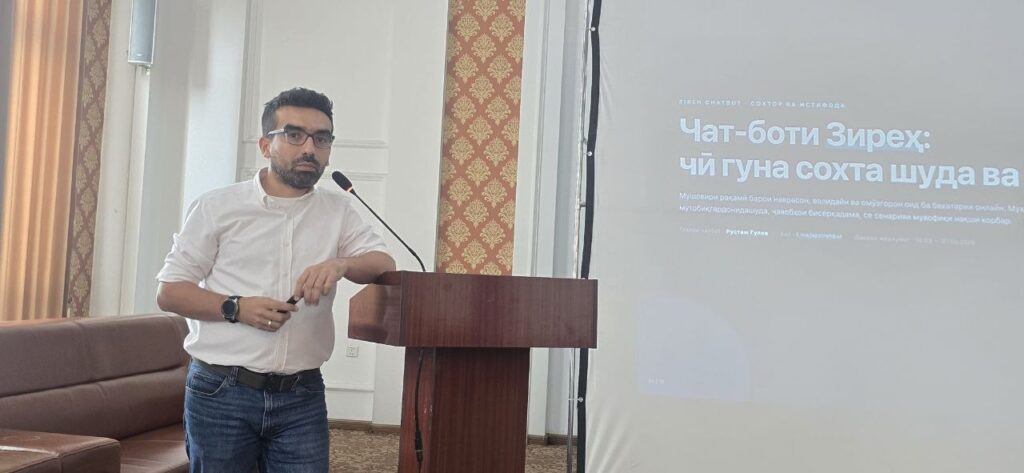
Media literacy expert Rustam Gulov talked about the chatbot work and data collection within the project. He noted that the @apzirehbot chatbot, using artificial intelligence, collected more than 50 questions from parents, teenagers, and teachers on digital security.
According to him, teenagers sent emotional questions to the chatbot, including cases of threats to distribute intimate photos, and also asked why parents check their phones.
Gulov noted that if all the questions are analyzed, three topics were most frequently discussed: account hacking, fraud, and internet threats.
“The chatbot also received many questions from teachers. It can be expanded and even help in preventing terrorism and become a tool for authorities such as the prosecutor’s office,” noted Rustam Gulov.
Some participants emphasized that such projects can be effectively implemented in schools only with the support of the Ministry of Education and Science. It was proposed to the representative of this department to include in the educational programs separate lessons and hours dedicated to media literacy and the development of responsible behavior skills in the digital environment.
The European Union remains fully committed to cooperating with Tajikistan in finding answers to these questions. Together we can ensure that the internet remains a force for good — a tool for learning, not harm; a means of uniting, not coercion,” said in conclusion, Deputy Head of the EU Delegation to Tajikistan, Mr. Ferdinand Yenrich.
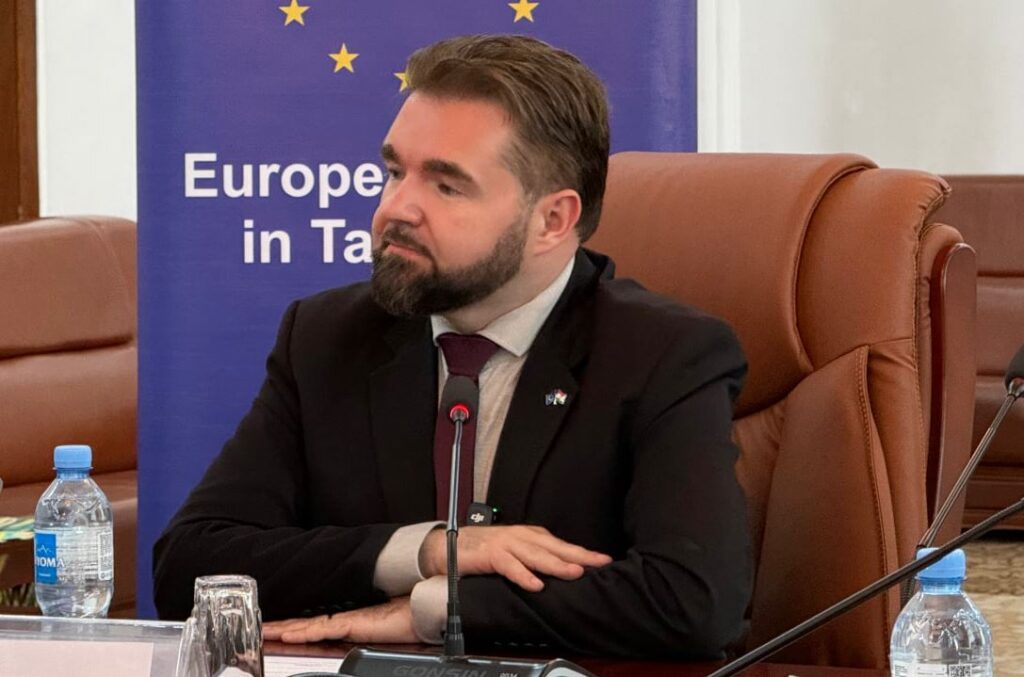
In conclusion, a discussion was held among the event’s participants, during which issues of digital safety for teenagers and ways to protect them online were considered. It was proposed to strengthen cooperation between relevant authorities, educational institutions, and parents to increase the level of digital literacy among teenagers.
The project was implemented by the media group “Asia-Plus” as part of the “CARAVAN” initiative funded by the European Union.