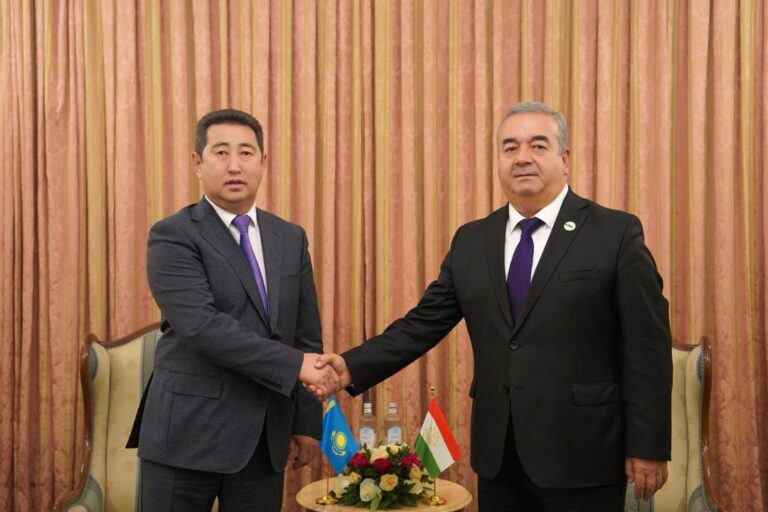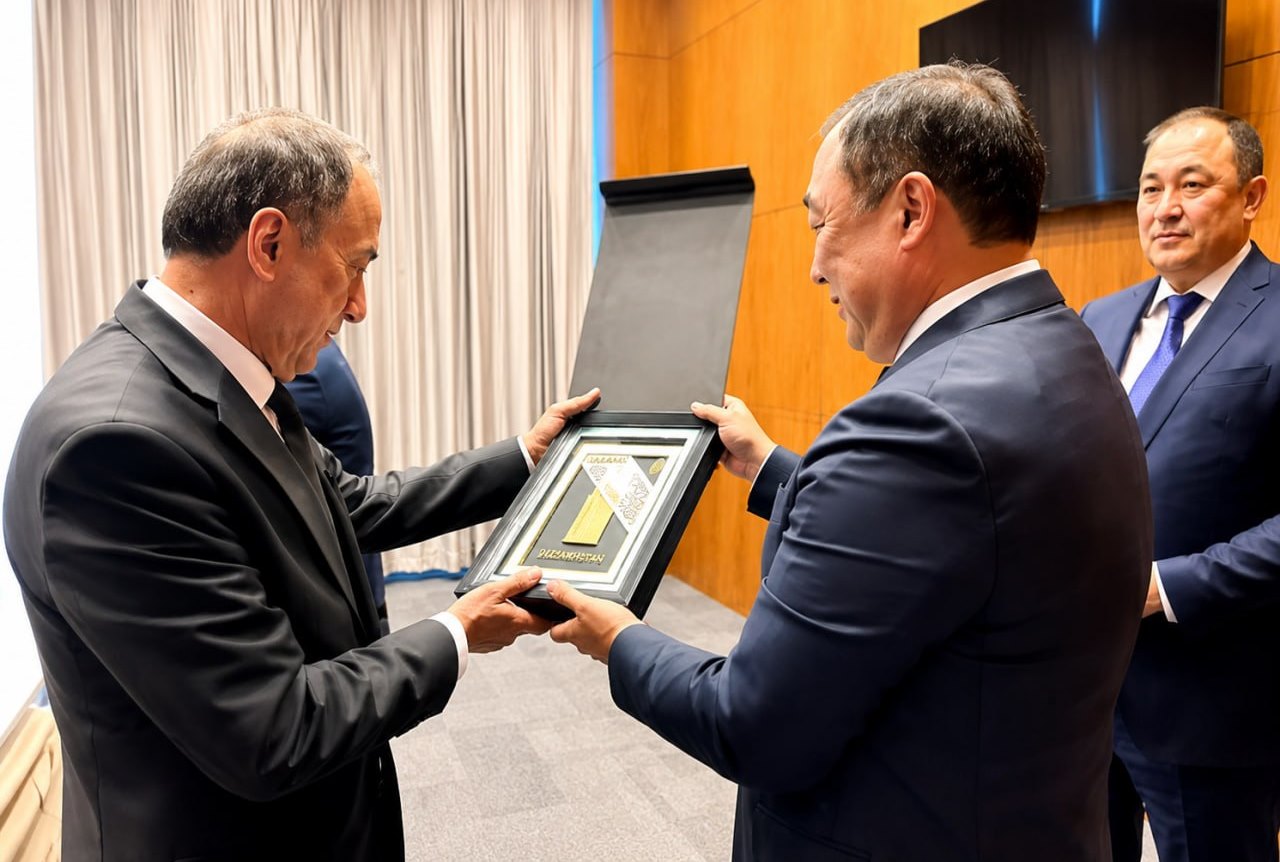
In the first four months of 2026, road freight transport between Tajikistan and Kazakhstan increased by 5.8%, and the number of vehicles rose by 17.9% compared to the same period in 2025. Further development of transport cooperation was discussed by Tajik Minister of Transport Azim Ibrohim and his Kazakh counterpart Nurlan Sauranbayev on May 15 in Kazakhstan’s capital, Astana, on the sidelines of the 18 th meeting of the TRACECA Intergovernmental Commission.
According to the Tajik Ministry of Transport (MoT) press center, the parties discussed further development of cooperation in the field of transport, including international transport corridors, simplification of transit procedures, digitalization of transportation, and increasing the capacity of infrastructure.
Azim Ibrohim noted that Kazakhstan is one of Tajikistan’s key partners in the region.
Over the first four months of this year, road freight transport between the two countries has reportedly shown positive dynamics. An increase in railway transport and transit through the territory of Kazakhstan was also noted. In 2025, the total volume of railway transport exceeded 5.6 million tons, which is more than 621 thousand tons higher than the figures for 2024.
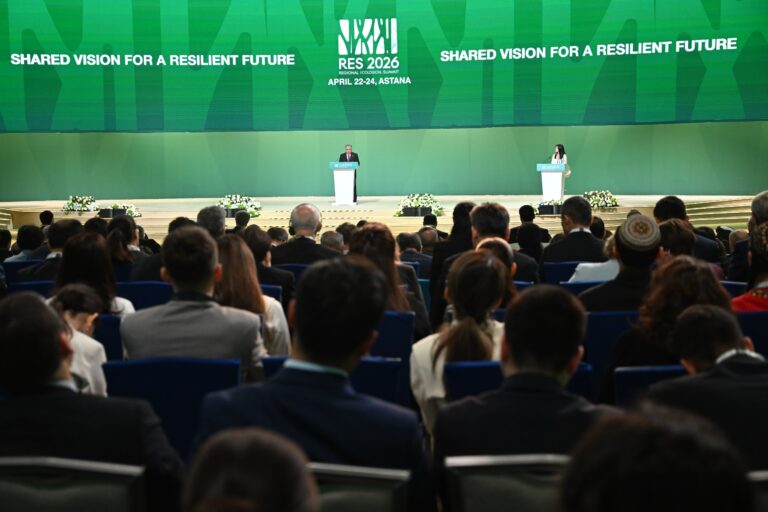
The 18th meeting of the TRACECA Intergovernmental Commission was held in Astana on May 15. Representatives of member countries, the Permanent Secretariat of TRACECA, international organizations, and partners participated in it.
The meeting discussed issues of transportation digitalization, development of international transport routes, new logistics chains, and simplification of transit procedures.
During the meeting, five TRACECA member states — Azerbaijan, Kazakhstan, Kyrgyzstan, Ukraine, and Uzbekistan — signed the Agreement on a Single Transit Permit to simplify international road transport.
The Agreement on a Single Transit Permit is aimed at simplifying international road transport. It provides for the issuance of one electronic permit through a single web portal instead of obtaining separate transit permits in each country. This will speed up border crossings, reduce paperwork procedures, and make transportation more transparent.