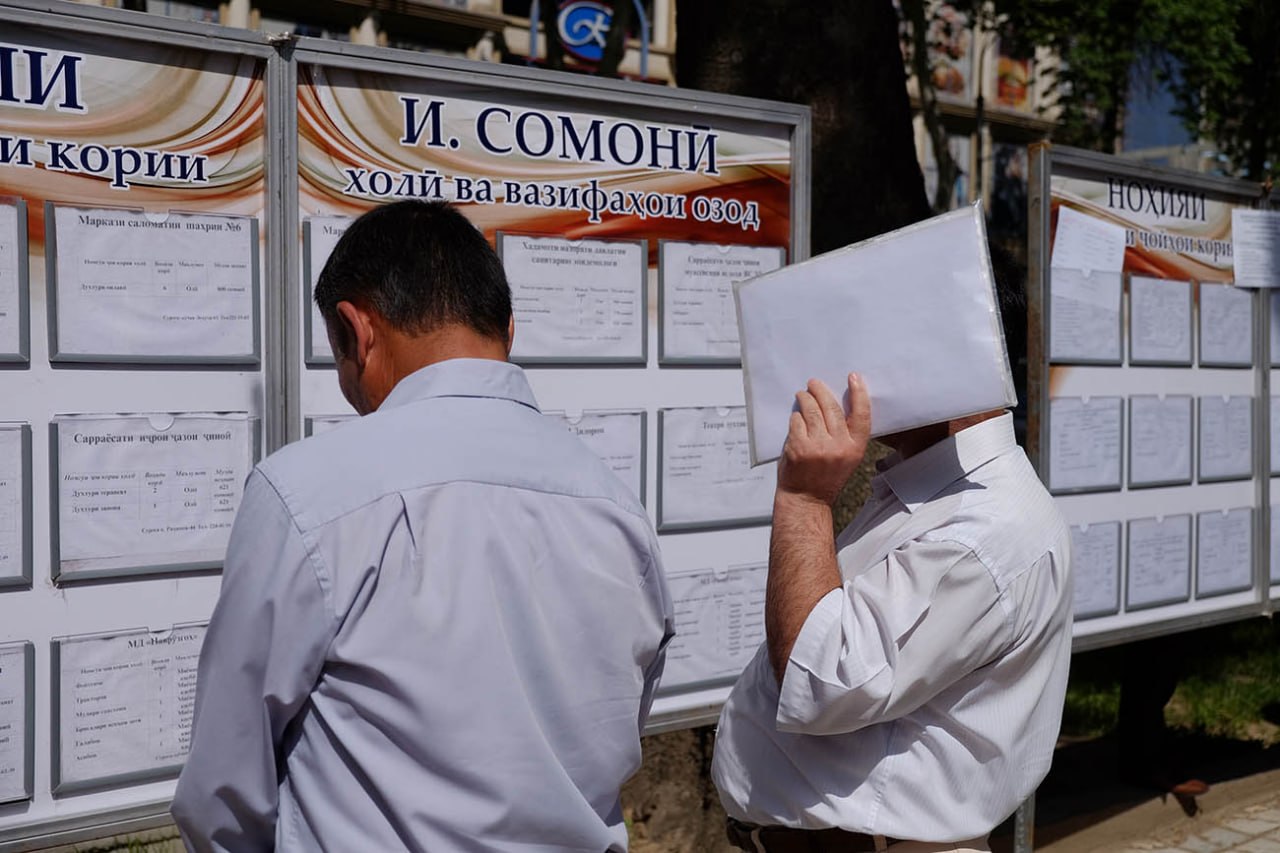
The labor market in Tajikistan has grown numerically over 21 years, but the key issue has shifted: today, it is important not only to reduce unemployment but also to engage millions of able-bodied residents in the labor market, especially women and populations in regions with high levels of unused labor force.
The Agency for Statistics under the President of Tajikistan published a labor force survey for 2025. It discusses the size of the labor force, employment, unemployment, and people who are not participating in the labor market.
It also provides separate data for the regions and shows how the main labor force indicators have changed over the last 21 years.
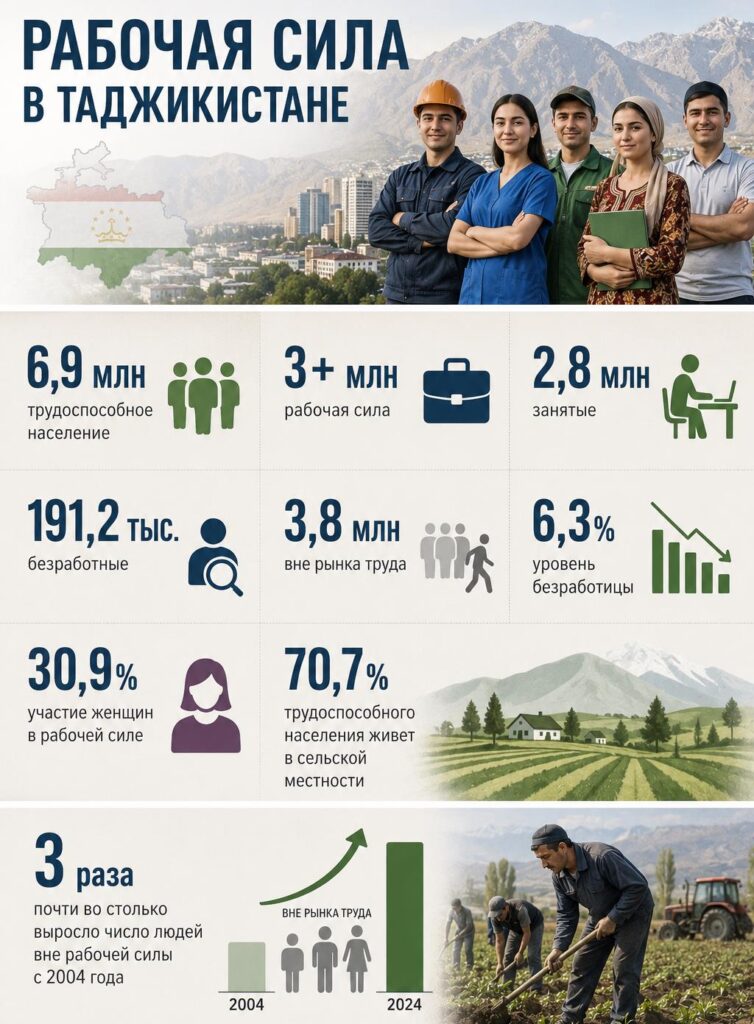
However, a significant portion of the population is not participating in the labor market. There are 3.8 million such people, which is more than the size of the labor force.
Fewer women in the labor market
The survey data shows that women are significantly more likely to remain outside the labor market.
The majority of labor resources are in rural areas
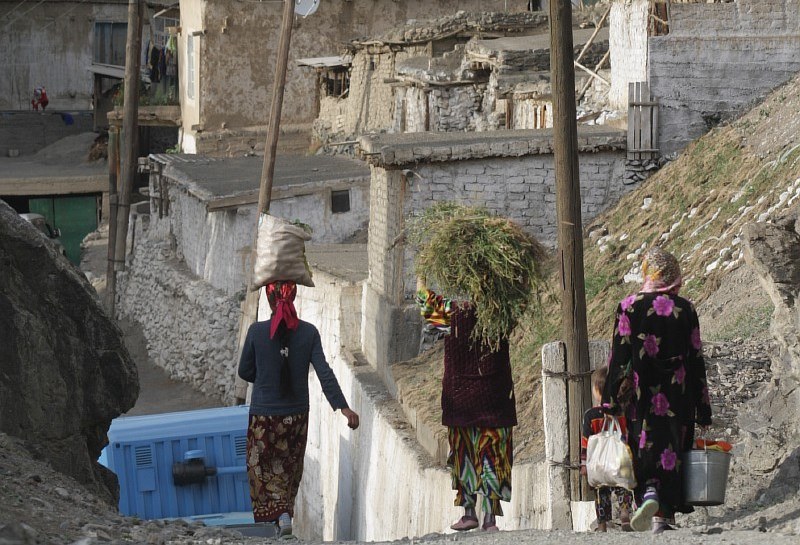
The main part of the working-age population of Tajikistan resides in rural areas — 70.7%, while cities account for 29.3%.
A similar picture is observed in terms of the labor force: 71.3% are in rural areas and 28.7% in urban areas. Among the employed, the share of rural residents is 71.6%.
Meanwhile, among the unemployed, two-thirds also reside in rural areas — 66.7%. Among those not in the labor force, the share of rural residents is 70.2%.
The labor market develops unevenly across regions
The ORS-2025 data show that in GBAO and Sughd region, the population is more actively engaged in the labor market, whereas in Khatlon region and RRP, employment issues and underutilization of labor potential are more pronounced.
The most working-age residents live in Khatlon region — about 2.5 million people.
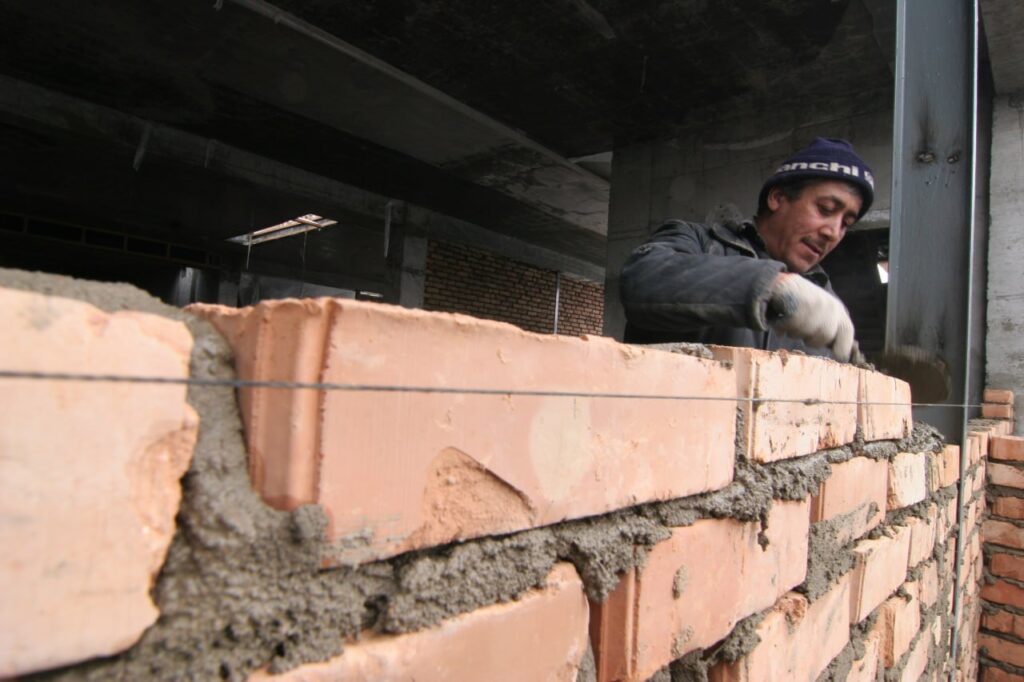
Sughd region leads in terms of the size of the labor force and the employed. About 1.1 million people work or are looking for work there, and the number of employed exceeds 1 million.
The highest labor force participation rate is noted in GBAO — 59% and in Sughd region — 54.8%. The lowest rates are in RRP, Khatlon region, and Dushanbe.
Unemployment is highest in GBAO — 8.6% and in RRP — 7.4%. The lowest rate is recorded in Sughd region — 5.9%.
The highest level of labor force underutilization is noted in RRP — 14.5%.
What has changed in the labor market over 21 years
The survey also presents the dynamics of the main labor force indicators for the period from 2004 to 2025. During this time, Tajikistan saw an increase in the working-age population, the labor force, and the number of employed. The size of the labor force increased from 2.3 million to just over 3 million people. The number of employed grew from 2.1 million to 2.8 million people.
The main change is the increase in the number of people who are not part of the labor force. If in 2004 there were about 1.3 million such people, by 2025 there were already 3.8 million. Over 21 years, their number has almost tripled. This means that more and more able-bodied residents are neither working nor looking for work.
Researchers note that the main problem today is not only unemployment but also the fact that many able-bodied residents are not participating in the labor market. The majority of them do not enter the labor market at all – they are not looking for work.
Reasons include low participation of women in employment, especially due to household responsibilities and family care, as well as a lack of stable jobs in rural areas, where the majority of the working-age population lives.