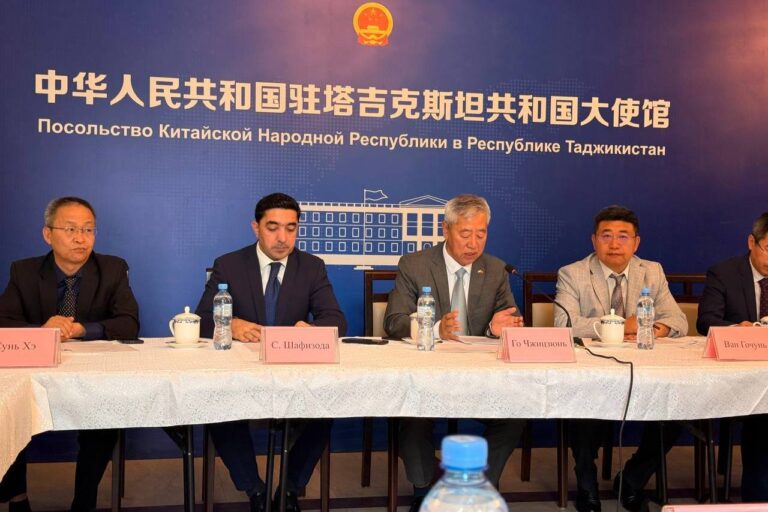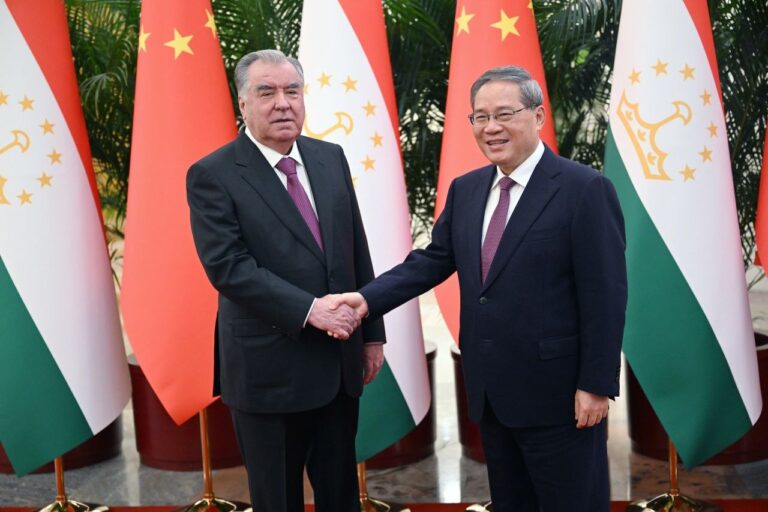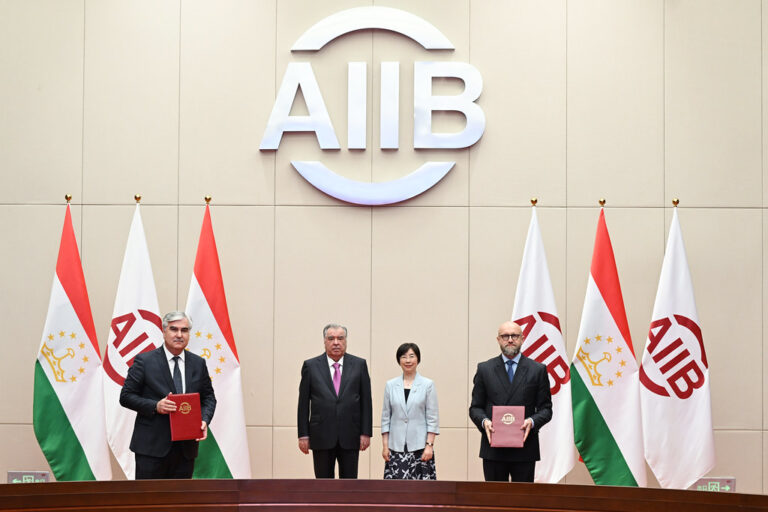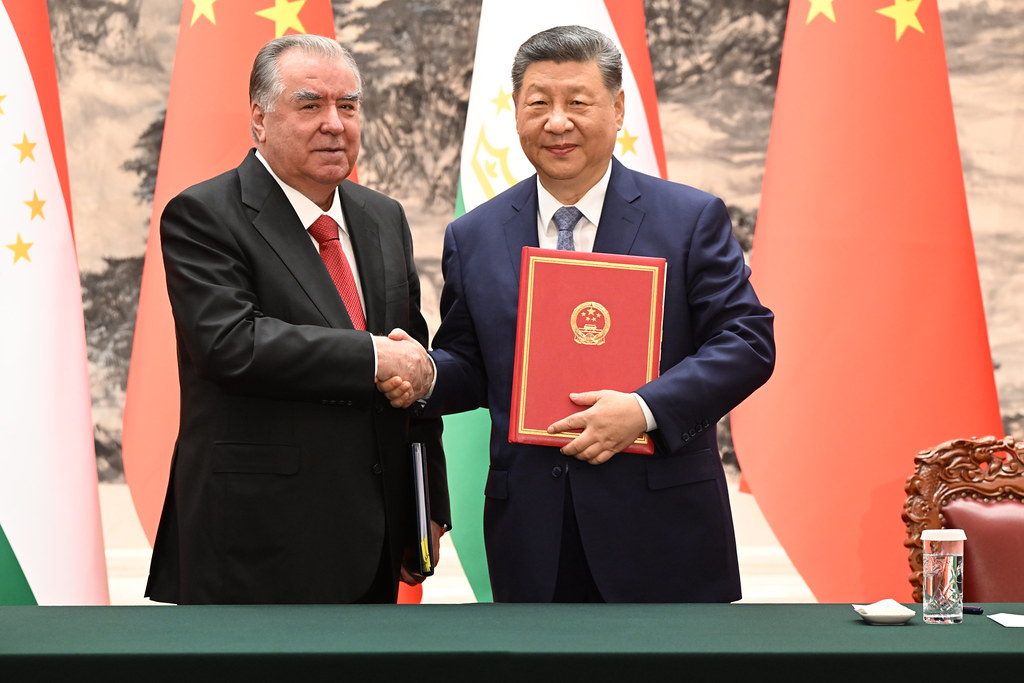
Tajikistan and China have signed a new Treaty on Eternal Good-Neighborliness, Friendship and Cooperation during President Emomali Rahmon’s state visit to China, outlining expanded political, economic, security, and military cooperation between the two countries.
The draft treaty, published on May 8, also defines the positions of both sides on sovereignty, regional security, the “One China” policy, counterterrorism cooperation, and joint development initiatives.
Support for the “One China” policy
Under the agreement, Tajikistan reaffirmed its support for the “One China” policy, recognizing that there is only one China, that Taiwan is an inseparable part of Chinese territory, and that the government of China is the sole legitimate representative of the country.
In return, China expressed support for Tajikistan’s efforts to safeguard sovereignty, maintain national security and stability, and promote economic and social development.
The treaty states that the two countries will continue developing their strategic partnership in accordance with international norms, while maintaining long-term friendly relations and cooperation. Both sides pledged to respect each other’s sovereignty and territorial integrity, refrain from interference in internal affairs, and avoid threats against one another.
The agreement also emphasizes adherence to all previously signed border agreements between the two countries.
Commitments against hostile actions
According to the treaty, Tajikistan and China agreed not to participate in alliances or conclude agreements with third parties that could undermine the independence, security, or territorial integrity of the other side.
The document also states that neither country will support hostile actions directed against the other or allow third countries to use their territories for activities harmful to the partner state’s interests.
In addition, both sides pledged not to allow organizations or groups operating on their territory to threaten the sovereignty, security, or territorial integrity of the other country.
Expanding political dialogue
The treaty provides for deeper political coordination between Dushanbe and Beijing through more frequent meetings between heads of state, foreign ministers, and other senior officials.
The two countries also plan to strengthen interparliamentary cooperation and expand exchanges between legislative bodies.
Economic and trade cooperation
The agreement places particular emphasis on expanding economic and trade cooperation and aligning China’s Belt and Road Initiative with Tajikistan’s national development programs.
China’s Belt and Road Initiative, launched in 2013, aims to revive the ancient Silk Road through large-scale infrastructure, transport, and investment projects linking China with Asia, Europe, and Africa.
Under the treaty, the two countries intend to deepen cooperation in trade, investment, energy, agriculture, industry, science and technology, the digital economy, and green development.
Both sides also pledged to facilitate the safe and uninterrupted implementation of joint projects.
The agreement further highlights plans to strengthen cooperation within international organizations, including the United Nations, the Shanghai Cooperation Organisation, and the “China–Central Asia” format.
The treaty states that both countries oppose unilateral restrictions and economic sanctions and support a fair global trading system and a stronger role for the World Trade Organization.
Cultural and regional ties
Tajikistan and China also agreed to expand cooperation in culture, education, healthcare, tourism, sports, media, publishing, and scientific research.
The treaty additionally calls for stronger direct ties between regions and cities of the two countries, as well as exchanges of governance experience.
Security and military cooperation
The agreement provides for enhanced cooperation in security and law enforcement, including joint efforts against terrorism, extremism, and separatism.
The two countries also pledged to intensify cooperation against organized crime, illegal migration, drug and arms trafficking, cybercrime, and other forms of transnational crime.
Military cooperation is another major component of the treaty. Tajikistan and China plan to expand military and technical cooperation, increase military exchanges and contacts, and support the training of military personnel.
At the same time, the treaty stresses that such cooperation is not directed against third countries and is intended to protect the interests of both states and maintain regional security.
The document also notes that the treaty does not contradict previous international agreements signed by Tajikistan and China and does not alter their existing obligations.
The agreement is concluded for an indefinite period and will enter into force once both countries officially notify each other through diplomatic channels that all domestic ratification procedures have been completed.
China remains one of Tajikistan’s key strategic partners. During Rahmon’s latest visit to China, held from May 11 to 14, the two countries signed more than 80 new cooperation agreements.