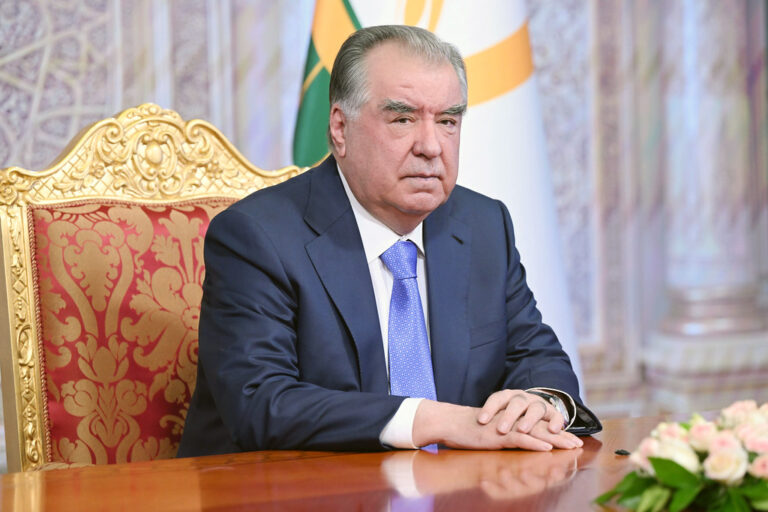
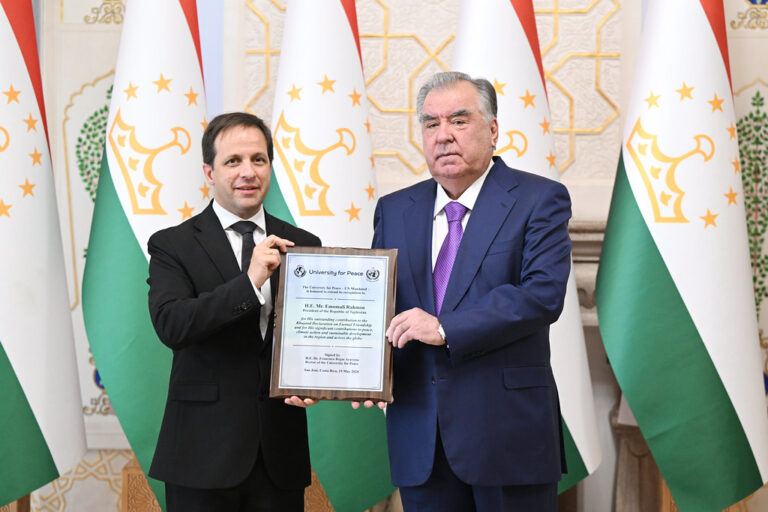
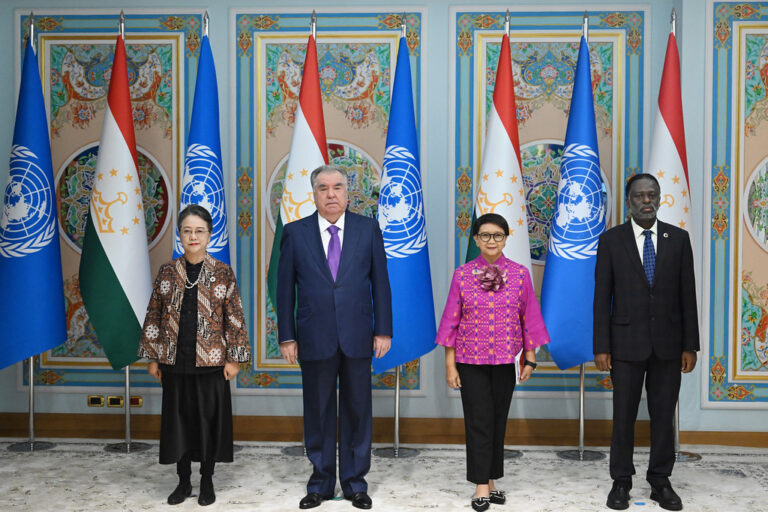
DUSHANBE, February 3, 2009, Asia-Plus — President Emomali Rahmon departs for Moscow today afternoon to attend extraordinary sessions of the Collective Security Council of the Collective Security Treaty Organization (CSTO) and the Interstate Council of the Eurasian Economic Community (EAEC), according to the MFA information department head Davlat Nazriyev.
Foreign Minister Hamrokhon Zarifi, Security Council Secretary Amirqul Azimov, Deputy Defense Minster Ramil Nadyrov and a number of other high-ranking Tajik stay officials are accompanying President Rahmon on this trip.
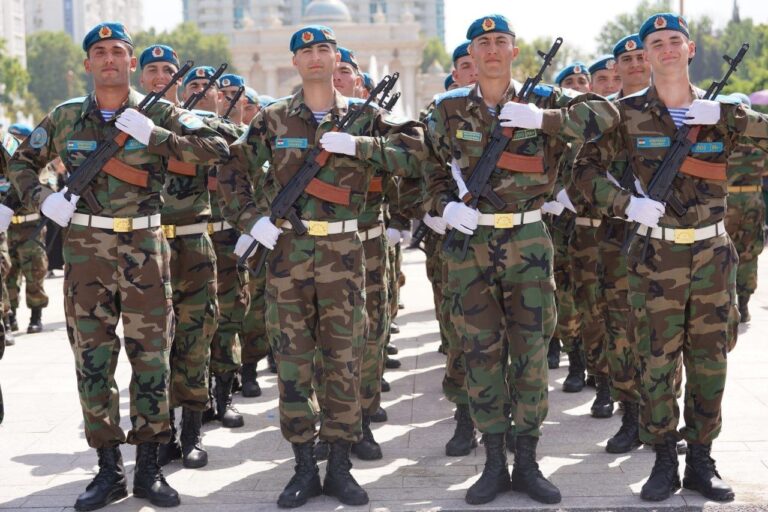
Both sessions will be held on February 4. “The EAEC Interstate Council extraordinary session will consider issues related to establishment of the Anti-crisis Fund and the Center for High Technologies within the Community and the CSTO summit will consider issues related to strengthening of the Organization potentials to provide collective security of member nations,” Nazriyev noted.
A joint meeting of the CSTO councils of foreign ministers, defense ministers and the collective security secretaries that will precede the CSTO summit is expected to discuss the draft budget of the CSTO for 2009 and an agreement on creation of a collective mechanism for creating a mechanism of formation of collective operational forces for addressing challenges.
This agreement was reached during a meeting of the presidents of Armenia, Kyrgyzstan, Kazakhstan, Russia and Tajikistan in Kazakhstan on December 19-20, 2008. Speaking at the summit, Kazakh President Nursultan Nazarbayev called for creating a mechanism of sanctions within the framework of the CSTO for breaching non-aggression pacts. “We all talked within the CIS about non-aggression, but the conflict unleashed by Georgia shows that they (sanctions) do not work, because we have no sanctions; we have no collective response to such challenges. We must do it within the CSTO framework,” Nazarbayev said, according to Itar-Tass. “Kazakhstan is committed to the essence of this organization (CSTO) and we have to review and adjust the common position. If it”s an organization of allies, we must say so. We have to define these terms,” the Kazakh leader underlined. “Of course, the CSTO is not Warsaw Pact, which was a defense organization, yet, the CSTO must have some armed forces, a formation for responding to challenges,” Kazakh leader added.
As it had been reported earlier, a number of foreign media reported on January 31 and February 1 that Tajik leader had allegedly canceled all his foreign visits scheduled for the first half of February in connection with the current energy crisis in Tajikistan.