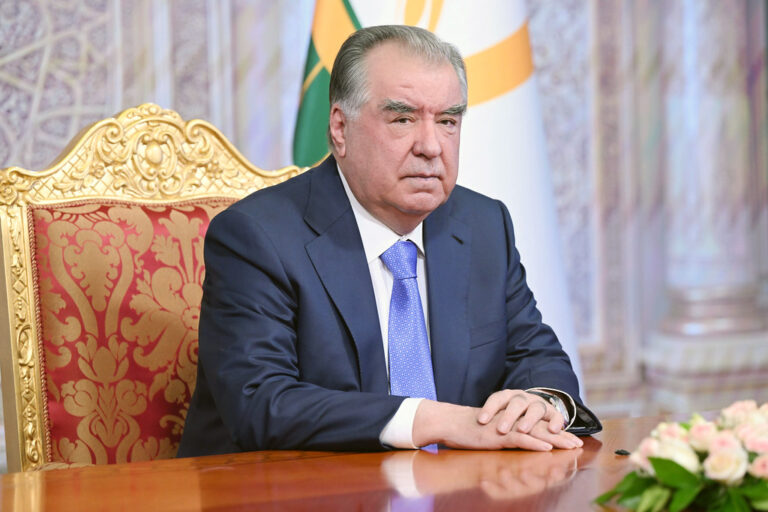
DUSHANBE, April 15, 2009, Asia-Plus — President Emomali Rahmon is making traditional annual address to the parliament today.
Measures to mitigate effects of the global financial crisis have been a major topic of the president’s address.
Speaking at the meeting, the president said that he had charged the government to reduce the VAT rate from 20 to 18 percent and the income tax rate from 25 to 15 percent as one of anticrisis measures as well as work out an appropriate legal foundation to remove other administrative obstacles.
The National Bank of Tajikistan (NBT) is to reduce annual interest rate on the government credit given to farmers through banks from 12 to 10 percent.
The government and the parliament are to work out legal documents for Tajikistan’s joining international standards of protection of entrepreneurs’ rights, the president said.
“MPs should make a number of appropriate amendments to the country’s laws on state registration of legal and physical entities, joint-stock companies, and bankruptcy,” Rahmon said.
The president also urged to reduce expenditures on business trips of officials both inside the country and abroad by 80 percent and reduce expenditures on holding of various events in the provinces, etc.
According to him, they have reached an agreement with international financial organizations on providing some 288 million somoni (equivalent to 75.2 million US dollars) in no-strings aid to Tajikistan for implementation of the government’s anticrisis program and supporting the state budget. Negotiations in this direction should be conducted permanently and intensively, the president noted.
The head of state said that effects of the global financial crisis had been felt in the country since the last quarter of 2008 and they have become more tangible in the first quarter of this year. In this connection, Rahmon charged the government to work out an additional anticrisis program as soon as possible and expand cooperation with international financial institutions on attracting investments for enhancement of Tajikistan’s economy.
The global international crisis has resulted in the international prices of cotton fiber and aluminum that are the main items of Tajik exports falling and labor migrant’s remittances to Tajik banks decreasing, the president said. He noted that the crisis had also led to decrease in the currency receipts.
The president noted that the revenue part of the national budget had reached only 86.2 percent of the target for January-March 2009 and the budget had received some 148 million somoni less. However, gross domestic product rose 3.5 percent in three months to March 31, 2009 but it is expected to be decreasing through the year, he said.