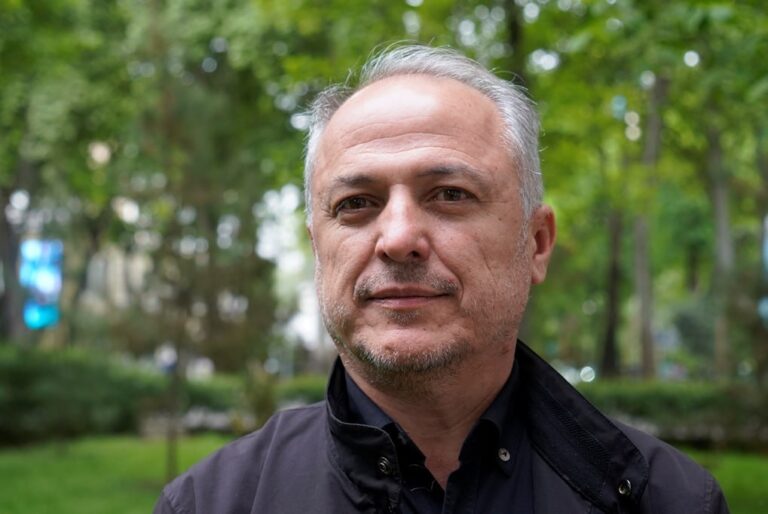
DUSHANBE, May 12, 2010, Asia-Plus — The 37th Council of Foreign Ministers (CFM) of the Organization of the Islamic Conference (OIC) Member States that will take place in Dushanbe from May 18-20 is one of the most important political events in Tajikistan this year, Tajik political scientist Hakim Abdullo Rahnamo said.
According to him, the meeting will allow to consider some problems facing the Organization itself.
Rahnamo considers that in the future, membership of the OIC will become for the Muslim countries more important than even membership of the United Nations.
However, OIC is one of the most passive international organizations though it has powerful economic and financial potentials, he said. The OIC member nations account for some 75 percent of world’s oil reserves. “Besides, the Organization includes countries with thriving markets and huge financial opportunities,” said Rahnamo, “Available assets of the OIC member states currently being in bank circulation are estimated at more than five trillion U.S. dollars.”
According to him, “one of the main problems of OIC is to intensify and actively use its powerful potential and huge opportunities in the interest of its members.” “However, the Organization has still failed to reach this goal.”
One of the main obstacles in the way of efficient use of the OIC potential is lack of common position of its member nations on many political, economic, cultural and international problems. “OIC has turned into the organization of disagreements and divergences,” said the political scientist, “The majority of member nations of the Organization are under influences of different geopolitical axes. Saudi Arabia and Egypt are under influence of international position of the United States, Iran holds anti-American position, while Central Asia’s countries remain under influence of the Russian Federation on a number of international issues.“
He added that the most acute problem was difference of positions of the leading member nations of OIC such as Iran, Egypt and Saudi Arabia. “Egypt and Iran have not had diplomatic relations for more than two decades and relations between Iran and Saudi Arabia could be called “cold war,” Rahnamo said.
The Organization of the Islamic Conference (OIC) is an international organization with a permanent delegation to the United Nations. It groups 57 member states, from the Middle East, Africa, Central Asia, Caucasus, Balkans, Southeast Asia, South Asia and South America (Guyana and Suriname). These States decided to pool their resources together, combine their efforts and speak with one voice to safeguard the interest and ensure the progress and well-being of their peoples and those of other Muslims in the world.