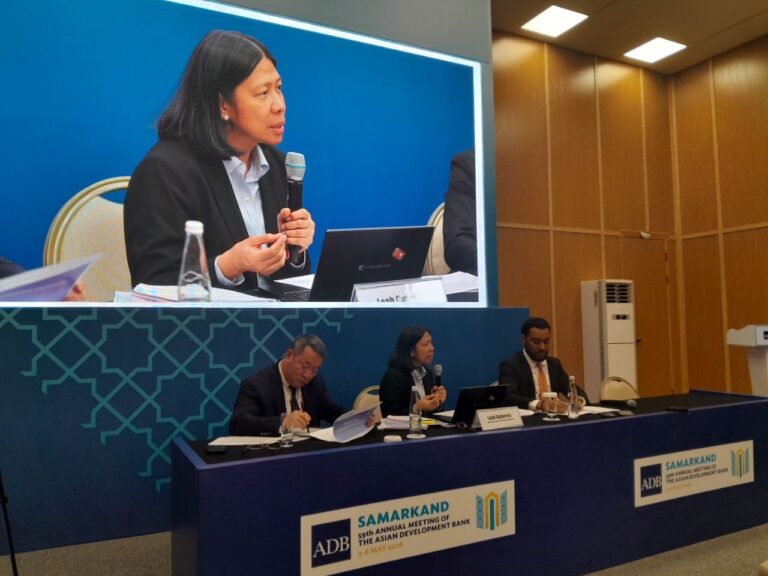
DUSHANBE, November 10, 2010, Asia-Plus — Visiting Vice-President of Japan International Cooperation Agency (JICA), Mr. Kiyoshi Kodera, yesterday met here with Tajik Minister of Finance Safarali Najmiddinov.
According to the Ministry of Finance (MoF) Secretariat, the sides discussed issues related to further expansion of cooperation between the Government of Tajikistan and JICA.
Tajik minister, in particular, noted that cooperation with JICA have promoted considerable progress in economic development of Tajikistan and the JICA-supported projects have helped enhance the country’s agrarian, transport and industrial sectors and develop social services.
“Assistance provided by JICA during the ongoing global financial crisis is very timely for Tajikistan,” Najmiddinov stressed.
Mr. Kiyoshi Kodera, for his part, said that JICA would continue providing assistance to Tajikistan in the future as well.
JICA has funded a number of educational and health projects in Tajikistan. Besides, hundreds of Tajik specialists have taken training courses in Japan with assistance from JICA.
The Japan International Cooperation Agency is an independent governmental agency that coordinates official development assistance (ODA) for the government of Japan. It is chartered with assisting economic and social growth in developing countries, and the promotion of international cooperation. A major component of the comprehensive overhaul of Japan”s ODA that the Japanese government (Diet) decided on in November, 2006 is the merger in 2008 between JICA and that part of the Japan Bank for International Cooperation (JBIC), which currently extends concessional loans to developing countries. JICA is one of the largest bilateral development organizations in the world with a network of 97 overseas offices and projects in more than 150 countries. It is also responsible for administering part of Japan”s grant aid which is currently under the jurisdiction of the Ministry of Foreign Affairs and so all three major ODA components—technical cooperation, grant aid, and concessional loans—are now managed “under one roof.” JICA will also strengthen research and training capacity in the years ahead, acting as a kind of ODA think tank, contributing to global development strategies, strengthening collaboration with international institutions, and being better able to communicate Japan”s position on major development and aid issues.