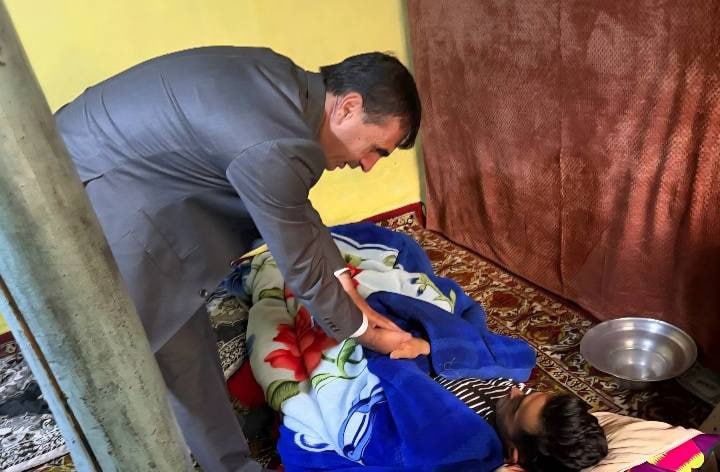
DUSHANBE, April 14, 2011, Asia-Plus — Organ transplantation is going forward in Tajikistan and Tajik specialists intend to use deceased donor organs for transplant operations, Minister of Health Nusratullo Salimov announced at a news conference in Dushanbe on April 13.
“Specialists from the Republican Transplant Center have begun to perform kidney transplant operations more frequently and most living donors have been immediate relatives, but patient and his relative are not always compatible with each other,” the minister noted.
According to him, the deceased donor organ transplantation is now practiced in many countries, including Iran. “If this issue is solved, organs will be extracted after statement of death that will be fixed by a special commission in case if the deceased’s relatives give consent for organ donation,” Salimov noted.
The Republican Transplant Center director Ashour Dostiyev noted that they have performed eight kidney transplant operations to date. The firs kidney transplant operation was performed in Tajikistan on November 5, 2009. “Except two patients, on whom the operations were performed in 2009, other patients are alive and well. Two patients, who have undergone kidney transplant operations recently, are still under supervision of physicians,” Dostiyev said, noting that 10 other patients are waiting for kidney transplant procedure.
According to him, Tajik specialists plan to perform a liver transplant operation this year for the first time.
Organs that can be transplanted are the heart, kidneys, liver, lungs, pancreas, intestine, and thymus. Tissues include bones, tendons (both referred to as musculoskeletal grafts), cornea, skin, heart valves, and veins. Worldwide, the kidneys are the most commonly transplanted organs, followed closely by the liver and then the heart. The cornea and musculoskeletal grafts are the most commonly transplanted tissues; these outnumber organ transplants by more then tenfold.
Organ donors may be living, or brain dead (medical condition defined as a complete and irreversible cessation of brain activity). Tissue may be recovered from donors who are cardiac dead – up to 24 hours past the cessation of heartbeat. Unlike organs, most tissues (with the exception of corneas) can be preserved and stored for up to five years, meaning they can be “banked”. Transplantation raises a number of bioethical issues, including the definition of death, when and how consent should be given for an organ to be transplanted and payment for organs for transplantation. Other ethical issues include transplantation tourism and more broadly the socio-economic context in which organ harvesting or transplantation may occur. A particular problem is organ trafficking.