DUSHANBE, May 25, 2011, Asia-Plus — Tajikistan, Central Asia’s poorest state and a key logistical link for international forces in Afghanistan, faces a growing security threat from both local and external rebels, International Crisis Group (ICG) reports.
The ICG latest report entitled “Tajikistan: The Changing Insurgent Threats” examines the deteriorating situation and warns that the country is profoundly vulnerable socially, economically, politically and militarily. According to the report, the fact that Tajikistan shares a long, poorly protected border with Afghanistan amplifies its problems and risks contaminating an already complicated region.
“Tajikistan is increasingly incapable of providing basic services to its population”, says Paul Quinn-Judge, Crisis Group Central Asia Project Director. “Corruption remains at a breathtaking level; and recent unsuccessful military operations in the east of the country against warlords and a small group of young insurgents underline its inability to handle even a modest security threat. President Emomali Rahmon did a deal to bring a temporary peace to the area earlier this year, but he may soon face a tougher challenge from the resurgent Islamic Movement of Uzbekistan (IMU), a group with a vision of an Islamist caliphate that is fighting in Afghanistan alongside the Taliban. Tajikistan must hope it remains preoccupied there”.
With the war in Afghanistan lapping up against the 1,400km border with Tajikistan, an escalation of violence cannot be ruled out. Steady small-scale infiltration of fighters from Afghanistan has been going on for several years. Most seem to be moving on to other parts of the region, but a weakened Tajikistan will increasingly be an attractive base area for Central Asian guerrillas trained in Pakistan and Afghanistan.
One of the Tajik leadership’s most cherished beliefs has already been shattered: that Tajiks would never revolt against a government, no matter how bad, because of the scars left by the 1992-1997 civil war. The guerrillas who are crossing and the local people who are turning to violence are too young to have clear memories of that conflict. Meanwhile, facing a swift growth in observant Islam, the leadership is responding by marginalizing the Islamic Revival Party and limiting religious activities as well as democratic freedoms – measures likely to exacerbate the situation.
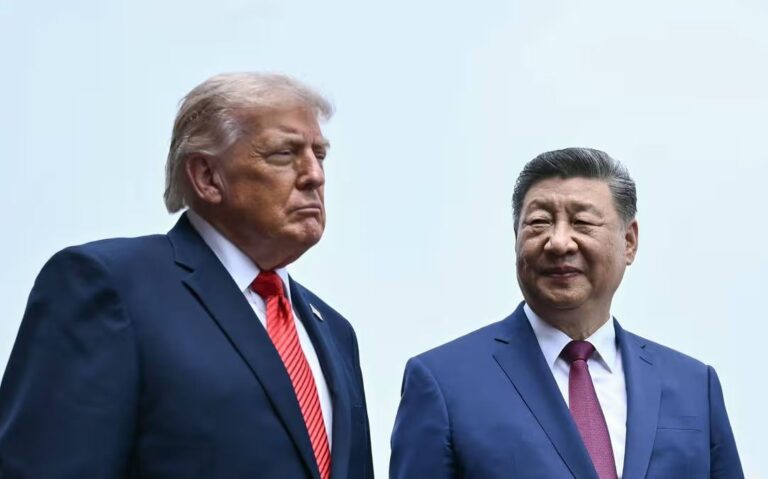
Insecurity is only one of many problems. The economy is moribund, the regime a byword for corruption. The U.S. China and Russia, each with serious interests in the country, need to consult, share intelligence on Islamist insurgents and examine joint measures to respond to the growing insecurity. Donors should make aid conditionality the norm, penalizing corruption or misuse. The U.S. and other members of the international coalition in Afghanistan should raise with the highest levels of the Tajik government the widespread belief that the narcotics trade is protected by very senior officials. The government should hold public dialogue with all Islamist groups that explicitly repudiate violence; repeal laws banning such organisations; and encourage their free participation in all forms of political and social life.
“President Rahmon denies that the North African scenario of popular unrest and revolt could happen in Tajikistan”, says Robert Templer, Crisis Group’s Asia Program Director. “But Tajikistan is so vulnerable that a small, localized problem could quickly spiral into a threat to the regime’s existence. The speed with which the popular mood can move from passivity to anger has been demonstrated not just in the Middle East, but much closer to home, in Kyrgyzstan last year. Tajikistan is not immune”.