
DUSHANBE, June 24, 2011, Asia-Plus — While global markets for cocaine, heroin and cannabis declined or remained stable, the production and abuse of prescription opioid drugs and new synthetic drugs rose, according to the World Drug Report 2011 that was released on June 23.
Illicit cultivation of opium poppy and coca bush remained limited to a few countries. Although there was a sharp decline in opium production and a modest reduction in coca cultivation, overall, the manufacture of heroin and cocaine was still significant.
The flagship report was launched in New York by Secretary-General Ban Ki-moon; Yury Fedotov, UNODC Executive Director; Joseph Deiss, President of the General Assembly; and Viktor Ivanov, Director of Russia”s Federal Service for Drug Control.
Globally, some 210 million people, or 4.8 per cent of the population aged 15-64, took illicit substances at least once in the previous year. Overall drug use, including problem drug use, (0.6 per cent of the population aged 15-64) remained stable. However, demand soared for substances not under international control, such as piperazine and cathinone. The effects of cannabis are also being mimicked by synthetic cannabinoids, or “spice”.
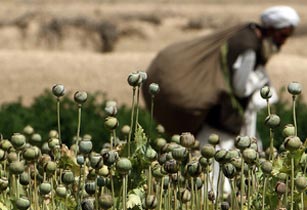
Global opium poppy cultivation reached some 195,700 hectares (ha) in 2010, a small increase over 2009. Opium production declined, however, by 38 per cent to 4,860 tons due to a blight that wiped out much of the opium harvest in Afghanistan. While cultivation in Afghanistan remained stable, the global trend was mainly driven by increases in Myanmar, where cultivation rose by some 20 percent from 2009. Consequently, opium production in Myanmar increased from 5 percent of global production in 2007 to 12 percent in 2010. Global opium production declined by 45 per cent between 2007 and 2010, particularly as a result of poor yields in 2010, but this trend is unlikely to continue.
The global area under coca cultivation shrank to 149,100 ha in 2010, an 18 percent drop from 2007, the report said.
Cannabis remains by far the most widely produced and consumed illicit substance globally, although data on cannabis are limited. In 2009, between 2.8 per cent and 4.5 per cent of the world population aged 15-64 – between 125 and 203 million people – had used cannabis at least once in the past year.
While cannabis herb (marijuana) production is widespread, notably in the Americas and Africa, cannabis resin production (hashish) continues to be concentrated in just two countries: Morocco, supplying the West European and North African markets, and Afghanistan supplying the markets in South-West Asia. Cannabis resin was a far more profitable crop than opium poppy in 2010 in Afghanistan.
Soaring production, trafficking and consumption of amphetamine-type stimulants accompanied by a resurgence in opium cultivation and heroin trafficking are a big concern in South-East Asia. “The gains we have witnessed in the traditional drugs markets are being offset by a fashion for synthetic ”designer drugs” mimicking illegal substances,” said the Executive Director.
In his end remarks at the launch Mr. Fedotov noted that “drugs cause some 200,000 deaths a year. Since people with serious drug problems provide the bulk of drug demand, treating this problem is one of the best ways of shrinking the market.” He also spoke on the half-decade of the 1961 drug convention: “This year is the 50th anniversary of the keystone of the international drug control system: the 1961 Single Convention on Narcotic Drugs. Its provisions remain sound and highly relevant, as does its central focus on the protection of health.”
