DUSHANBE, August 28, 2012, Asia-Plus — Lieutenant-General Ramil Nadirov, who is Principal Deputy Minister of Defense of Tajikistan also Chief of the General Staff of Tajikistan’s Armed Forces, is attending a meeting of the heads of chief staff of the armed forces of the Collective Security Treaty Organization (CSTO) member nations that has opened in Moscow today, Faridoun Mahmadaliyev, a spokesman for the Ministry of Defense of Tajikistan, told Asia-Plus Tuesday afternoon.
The meeting, presided over by the head of the Chiefs of Staff Committee of Kazakhstan’s Ministry of Defense Saken Zhasuzakov, who is also the chief of the CSTO Joint Staff, is reportedly discussing the guidelines for developing the military component of the CSTO, ways of improving the structure of the organization’s collective security system as well as the results of inspection of formations and military units of the CSTO members nations that are meant to be part of the Collective Rapid Reaction Force or the Peacekeeping force.
The regional security organization was initially formed in 1992 for a five-year period by the members of the CIS Collective Security Treaty (CST) — Armenia, Kazakhstan, Kyrgyzstan, Russia, Tajikistan, and Uzbekistan, which were joined by Azerbaijan, Georgia, and Belarus the following year. A 1994 treaty “reaffirmed the desire of all participating states to abstain from the use or threat of force,” and prevented signatories from joining any “other military alliances or other groups of states” directed against members states. The CST was then extended for another five-year term in April 1999, and was signed by the presidents of Armenia, Belarus, Kazakhstan, Kyrgyzstan, Russia, and Tajikistan. In October 2002, the group was renamed as the CSTO.
Uzbekistan became a full participant in the CSTO on June 23, 2006; and its membership was formally ratified by the Uzbek parliament on March 28, 2008. Uzbekistan, however, suspended its membership in the organization on June 28, 2012.
The CSTO is currently an observer organization at the United Nations General Assembly.
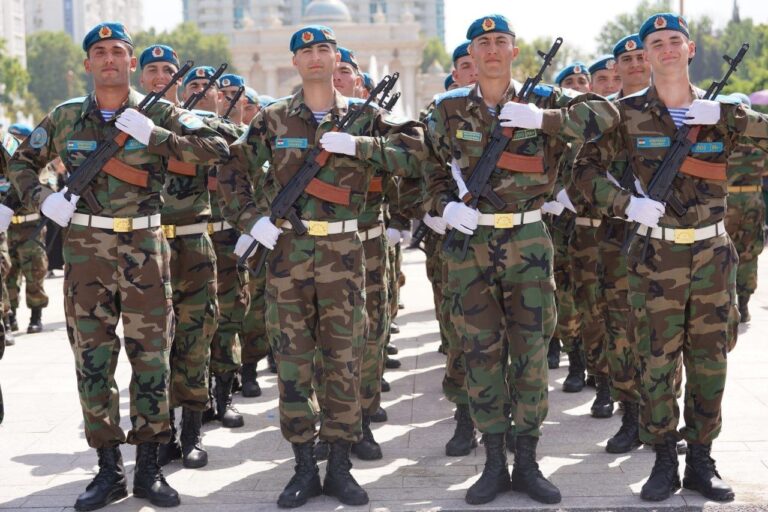
An agreement to create the Collective Rapid Reaction Force was reached by five of the seven members on February 4, 2009, with plans finalized on June 14, 2009. The agreement called on each of the CSTO member nations to provide one battalion for the formation of the force. The force is intended to be used to respond to the broadest range of threats and challenges.