DUSHANBE, November 7, 2012, Asia-Plus — Former World Bank vice-president believes that analysts often overlook ‘remarkable’ growth rate that Tajikistan and other Central Asian countries have shown in recent years.
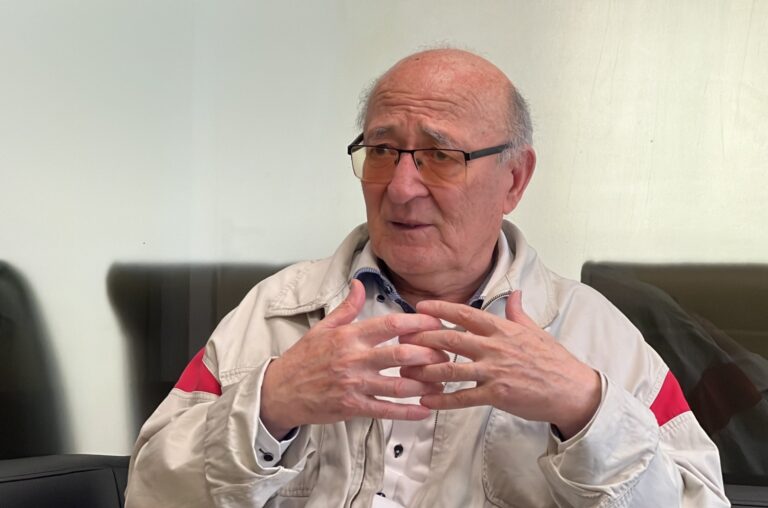
Silk Road Newsline quoted Johannes Linn, a senior fellow at the Brookings Institution in Washington and a former World Bank vice president for Europe and Central Asia, as saying that analysts who write about Tajikistan and other Central Asian countries tend to overlook a ‘remarkable’ growth rate these countries have consistently shown over the last several years.
“I’ve been struck by how every single document written by political economists casts the future and the presence of Central Asia in almost universally negative terms. You then read economists — there are a few of them writing about Central Asia and a recent, last 15 to 10 years trends since the recovery started in the late 90s, read IMF, read World Bank, read ADB – anything that is written from an economic perspective and you actually find a pretty positive story. You just look at the growth rates,” Lynn said at the launch of the new book “Tajikistan’s Difficult Development Path” in Washington on November 5.
Written by Martha Brill Olcott, a senior associate with the Russia and Eurasia Program at the Carnegie Endowment for International Peace in Washington, the book traces political, economic, and social change in Tajikistan following the country’s independence.
“The fact that Central Asia as a region and Tajikistan as a country has consistently now grown for 12, 13 almost 15 years at higher than 6 or 7 percent a year and that the IMF projects for the next 5 years another 6 percent per annum growth rate is remarkable,” Lynn continued.
Asked to comment on the U.S.-Tajikistan relations, Lynn said, the U.S. “has taken a cautious middle course to engage but not too closely.”
“My sense is that it has been too little engagement and I would argue, for example, if the U.S. had invested more in a relationship with President Rahmon over the last 5 to 10 years it might actually be in a better position to have influence over his choices,” he said.