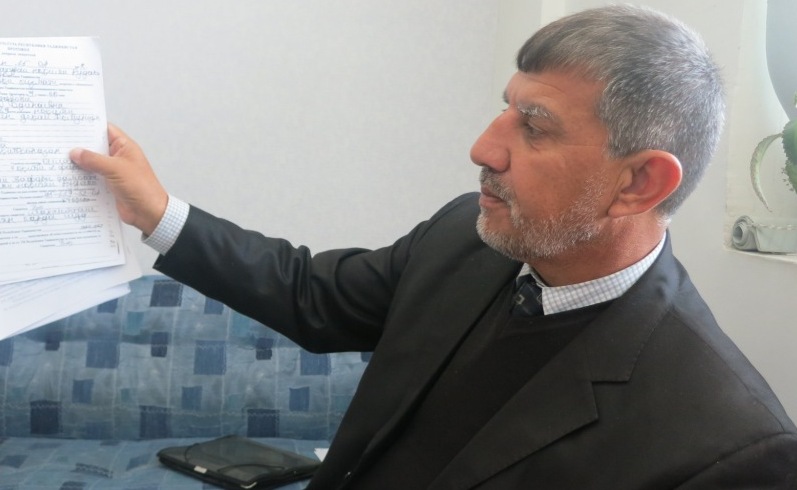
DUSHANBE, November 19, 2012, Asia-Plus – Mahmurod Rizoyev, farther of one of 50 prisoners, who were transferred from Dushanbe and Vahdat penal colonies to a penal colony in the northern city of Khujand, says his son’s health conditions have deteriorated but the Khujand penal colony administration have taken no measures to help him.
“Recently, I talked to my son, Sunatullo Rizoyev, by phone and he said that internal bleeding has occurred due to beatings,” said Mahmurod Rizoyev. “However, the penal colony administration has not responded to his health conditions.”
Mahmurod Rizoyev has provided audio recording of his phone conversation with his son and his son says, “If I die, do not believe that it was suicide or accident.”
Mahmurod Rizoyev noted once again that his son had underwent under pressure from wardens in Dushanbe’s penal colony # 1 and then had been brutally beaten in Khujand’s penal colony # 23 “because he told investigators that inmate Hamza Ikromzoda was beaten to death and he saw that.”
We will recall that Hamza Ikromzoda, 27, died in Dushanbe’s penal colony # 1 on September 20. Hamza’s relatives claim that he was tortured. They say his body carried traces of torture, including burns caused by a heated iron.
Tajik authorities deny these allegations. They maintain that Ikromzoda committed suicide by hanging and that the marks on his body were caused by desperate attempts to revive him after he had been found.
Inmates of Dushanbe’s penal colony # 1 have complained about restriction of their rights and toughening of prison regime after the death of Hamza Ikromzoda.
Ikromzoda”s former cellmate Saidali Qazoqov told a press conference in Dushanbe in early October that abuse by prison authorities was a widespread practice. He said that the only way inmates could avoid mistreatment was to get their relatives to pay bribes of $200- $500 to prison officials. Qazoqov also showed reporters bruises on his body, which he said he received as a result of torture. He also intimated that those who abused prisoners to extort money felt they could do so with impunity because they were related to people in high places.
Relatives of some prisoners who have been transferred from penal colonies in Dushanbe and Vahdat to a penal colony in Khujand say about severe beatings in the Khujand penal colony.
On November 7, they lodged an appropriate complaint to the Prosecutor-General’s Office and came to the Bureau on Human Rights and Rule of Law (BHR) in Dushanbe.
They reportedly told members of the Coalition of NGOs against Torture that 50 inmates of penal colonies in Dushanbe and Vahdat had been transferred to penal colony # 23 in Khujand.
Following their application, the Coalition against Torture has issued a statement demanding investigations into the alleged mass beatings of prison inmates.
The rights group says that at least four of the beaten prisoners were witnesses in the September death of an inmate that has received heavy media coverage. The statement lists six other suspicious deaths in custody.
Tajik law enforcement authorities have started visiting all prisons in the country to talk to inmates and deal with reported cases of rights violations.