DUSHANBE, December 7, 2012, Asia-Plus — Twenty years after their independence from the Soviet Union, the Central Asian states of Kazakhstan, Kyrgyzstan, Tajikistan, Turkmenistan and Uzbekistan still haven’t fully realized their potential for regional economic integration, Juha Kähkönen, deputy director of the Middle East and Central Asia Department at the International Monetary Fund (IMF), was quoted as saying by Silk Road Newsline.
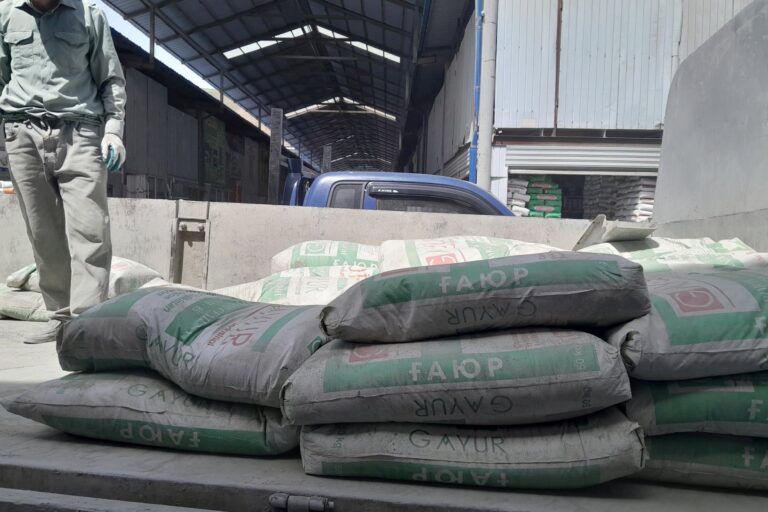
“If one looks at trade among these countries, it is minuscule and has been for a long time. Actually, the region is among the least integrated in the world and it’s clear that large outside countries have a big influence,” Kähkönen told a panel on the economies of Central Asian Countries and Afghanistan at the Central Asia-Caucasus Institute (CACI) in Washington this week.
According to Kähkönen, the future of the regional economic integration in Central Asia is an issue international experts “are grappling with”.
“It was clear that in Central and Eastern Europe the EU was the anchor and they had clear aspirations with that anchor in mind. But what is the anchor for countries in the CCA region? It’s not clear that there is anything similar,” he said. “There are many big neighbors that are interested in the region for various reasons, I mean, all the countries in the region have some kind of love-hate relationship with Russia, China is playing a big role and the countries themselves are not cooperating very much with each other.”
During a panel discussion, Kähkönen presented a report based on the latest IMF economic outlook for Central Asia. Additional reports were presented by Guanghua Wan, principal economist at the Asian Development Bank (ADB), and Joji Tokeshi, country director of the ADB’s Afghanistan Resident Mission.
Commenting on these reports, CACI chairman S. Frederick Starr said the economic and trade data clearly showed strong prevalence of centrifugal over centripetal forces in the region that also finds itself increasingly under pressure from external players.
“Here we have a rising presence of China on the economic horizon, Europe is making a certain bid, the United States doing certain things, Russia coming in with basically above all a political program versus the economic development aspects,” Starr said.
“I have heard nothing about the centripetal forces today,” he continued. “The conclusion I leave from these excellent reports is that this region, for the time being, is loosing its sovereignty in any but the most narrow political sense, that it is being drawn into forms of engagement externally by dynamic actors of various sorts and that it has no program individually or together to address this.”
“If this is indeed the case, one has to ask if this is the right unit to be talking about or maybe we should have some different construct entirely? I personally don’t think it is the case, by the way. My personal view is that Central Asians are extremely savvy about dealing with external forces and they know more about their sovereignty than we do but that said, it’s hard to hear these three excellent reports today without thinking that the centrifugal forces are absolutely dominant in 2012 and no dramatic change visible on the horizon,” Starr said.