
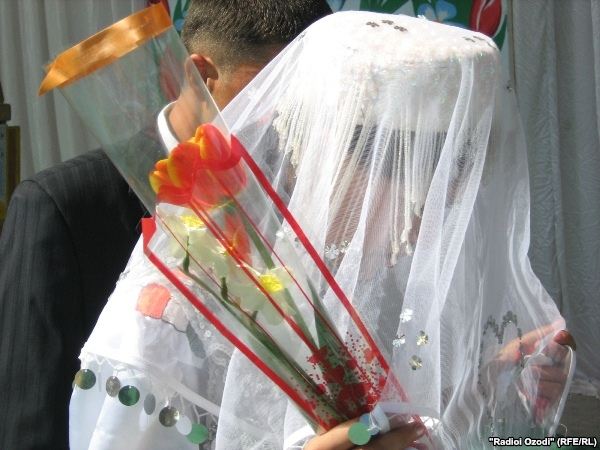
DUSHANBE, March 15, 2013, Asia-Plus — Early marriages deprive young women in Tajikistan of education, pose a threat to their health and leave them vulnerable to abuse. A shortage of men has contributed to worsening of the situation as many Tajiks of working age have gone abroad in search of work.
Findings of the report, released in the framework of Central Asia Regional Migration Program (CARMP), show that gender imbalance resulting from labor migration leads to a shortage of men in Tajikistan and becomes reason for early marriages in the country.
According to the report, the law raising the official marriage age from 17 to 18 has not stopped Tajik women being forced into early marriages.
The report also notes that labor migration becomes a severe test for marriages. “Changing conditions, higher living standards and different cultural values in destination countries have always contributed to disruption of families,” the report says.
The report findings show that not only 30 percent of unmarried Tajik labor migrants get married in Russia but also 50 percent of married Tajik labor migrants enter into a mock marriage there. This leads to disruption of families. At present some 300,000 women under the age of 30 are single, the report notes.
Central Asia Regional Migration Program (CARMP) is a complex program in the field of labor migration and joins the efforts of IOM, UN Women and the World Bank with financial support of UK Government (UKAID/DFID) to reduce poverty in Central Asia. CARMP concerns labor migration, which has played a key part in reducing poverty levels in Central Asia. This is particularly so in the two countries: Kyrgyzstan and Tajikistan. Most communities in rural areas in these countries are affected by migration, mainly to the Russian Federation and Kazakhstan.
In Tajikistan, the program supports the creation of a gender-disaggregated database on migration managed by Tajik migrations service agency and fosters coordination and data sharing between the migration service agency and the border service.