Cases of anthrax reported in Sughd

DUSHANBE, July 15, 2013, Asia-Plus — Cases of anthrax have been reported in two districts of the northern province of Sughd. “Cases of anthrax have been registered in the Ayni and Panjakent districts,” Nasibjon Ikromov, the first deputy head of the Sughd sanitary and epidemiological center, told Asia-Plus in an interview. According to him, two […]

Sheroz Sharipov

DUSHANBE, July 15, 2013, Asia-Plus — Cases of anthrax have been reported in two districts of the northern province of Sughd.

“Cases of anthrax have been registered in the Ayni and Panjakent districts,” Nasibjon Ikromov, the first deputy head of the Sughd sanitary and epidemiological center, told Asia-Plus in an interview.

According to him, two cases of anthrax have been registered in Ayni and four cases of anthrax have been registered in Panjakent.  “The anthrax patients from Ayni have been taken to the hospital in Khujand for further medical treatment,” Ikromov added.  

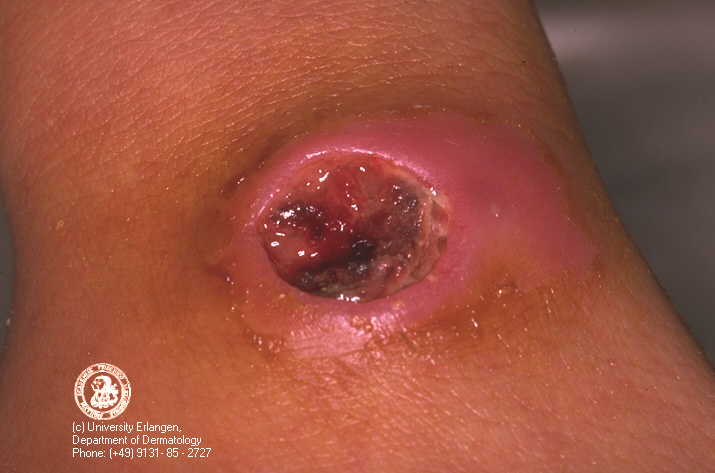
Anthrax is an acute disease caused by the bacterium Bacillus anthracis. Most forms of the disease are lethal, and it affects both humans and animals. There are effective vaccines against anthrax, and some forms of the disease respond well to antibiotic treatment.

Like many other members of the genus Bacillus, Bacillus anthracis can form dormant endospores (often referred to as “spores” for short, but not to be confused with fungal spores) that are able to survive in harsh conditions for decades or even centuries.  Such spores can be found on all continents, even Antarctica.  When spores are inhaled, ingested, or come into contact with a skin lesion on a host, they may become reactivated and multiply rapidly.

Anthrax commonly infects wild and domesticated herbivorous mammals that ingest or inhale the spores while grazing.  Ingestion is thought to be the most common route by which herbivores contract anthrax.  Carnivores living in the same environment may become infected by consuming infected animals.  Diseased animals can spread anthrax to humans, either by direct contact (e.g., inoculation of infected blood to broken skin) or by consumption of a diseased animal”s flesh.  

Join us on social media!

Article translations:

Related Article

Оби зулол
Оби зулол
Tenisi

Most Read

Коммерсбонк Точикистон

Recent Articles

Major global investment companies show interest in Tajikistan’s economy

Among them are J.P. Morgan, Loomis Sayles & Company, Morgan Stanley Investment Management, and Global Evolution.

President Rahmon awarded UN University for Peace Certificate of Recognition

He is awarded for "significant contribution to establishing peace, developing regional cooperation, and strengthening mutual understanding between peoples."

Starlink satellite internet becomes available in Kyrgyzstan

And in Tajikistan, it was launched in February of this year.

In Dushanbe, 30 more new electric buses start operating

Each is designed to carry 100 passengers and can travel up to 300 kilometers without recharging.

Who is the man who “increased the Aryan race” and told the President of Tajikistan about it?

Kozie Koziyev, a folk craftsman, built dozens of houses, participated in the construction of a mosque and a kindergarten in Matcha, raised 11 children, and created a true dynasty of builders.

Tajik leader discusses water, climate, and global security issues with UN Deputy Secretaries-General

The parties paid special attention to the "Dushanbe Water Process," parliamentary diplomacy, and the peaceful resolution of conflicts.

Tajikistan completes the spring military draft target ahead of schedule

There is still a week left until the end of the conscription campaign.

Custodian of non-written languages and builder of academic bridges; philologist Khusrav Shambezoda turns 70

He could have devoted himself exclusively to the study of classical heritage, but he chose the challenging path of preserving the living word — and Tajik-Russian science gained in him a brilliant sociolinguist whose name became synonymous with dedication.

Tajikistan ranks among the top three leading trade reformers in Europe and Central Asia

The country has shown progress in the digitalization of trade procedures, the reduction of paper barriers, and the enhancement of transparency for exporters.

China to send workers to Tajikistan for modernization of the Kulma BCP

This is the only land border crossing point between Tajikistan and China.