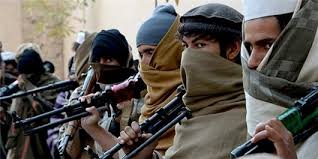
DUSHANBE, May 15, 2014, Asia-Plus – Activists of civil society of Afghan Badakhshan Province warn the central authorities of Afghanistan that they can lose the province if they government of Afghanistan that it can lose the province if they do not purge it of terrorists.
Afghan news agency
Jumhur
reported in early May (Sawr 24) that activists of civil society of Badakhshan Province accuse the central government of Afghanistan of neglecting the issues of providing security in the province and say that nine district of the province have come under control of terrorists.
According to the civil society activists, it was negligence of the central authorities that turned the province into the center for concentration of foreign terrorists and extremists,
Jumhur
reported.
Afghanistan’s largest independent news agency
Pajhwok Afghan News
reported on May 4 that at least two policemen have been killed during hours-long clashes with insurgents before retreating from their posts in Warduj district of northeastern Badakhshan province. Public Order Police Commander Gen. Rahmanuddin Rahman, who paid a visit to the province, told Pajhwok Afghan News police fought for at least five hours and then retreated along with weapons and ammunitions from their check-posts. He said rebels suffered heavy causalities during the clashes, but did not give any figures.
According to
Pajhwok Afghan News
Taliban spokesman Zabihullah Mujahid said the militants captured two bases and 10 check posts from security forces after an overnight firefight that lasted two hours. He claimed 32 security officials were killed, 19 wounded and 17 others captured alive with their weapons.
On Sunday May 3, militants reportedly captured 13 check-posts after they were abandoned by security forces to avoid clashes in the Sofyan village of Warduj district.
Meantime,
Afghanistan Times
reported on May 15 that Afghan security forces have retaken control on Yamgan district of northeastern Badakhshan province.
The provincial security chief, Fazaluddin Ayar, was quoted as saying that Afghan security forces succeeded to retake control of Yamgan district after hours of conflicts with the Taliban insurgents.
Ayar said the operation was launched by the Afghan National Police (ANP), the Afghan National Army (ANA) and the Afghan Special Forces.
He added that two Taliban have been killed in the operation.
According to the security chief, no casualty was suffered by the Afghan security forces in the operation.
Dozens of the Taliban militants attacked Yamgan district earlier this week and managed to take control of the district following hours of gun battle,
Afghanistan Times
reported.
Opinions differ within Tajikistan as to the gravity of the possible threat emanating from Afghanistan. Qosimsho Iskandarov, a Tajikistani expert on Afghanistan, told Asia-Plus in late April that “armed clashes being conducted in Kunduz, which borders Tajikistan’s Khatlon province, pose a threat to southern borders of our country and Tajikistan and its allies ought to be ready for all possible scenarios of continuation of war near our borders.”
But another local expert told Asia-Plus that “world powers” are exaggerating the threats for their own ends. “World powers such as the United States and Russia are interested in spread of so-called forecasts on threats that are allegedly posed by the Islamic State of Iraq and the Levant (ISIL), Taliban and others militants to Central Asia’s nations, first of all Tajikistan,” said Davlatkhoja Nazirov. “Neither ISIL nor Taliban militants will go far from Afghanistan.”