

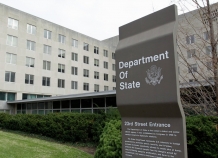
DUSHANBE, October 15, 2015, Asia-Plus – The U.S.
2014 Report on International Religious Freedom
notes that Tajikistan’s constitution provides for freedom of religion, including the right individually or jointly to adhere to any or no religion, and to freely choose and act in accordance with one’s religion.
The law, however, prohibits persons under the age of 18 from participating in public religious activities, and the government enforced the ban. Women from the majority Hanafi Sunni Muslim community remained barred from attending religious services by a fatwa issued by the Council of Ulema, the country’s highest body of Islamic scholars, but those of other denominations and religious groups were permitted to do so.
The government arrested individuals suspected of involvement with religious groups it termed “extremist,” and continued to express concern over religious groups it perceived as representing a threat to social order. The government closely monitored the registration of religious groups, suspending the activities of mosques found in violation of registration requirements and reinstating operations once mosques fulfilled registration requirements.
Protestant church leaders complained of harassment by security services, and the Committee on Religious Affairs (CRA) continued to deny the registration of the Jehovah’s Witnesses and one local Protestant church.
The government continued to exercise strict control over religious publications and religious events.
The U.S. government estimates the total population is 8.1 million (July 2014 estimate). According to local academics, the population is more than 90 percent Muslim. The majority adhere to the Hanafi school of Sunni Islam as traditionally practiced in Central Asia. Approximately 4 percent of Muslims are Ismaili Shia, the majority of whom reside in the remote Gorno-Badakhshan Autonomous Region located in eastern Tajikistan.
There are Christians and small numbers of Bahais, Hare Krishnas, Jehovah’s Witnesses, and Jews in the country. The largest Christian group is Russian Orthodox; there are also Baptists, Roman Catholics, Seventh-day Adventists, Lutherans, and Korean Protestants.
There is no official state religion, but the government recognizes the “special status” of Hanafi Sunni Islam.
The CRA is the main body overseeing and implementing all religious laws. The Center for Islamic Studies, under the president’s executive office, monitors religious issues and helps formulate the government’s policy toward religion.
The law on parental responsibility prohibits persons under 18 years from participating in public religious activities, including attending the Hajj, with the exception of funerals. With written parental consent, the law allows minors between the ages of seven and 18 to obtain a religious education in their free time outside of school classes and the state education curriculum, and to worship as part of educational activities at religious institutions.
By law all religious groups must register with the government to operate. The CRA oversees this process. In the absence of registration, local authorities can force a place of worship to close.
The law restricts Muslim prayer to four locations: mosques, cemeteries, homes, and shrines. The law on religion regulates registration, size, and location of mosques, limiting the number of mosques that may be registered within a given population area.
