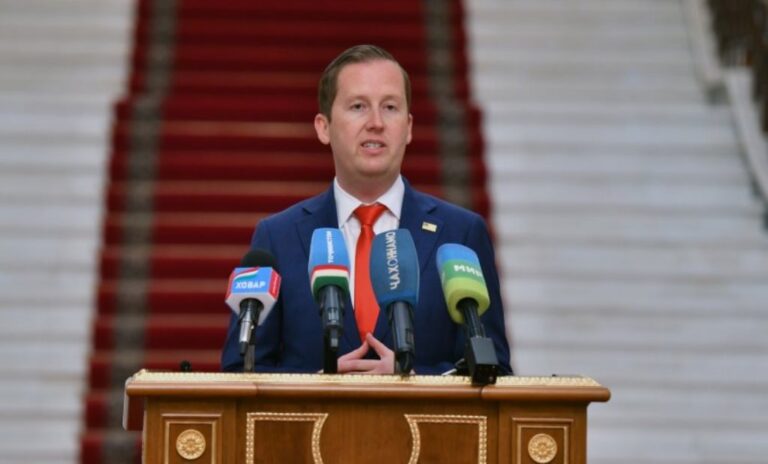
DUSHANBE, December 4, 2015, Asia-Plus – On Thursday December 3, Tajik Foreign Minister Sirojiddin Aslov delivered a statement at the 22nd OSCE Ministerial Council in Belgrade.
According to the Tajik MFA information department, Aslov stated Tajikistan’s position on the necessity of reforming the OSCE and a role of the OSCE in facilitating the political process and de-escalating tensions in Ukraine, combating terrorism and trafficking in narcotics and human beings, strengthening security in Afghanistan, and establishing an equal dialogue between the OSCE Participating States.
The issue of combating terrorism becomes especially topical against the backdrop of the latest terrorist attacks in Paris, Bamako, Beirut, Mali, Tunisia, and in the sky over the Egyptian Sinai, Tajik foreign minister said, noting that all that was evidence of intensification of activities of terrorist organizations, including Islamic State of Iraq and the Levant (ISIL).
The latest developments in Afghanistan, including Taliban’s temporary takeover of the northern city of Kunduz, which is located not far from Tajikistan’s border, cannot but disturb us, Aslov said.
In this connection, he pointed to the necessity of further active interaction between the interested sides in seeking solution to the Afghan crisis.
The 22nd two-day OSCE Ministerial Council began on December 3 with a call for greater efforts to rebuild consensus on European security and renewed dialogue based on full respect for OSCE principles and commitments.
OSCE Chairperson-in-Office Ivica Dacic encouraged participants to conduct an open, frank and constructive dialogue on all issues of common concern.
Addressing the meeting, which is being attended by over 40 Foreign Affairs Ministers and hundreds of high-level diplomats from the 57 OSCE participating States, 11 Partners for Cooperation and representatives of international organizations, OSCE Secretary General Lamberto Zannier noted there was much work ahead in critical and complex areas, such as rule of law, independence of the judiciary, freedom of expression and freedom of the media, electoral processes, democratic governance, capacity building for state institutions, inter-ethnic relations and implementation of the Ohrid Framework Agreement (OFA).
The only way to achieve progress in these critical areas is through maintaining the current constructive spirit and investing additional efforts in the implementation of all agreements and urgent reforms, in full and good faith, Mr. Zannier said.
The foreign ministers are discussing the crisis in and around Ukraine, migration, terrorism and other common challenges within and beyond the OSCE area, as well as ways to rebuild consensus on European security as a common project. The Council will set the course for the future work of the organization with Germany taking up the Chairmanship from 1 January 2016.
The Ministerial Council is the central decision-making and governing body of the OSCE. The meeting, held annually, provides foreign ministers and more than 70 delegations of OSCE participating States, partner countries and several international organizations an opportunity to review and assess the Organization”s activities during the past year and offer national viewpoints on security matters.