Major cement plant was put into operation in the Yovon district of Khatlon region today, August 24, with the participation of the President of Tajikistan Emomali Rakhmon, who came this morning by train on the new railroad Dushanbe-Kurgan-Tyube-Kulyab to Yovon.
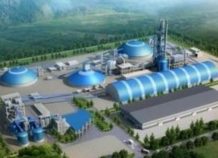
As reports a press-service of the President of RT, a joint opened Tajik-Chinese enterprise “Chungtsay Mohir cement” plant is the second power factory in Tajikistan, which products cement.
The design capacity of the plant is 1.2 million tons of cement per year.
The plant is equipped with modern technological equipment of world famous companies. The production process here is regulated and controlled through the electronic system.
“Chungtsay Mohir cement” is the first plant in Central Asia that will produce cement of the brand “400”, “500” and “600”.
For the construction of a total area of 20 hectares of the plant were attracted 958 million somoni, 35% of which are the contributions of local entrepreneurs.
It is expected that in the near future on this plant will start to work the shops on the manufacture of plasterboard with a capacity of 1 million square meters per year and kraft bags (80 million bags per year).
Recall that in 2013 in Yovon district was put into operation a “Huaxin Gayur Cement” plant, with a capacity of 1 million tons per year. This plant was built in one year by domestic entrepreneurs (25%) with the participation of Chinese private capital (75%).
According to the Antimonopoly service under the government of Tajikistan, in the first half of this year 15 plants were engaged in cement production in Tajikistan. In January-June this year they produced more than 870 thousand tons of cement, that is 30.1% more than the same period in 2015. In particular, more than 422 thousand tons of cement was produced by JV “Huaxin Gayur Cement”.
The office noted that at the moment, Tajikistan fully satisfies domestic demand for cement, and of these products even are exported. So, in the first half of this year, Tajikistan exported about 200 thousand tons of cement to Afghanistan and Kyrgyzstan.
The office noted that at the moment Tajikistan fully satisfies domestic demands for cement and a half of these products even go on export. So, in the first half of this year Tajikistan has exported about 200 thousand tons of cement to Afghanistan and Kyrgyzstan.