Five Tajik performers have been invited to participate in the Shashmaqom Festival that will take place in New York in November this year.
Dedicated to the 100th birthday of a famous Bukharian Jewish musician from Tajikistan, Neriyo Aminov (1916-1996), the festival will take place in New York from November 12-13.
Head of the Shashmaqom Ensemble of Tajikistan, Furqat Said, as well as Abdurashid Abduvaliyev, Sitora Karomatullo, Gulchehra Qurbonova and Shoira Rahimjon have been invited to participate in the upcoming Shashmaqom Festival in New York.
Famous Bukharian Jewish musician and dancers from Tajikistan, who now live in the United States, including Malika Kalontarova, Roman Tolmasov, Roshel Aminov, Rano Aminova and Ezra Malakova, are also expected to participate in the festival, which is organized by relatives and admirers of talent of Neriyo Aminov.
The Academy of Maqom now functions in Dushanbe. Established with support from the Aga Khan Music Initiative, the Academy of Maqom takes its name from the venerable tradition of classical or court music that spans the core Muslim world from Casablanca, Morocco, to Kashgar in western China.
Shashmaqom is a Central Asian musical genre, (typical of Tajikistan and Uzbekistan). Shashmaqom means the six Maqoms (modes) in the Persian language.
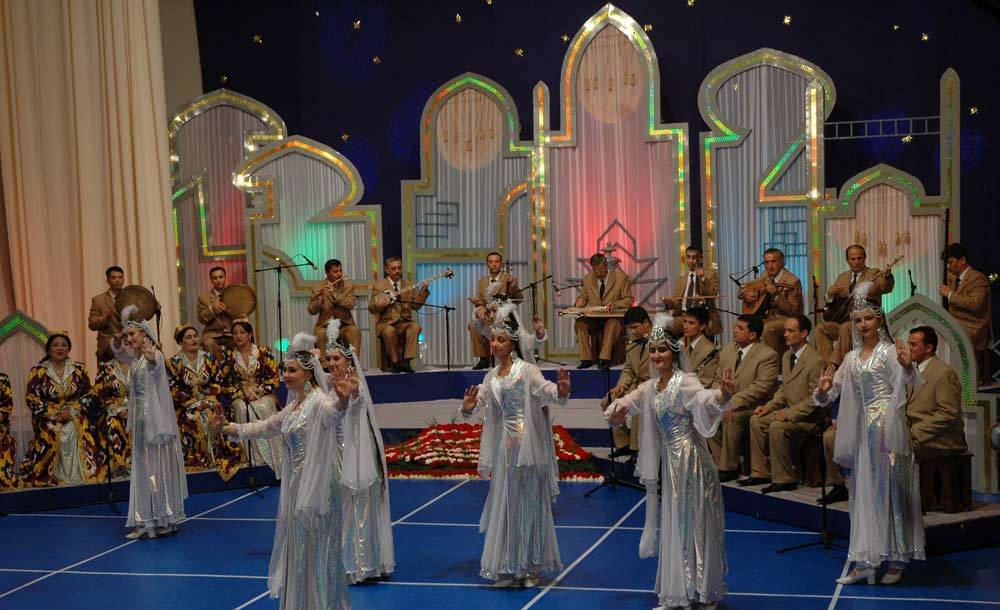
Shashmaqom is a refined sort of music, with lyrics derived from Sufi poems about divine love. The instruments of shashmaqam provide an austere accompaniment to the voices. They consist, at most concerts, of a pair of long-necked lutes, the dayra, or frame drum, which, with its jingles, is very much like a tambourine, and the sato, or bowed tanbour, which vaguely resembles a bass fiddle.
In the Shashmaqom, instrumental pieces, lyrical song, contemplative poetry, and dance are all bound together in a vast yet integrated artistic conception of great refinement and profound beauty. The roots of Shashmaqom are linked most strongly with Samarkand and Bukhara – historically multicultural cities where performers and audiences have included Tajiks, Uzbeks, and Central Asian (Bukharan) Jews. Shashmaqom performers were typically bilingual in Uzbek – a Turkic language – and Tajik – an Iranian language – and sang poetic texts in both languages. During the Soviet era, however, the Shashmaqom was cloned into two distinct repertories – “Uzbek” Shashmaqom, with exclusively Uzbek-language poetic texts, and “Tajik” Shashmaqom, with exclusively Tajik language poetic texts. In both Uzbekistan and Tajikistan, the local version of the Shashmaqom came to serve as an important symbol of national cultural identity. This cultural symbolism has become still more significant in the post-Soviet era as the independent nations of Central Asia strive to define themselves socially and historically.