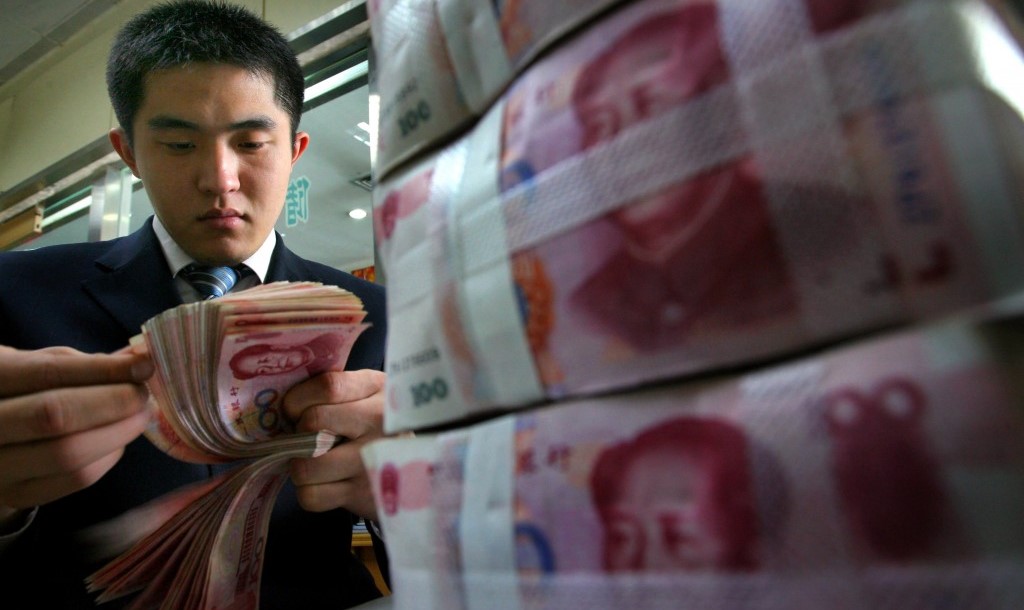
China has outrun Russia in terms of direct investment in Tajikistan’s economy.
By October 1, 2016, the volume of China’s accumulated direct investments in Tajikistan’s economy reached 1.016 billion U.S. dollars, which was nearly 30 percent of the total amount of the accumulated direct investments.
Over the report period, the volume of Russia’s accumulated direct investments in Tajikistan’s economy reached 985.5 million U.S. dollars, which was 27 percent the total amount of the accumulated direct investments.
By October 1, 2016, the total amount of the accumulated direct investments in Tajikistan’s economy reportedly reached 3.08 billion U.S. dollars
Over the first nine months of 2016, more than 355 million U.S. dollars came into Tajikistan in foreign direct investments, an official source at the State Committee on Investment and State-owned Property Management (GosKomInvest), told Asia-Plus in an interview.
Over the report period, China reportedly accounted for 71.8 percent (255 million USD) of the total amount of direct investments.
Russia was the second largest foreign investor with 35 million USD (9.9 percent) over the first nine months of last year.
Russia was followed by the United Kingdom – 7.4 percent (26.2 million USD), the United States – 3.5 percent (12.3 million USD), France – 3.0 percent (10.5 million USD), and Switzerland – 2.4 percent (8.6 million USD).
In 2015, Chinese direct investments into Tajikistan came to 273 million USD — 58 percent of the overall total. Russia’s direct investment in 2015 dropped to a total of 35 million USD, down to a proportion of 7.4 percent from 30 percent in 2010.
Russia, however, will remain a core element of Tajikistan’s economic survival as long as hundreds of thousands of Tajik laborers earn their incomes there.
According to the Agency for Statistics under the President of Tajikistan, Tajikistan plans to attract 200 million USD in foreign direct investments.
A foreign direct investment (FDI) is an investment in the form of a controlling ownership in a business in one country by an entity based in another country. It is thus distinguished from foreign portfolio investment by a notion of direct control. The origin of the investment does not impact the definition as an FDI: the investment may be made either "inorganically" by buying a company in the target country or "organically" by expanding operations of an existing business in that country.