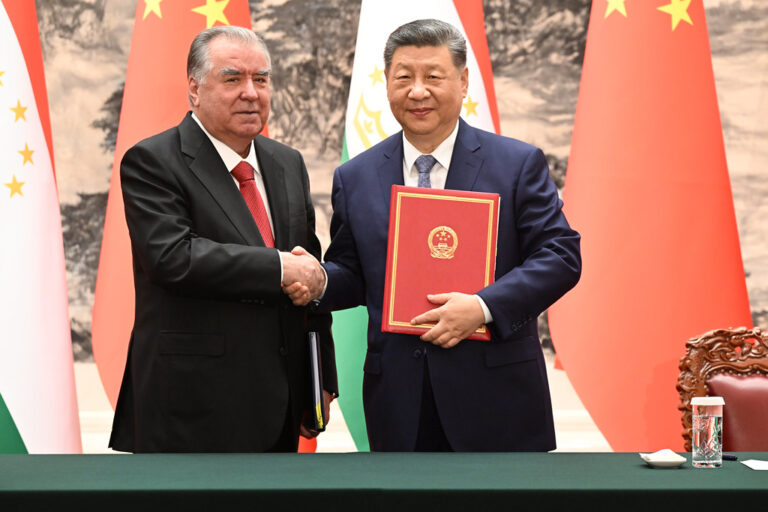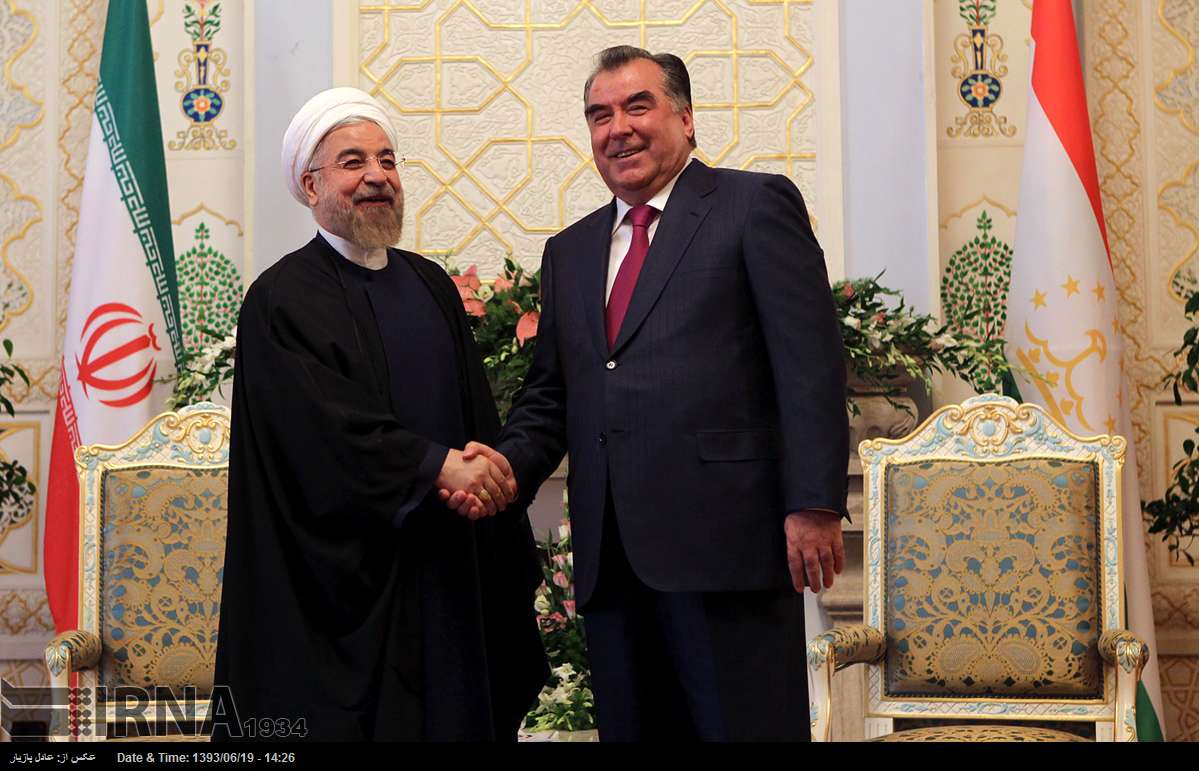
The presidents of Tajikistan and the Islamic Republic of Iran have exchanged congratulatory messages on the occasion of Eid al-Adha, according to the official website of the Iranian Embassy in Dushanbe.
In his message, Tajik President Emomali Rahmon reportedly expresses hope for further development of traditional friendship and cooperation between the two nations.
For his part, Iranian President Hassan Rouhani expresses hope in his message that due to efforts of all nations of the Muslim world “there will be put an end to global terrorism that has been engendered by the world superpowers and peace and stability will reign in Muslim countries.”
Tajikistan and Iran have traditionally close relations, sharing many similar cultural, religious and ethnic identifiers and Iran has been a major sponsor of essential hydropower infrastructure in Tajikistan, but Iran has angered Tajikistan by welcoming Tajikistan’s Islamic Revival Party (IRPT) leader Muhiddin Kabiri, who is wanted by police in Tajikistan to face various terrorism charges.
Iran invited IRPT leader Muhiddin Kabiri to attend the International Islamic Unity Conference that took place in Tehran on December 27-29, 2015.
Tajikistan’s MFA said in a statement on December 29 that it was “greatly concerned” that “the head of the extremist and terrorist former IRPT, Muhiddin Kabiri, who faces charges of attempting to overthrow the government … has been invited to the conference.”
In April 2016, Tajikistan’s customs service introduced restrictions on the import of food products from Iran. Dry leaf tea, poultry and other goods were ruled unacceptable for their allegedly poor quality. In July 2016, the Tajik office of Iran’s Khomeini Imdod Committee, an international development fund, closed. In early July this year, the Iranian trade and culture center in the Tajik northern city of Khujand, which was particularly appreciated for its library services and fast internet, closed its doors. The shuttering reportedly came at the request of the Tajik authorities.
On August 8 this year, the Tajik Interior Ministry claimed in the documentary that Iran was allegedly interested in unleashing civil war in Tajikistan, and it allegedly provided assistance to the IRPT and trained its militants in Iranian territory. The Tajik Interior Ministry had reportedly taken part in filming the documentary.
In the documentary, three Tajiks confessed to a series of killings of a number of Tajik politicians and public figures as well as 20 Russian officers in Tajikistan between 1997 and 2004.
The broadcaster aired footage of them in handcuffs saying they had received training in and financial support from Iran.
The documentary identified all three as supporters of a former deputy defense minister and mutinous general Abduhalim Nazarzoda.
The confessions mark the first time Iran has been publicly accused of involvement in Tajikistan's 1992-97 civil war.
Iran’s Embassy in Dushanbe on August 9 released a statement, in which it dismisses “unfounded claims made in the documentary aired by Tajikistan TV on August 8.
The statement posted on the Embassy’s website, in particular, described such claims as 'regrettable' saying there is no doubt that the film's producers will not be able to mar cultural bonds and historic friendship between the two nations of Iran and Tajikistan.”
It noted that broadcasting such one-sided films after a visit to Tehran by Tajik energy and water resources minister to attend President Hassan Rouhani inauguration on August 9 on behalf of the Tajik president has indicated that “certain currents and circles cannot bear normalization of ties and boosting of friendship relation between Tehran and Dushanbe.”
“Iran’s Embassy believes that such divisive moves are not in line with the two nations’ interests and they are pursued by those who do not favor the brotherly relations between the countries which share the same language and culture,” the statement said in conclusion.