China’s strategic interest in Iran is intensifying. Chinese manufacturers are looking to establish new operations in Iran, and Tehran is viewed as a vital transport and logistics hub, according to EurasiaNet.org.
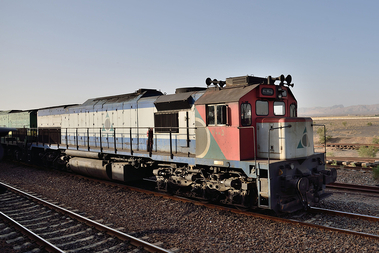
Iran is focusing in 2017 on expanding its railway network so that it can better align with China’s Central Asian logistics strategy, Iranian Minister of Transport Abbas Akhodi said recently. The minister added that the chief goal for Iran’s Department of Transportation would be to improve connections of the national rail network to neighboring railway networks. China is also providing $1.5 billion in financing to electrify the Tehran-Mashad trunk line, and another $1.8 billion to establish a high-speed rail connection linking Tehran, Qom and Isfahan. In return, Iranian authorities are slashing transit tariffs for Chinese goods, according to railway chief Saeed Mohammedzadeh.
The Iranian upgrades are seen as crucial to achieve two Chinese trade priorities – expand commerce with Turkey and widen access for Chinese goods to Iranian ports near the Strait of Hormuz. Beijing hopes to see trains running between the western Chinese region of Kashgar and Turkey’s Istanbul as soon as 2020. Iranian railways figure to serve as key links in routes through both Central Asia and the Caucasus.
For Iranian leaders – who have struggled to overcome international efforts to isolate Tehran because of its controversial nuclear program and other factors – China represents an important outlet for international trade and finance. On the sidelines of the Belt and Road launch event in Beijing in May, Iran’s Economic Affairs and Finance Minister Ali Tayebnia held talks with Chinese Finance Minister Xiao Jie to discuss substantial development assistance deals, which the two sides hope to seal in the coming months.
In 2015, Chinese enterprises in Iran signed contracts worth $1.5 billion. And Iran has since become a major market for Chinese construction and energy infrastructure equipment. China’s major contracting projects in Iran include energy, transport, steel, and chemicals. Among the planned energy projects is a production facility that would produce components for nuclear power plants.
Song Zhiping, Chairman of China Building Materials Group, characterized Chinese projects in Iran as a “win-win” solution. He asserted that Chinese manufacturers were capable of moving production lines to Iran for about 20 percent-to-30 percent of the cost of other international competitors.
China’s trade and foreign policy with Iran falls into a distinct category. Policymakers in Beijing tend to align their activities within various ministries according to geographic boundaries, with separate departments dealing with distinct areas. But Iran, in the eyes of Chinese policymakers, is not considered West Asian, Arabian, or Middle Eastern, it is included in East Asia. Iran, along with Pakistan, is considered so important to China’s sphere of influence that they are part of the ‘home affairs’ region, including Japan, Hong Kong and Indonesia.