Tajikistan’s legislation does not stipulate punishment for wearing hijab

Tajikistan’s legislation does not stipulate punishment for wearing non-traditional clothes and actions of some officials threatening women with fine for wearing hijab (Islamic headscarf) are illegal, a source in Tajikistan’s lower house (Majlisi Namoyandagon) of parliament told Asia-Plus in an interview. “The law making amendments to the law on the order of observing national traditions […]

Asia-Plus

Tajikistan’s legislation does not stipulate punishment for wearing non-traditional clothes and actions of some officials threatening women with fine for wearing hijab (Islamic headscarf) are illegal, a source in Tajikistan’s lower house (Majlisi Namoyandagon) of parliament told Asia-Plus in an interview.

“The law making amendments to the law on the order of observing national traditions and rituals urges citizens to observe and respect the state language and the style of wearing national traditional clothes and protect them against modern negative effects, but it carries no penalties,” the source said.  

According to him, actions of some officials threatening women with fine for wearing hijab or ragged jeans are absolutely illegal.  

Recall, the law on the order of observing national traditions and rituals initially drafted by President Emomali Rahmon is actual since 2007.  According to the document, citizens who spend lavish weddings and funerals, thereby damaging their family budget, are subject to fine. 

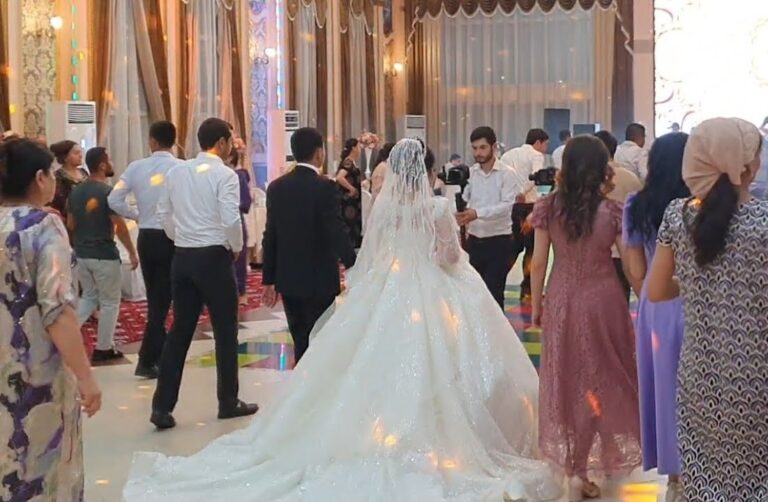
The law regulates private celebrations, allegedly to protect the public from spending excessive amounts of money.  It restricts the manner in which individuals can conduct private celebrations, including those with religious significance, such as weddings, funerals, gatherings after the return of a pilgrim from the hajj, and the birthday of the Prophet Muhammad.  National minorities specifically are exempted from restrictions in celebrating their national events.

Officials monitor weddings and funerals for compliance with the law on traditions and rituals and violation of the law is liable to fine.

Although the new law amending a 10-year-old law that governs the practice of traditions, rites, and celebrations in Tajikistan does not specifically mention the hijab, authorities in the past have said that head scarves that cover the front of a woman’s neck are a form of “alien culture and traditions.”

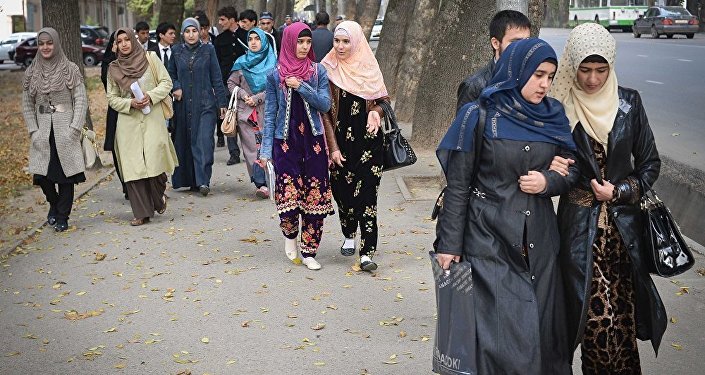
Since late spring, the Tajik authorities have been carrying out a massive renewed campaign against women wearing the hijab (Islamic headscarf).  Working groups have been raiding bazaars and public places in Dushanbe to reveal women wearing the hijab.  They are reportedly carrying out explanatory work among women wearing hijab.  

Meanwhile, women, vendors at Dushanbe’s open-air markets, say members of the working group were not carrying out explanatory work but were threatening them with fines, up to 1,000 somoni, it they do not take off hijab.

Representatives of the Committee for Family and Women’s Affairs deny these allegations as absolutely unfounded.  They claimed the raids were merely an “awareness campaign.”  According to them, no fines are provided for wearing hijab.  

Join us on social media!

Article translations:

Related Article

Оби зулол
Оби зулол
Tenisi

Most Read

Коммерсбонк Точикистон

Recent Articles

Major global investment companies show interest in Tajikistan’s economy

Among them are J.P. Morgan, Loomis Sayles & Company, Morgan Stanley Investment Management, and Global Evolution.

President Rahmon awarded UN University for Peace Certificate of Recognition

He is awarded for "significant contribution to establishing peace, developing regional cooperation, and strengthening mutual understanding between peoples."

Starlink satellite internet becomes available in Kyrgyzstan

And in Tajikistan, it was launched in February of this year.

In Dushanbe, 30 more new electric buses start operating

Each is designed to carry 100 passengers and can travel up to 300 kilometers without recharging.

Who is the man who “increased the Aryan race” and told the President of Tajikistan about it?

Kozie Koziyev, a folk craftsman, built dozens of houses, participated in the construction of a mosque and a kindergarten in Matcha, raised 11 children, and created a true dynasty of builders.

Tajik leader discusses water, climate, and global security issues with UN Deputy Secretaries-General

The parties paid special attention to the "Dushanbe Water Process," parliamentary diplomacy, and the peaceful resolution of conflicts.

Tajikistan completes the spring military draft target ahead of schedule

There is still a week left until the end of the conscription campaign.

Custodian of non-written languages and builder of academic bridges; philologist Khusrav Shambezoda turns 70

He could have devoted himself exclusively to the study of classical heritage, but he chose the challenging path of preserving the living word — and Tajik-Russian science gained in him a brilliant sociolinguist whose name became synonymous with dedication.

Tajikistan ranks among the top three leading trade reformers in Europe and Central Asia

The country has shown progress in the digitalization of trade procedures, the reduction of paper barriers, and the enhancement of transparency for exporters.

China to send workers to Tajikistan for modernization of the Kulma BCP

This is the only land border crossing point between Tajikistan and China.