Catalonia's separatist government has staged a referendum on leaving Spain – against the wishes of the national authorities.
Media reports say Catalan officials have claimed that preliminary results of its referendum have shown 90% in favor of independence in the vote vehemently opposed by Spain.
Spanish prime minister defends violent response to poll, as raids on ballot stations by riot police leave hundreds of Catalans injured.
Preliminary results announced after Spanish prime minister claims ‘no referendum has been held in Catalonia on Sunday.’
According to The Guardian, Jordi Turull, the Catalan regional government spokesman, told reporters early on Monday morning that 90% of the 2.26 million Catalans who voted Sunday chose yes. He said nearly 8% of voters rejected independence and the rest of the ballots were blank or void. He said 15,000 votes were still being counted. The region reportedly has 5.3 million registered voters.
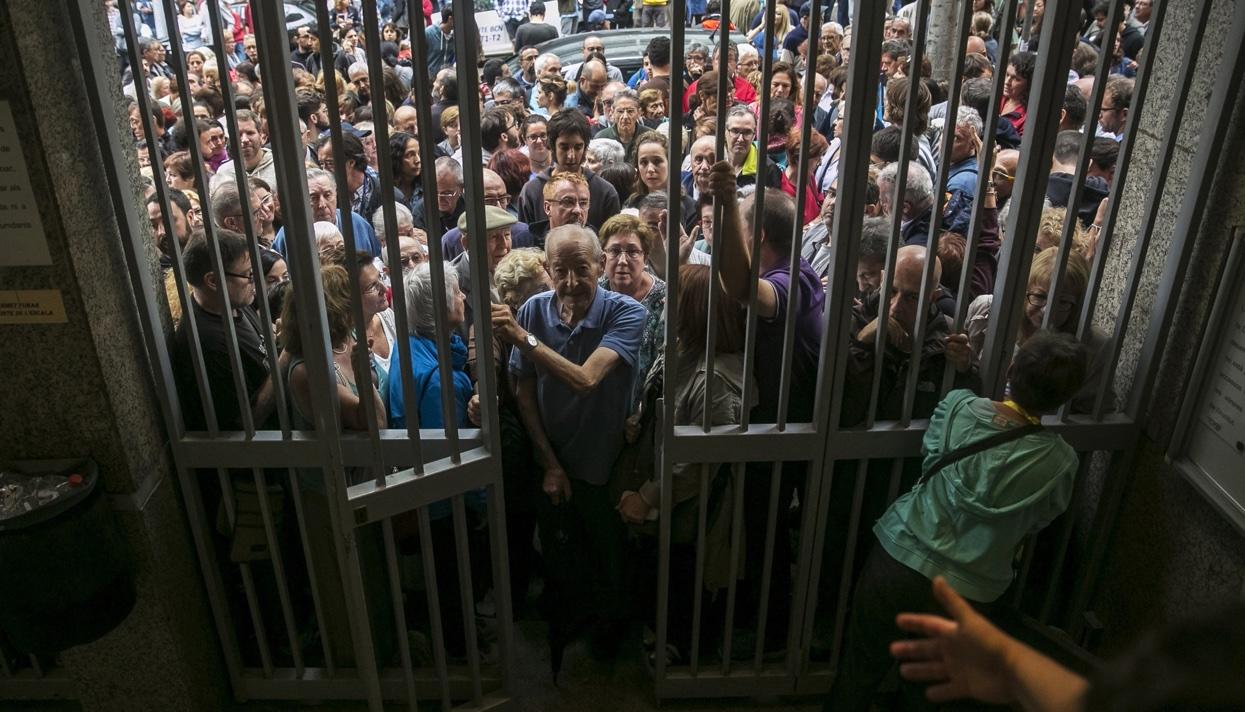
Turull said the number of ballots did not include those confiscated by Spanish police during violent raids which resulted in hundreds of people being injured.
International media reports say at least 844 people and 33 police were reported to have been hurt, including at least two people who were thought to have been seriously injured.
Catalonia’s regional leader, Carles Puigdemont, spoke out against the violence with a pointed address: “On this day of hope and suffering, Catalonia’s citizens have earned the right to have an independent state in the form of a republic.”
“My government, in the next few days, will send the results of [the] vote to the Catalan parliament, where the sovereignty of our people lies, so that it can act in accordance with the law of the referendum.”
Puigdemont had pressed ahead with the referendum despite opposition from the Spanish state, which declared the poll to be illegal, and the region’s own high court. He told crowds earlier in the day that the “police brutality will shame the Spanish state for ever.”
The Spanish government defended its response after hundreds of people were hurt when riot police stormed polling stations in a last-minute effort to stop the vote on Sunday.
Although many Catalans managed to cast their ballots, others were forcibly stopped from voting as schools housing ballot boxes were raided by police acting on the orders of the Catalan high court.
Catalonia is one of Spain's wealthiest and most productive regions and has a distinct history dating back almost 1,000 years. Before the Spanish Civil War it enjoyed broad autonomy but that was suppressed under decades of General Francisco Franco's dictatorship from 1939-75.
When Franco died, Catalan nationalism was revived and eventually the north-eastern region was granted autonomy again, under the 1978 constitution.
A 2006 statute granted even greater powers, boosting Catalonia's financial clout and describing it as a "nation", but Spain's Constitutional Court reversed much of this in 2010, to the anger of the regional authorities.
Catalans held an unofficial vote on independence in November 2014. More than two million of the region's 5.4 million eligible voters took part and officials declared that 80% had backed secession.