The Committee on Religious Affairs and Regulation of Traditions, Ceremonies and Rituals (CRA) says representatives of public commissions have no right to confiscate food prepared for banquets.
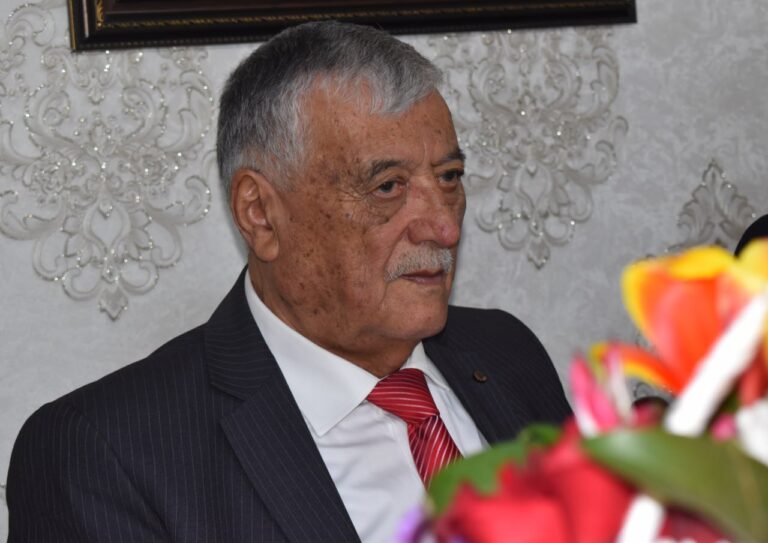
“Representatives of public commissions can only carry out explanatory work to prevent lavish weddings and other festive events, Afshin Muqimov, a spokesman for CRA, told Asia-Plus in an interview, commenting on an incident that took place in Kulob in late August.
Recall, the family of Zaidullo Khudoyorov was making final preparations to celebrate the marriage of his daughter when a group of local officials raided the house and confiscated most of the food the family had prepared for the banquet.
According to Muqimov, the family violated Article 10 (2) of the Law on Observing National Traditions and Rituals that regulates private celebrations.
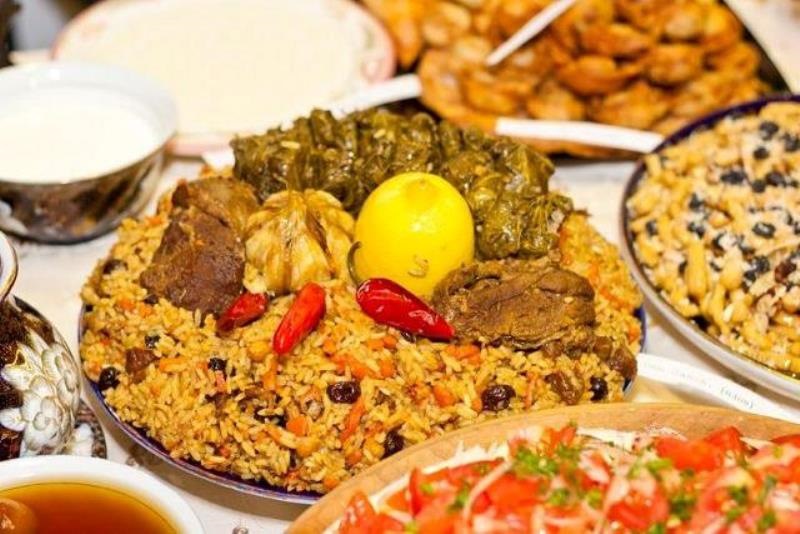
“This article bans large feasts for certain traditional gatherings, such ‘nonshikanon’, ‘modratalbon’, ‘padartalbon’, chodarkanon, ‘muborakbodi’,” said Muqimov. “The Khudoyorov’s family prepared special flatbreads and halva for the banquet at the bridegroom's house but this is violation of the law.”
But even in this case, nobody has the right to confiscate food, the spokesman noted.
At the same time, he noted that had nobody confiscated the food from Khudoyorov’s banquet.
“At the suggestion of the commission members Khudoyorov just agreed to hand over the food to the local psychiatric hospital,” the spokesman added.
Meanwhile, Radio Liberty reported last month that a group of local officials raided the house of Zaidullo Khudoyorov on August 26 and confiscated most of the food the family had prepared for the banquet.
The officials deemed the quantities of food “wasteful” and in violation of a newly amended Tajik law that regulates and limits how much families spend on wedding, funerals, and all other private functions.
“We managed to prevent a law breaking in the village,” said Kholmurod Ibrohimov, an official who took part in the raid, in Dahana, on the outskirts of the city of Kulob.
“During the raid, we established that the family prepared a wasteful amount of food, such as special flatbreads and halva for the banquet at the bridegroom's house,” Ibrohimov said on September 18, after reports of the seizure emerged. “We seized the food and handed it over to the Kulob psychiatric hospital.”
Ibrohimov also pointed out that the cost of the food was incompatible with the “impoverished” family's income.
RFE/RL says Khudoyorov, an unemployed father of seven children, depends on irregular income of odd jobs and the vegetables grown in his courtyard.
Khudoyorov, 44, says he had told his wife and other female relatives not to prepare the food that, according to local custom, the family of the bride sends to the bridegroom's house ahead of the party.
The law — locally known as "tanzim" or the "regulation" — was initially adopted in 2007, after President Emomali Rahmon said the cost of the lavish wedding and funeral traditions was putting a financial strain on families in the country.
In late August, Tajikistan's parliament approved the amendments to expand the law, introducing new limits and bans. According to the new changes, government officials may be removed from their post if they or their immediate family members violate the law to throw a lavish party.
The amendments also ban large feasts for certain traditional gatherings, such as celebrating the naming of a newborn, a baby's first haircut, or infant boys' circumcisions.
Instead, the families are encouraged to open bank accounts for their children and spend the money on their education and well-being.
The amendments also strictly limit traditional feasts in funerals and outlaw numerous death anniversaries — such as the seventh-day or six-month anniversaries — to relieve the host families of financial burden.