A two-day Border Security and Management Workshop concluded in Dushanbe on March 14.
According to the OSCE Porgramme Office in Dushanbe, the workshop’s aim was to enhance Tajikistan’s capability to effectively manage its borders, disrupting illicit trafficking and terrorism threats, while also allowing for growth and development of commerce.
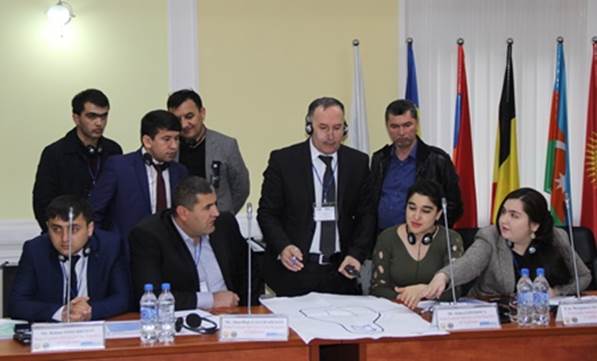
Twenty-two representatives from the Ministry of Defense, the Ministry of Internal Affairs and the Customs Service under the Government of the Republic of Tajikistan attended the workshop.
Hosted by the OSCE Border Management Staff College (BMSC), the workshop was a bilateral event of its organizer, the George C. Marshall European Centre for Security Studies, and the government of Tajikistan.
“We, at the BMSC, appreciate the opportunity to partner with other border security actors such as the George C. Marshall European Centre for Security Studies. Such partnerships help further expand our professional knowledge and share expertise,” said BMSC Director Jonathan Holland.
The workshop focused on inter-ministerial as well as inter-regional co-operation measures that can be enacted to more effectively counter transnational threats.
Pal Dunay, Academic Adviser for the George C. Marshall Centre, said: “Participants in workshops such as these are usually thankful for information that can be easily applied to their every-day duties, instead of deliberating on theoretical material. In the course of these two days we tried to give participants a broader picture of how the information we provide fits with their work.”
The training event covered current border security issues in Central Asia, the role of border services in migration management, identification of returning radicals and potential terrorists. Other workshop topics included detection of organized criminal groups and human traffickers, regional integration and interagency co-operation, as well as practical exercises and case studies.
One of the key assets of the workshop was the opportunity to analyze case studies that were based on real cases of human traffickers, terrorists and smugglers illegally crossing borders across multiple regions.
Zamir Qosimov, a representative of Tajikistan’s Interior Ministry referred to the training as “two very productive days that gave me an important insight into the experiences of different countries in countering transnational threats.”