A panel discussion will take place in Dushanbe in the framework of an international high-level conference on countering terrorism and preventing violent extremism.
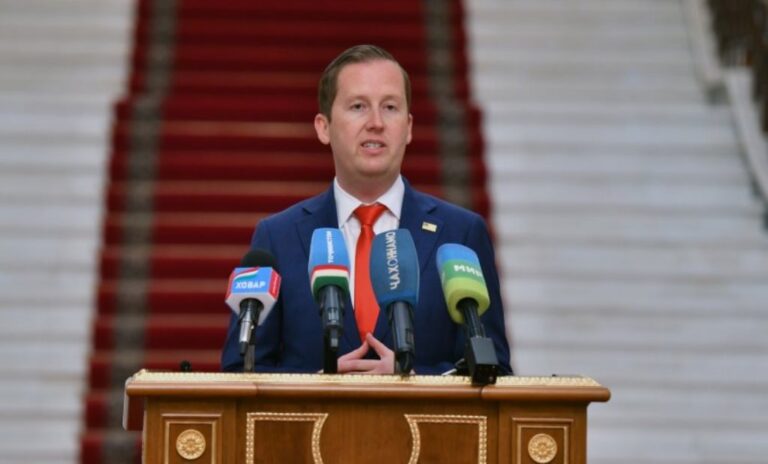
According to press release issued by UNDP’s Tajikistan Country office, UNDP jointly with the Government of Tajikistan will conduct a penal discussion on the theme “UN Support for Prevention of Violent Extremism: Existing Experience” at the National Library of Tajikistan in Dushanbe on May 3.
This penal discussion is an associated event of a high-level international conference on countering terrorism and preventing violent extremism.
The conference participants will include representatives of the Tajik Government, senior representatives of the United Nations, diplomatic missions and international organizations active in Tajikistan, partners for development, civil society and research institutions.
Gerd Trogemann, UNDP Istanbul Regional Hub Manager, Lina Benete, Head of Education Program, UNESCO Almaty Cluster Office for Kazakhstan, Kyrgyzstan, Tajikistan and Uzbekistan, Sabine Fraser, Peace and Security Adviser of UN Women, and Vera Tkachenko, UNODC International Project Manager, will deliver statements at the conference.
On September 8, 2006, United Nations General Assembly adopted the Global Counter-Terrorism Strategy (UNGCTS) as a unique global instrument to enhance national, regional and international efforts to counter terrorism. The UNGCTS provides a solid and comprehensive foundation for further actions of UN Member States to take practical steps individually and collectively to prevent and combat terrorism and violent extremism with a human rights-based approach. In 2011, as part of the UNRCCA-CTITF regional project titled” Towards a Comprehensive Implementation of the UNGCTS in Central Asia”, a Joint Plan of Action (JPoA) for the implementation of the Global Strategy in Central Asia was adopted. Progress in the implementation of this regional document was reviewed at a regional Ministerial meeting that took place in Ashgabat in June 2017, in presence of UN Secretary General A. Guterres.
The OSCE also adopted a number of documents and initiatives in recent years to assist participating States in preventing and countering violent extremism following a multi-dimensional approach, in accordance with the OSCE Consolidated Framework for the Fight Against Terrorism and Ministerial Council Declaration 4/15 (December 4, 2015) on Preventing and Countering Violent Extremism and Radicalization that Lead to Terrorism.
Recognizing the need to deepen attention to structural drivers and root causes of terrorism and violent extremism, the United Nations launched a Plan of Action on Preventing Violent Extremism (PVE) in 2016, which urges member states to complement security-driven responses with a range of development-focused solutions and interventions. Moreover, the Plan of Action calls for regional and national PVE action plans to be developed.
In this context, and with the assistance of the OSCE Programme Office in Dushanbe, Tajikistan developed its National Strategy on Countering Terrorism and Extremism (NSCTE) for the period of 2016-2020, adopted on November 12, 2016, which incorporates provisions of the UNGCTS. The NSCTE requires the relevant authorities to enhance the effectiveness of interaction and ensure the implementation of cooperation agreements on fighting terrorism and violent extremism with fellow Central Asian countries. Furthermore, the Tajik Government is committed to aligning its interventions in this domain with international norms and best practices including rights-based approaches.
In 2017, a delegation of the UN Security Council Counter-Terrorism Committee visited Tajikistan, to assess the implementation of the above-mentioned instruments. The Committee identified a number of priority technical assistance areas. This conference is organized as a further element of Tajikistan’s commitment to countering terrorism and violent extremism nationally, regionally and as an international partner.