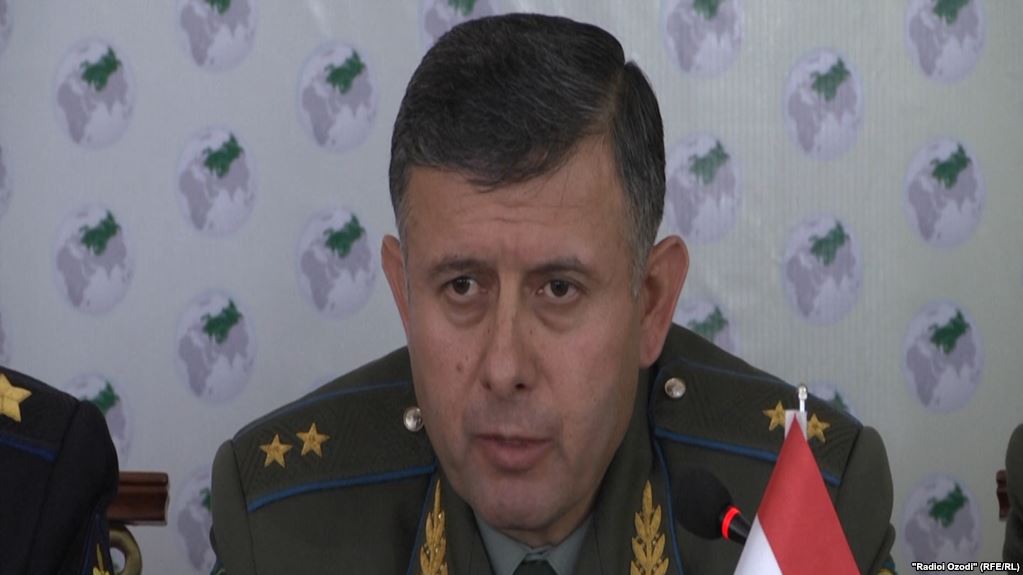
The Taliban Movement has deployed 6,825 militants along Afghanistan’s common border with Tajikistan, the head of the Main Border Guard Directorate at the State Committee for National Security (SCNS), Lieutenant-General Rajabali Rahmonali, noted yesterday at the ceremony dedicated to the 15th anniversary of implementation of the Border Management Programme in Central Asia (BOMCA), according to Radio Ozodi.
According to him, the militants have been transferred to the northern Afghanistan from the southern part of the country and they are no at the training bases in Balkh, Kunduz, Takhar and Badakhshan provinces.
“Many of these militants are natives of Central Asia’s nations,” Rahmonali stressed.
Tajikistan, which has the longest – 1,400 kilometer – border with Afghanistan, is concerned about accumulation of armed forces along its southern border.
Tajik Border Troops commander noted that the Afghan-Tajik border has become a headache only for Tajikistan.
He appreciated foreign nations and international organizations’ support for strengthening of Tajikistan’s southern border and noted that Tajikistan still needs assistance from international community.
Rajabali Rahmonali further noted that as part of the BOMCA program, Tajikistan has received 43 million euros aid for strengthening it common border with Afghanistan.
In a statement delivered at the session of the Collective Security Council of the Collective Security Treaty Organization (CSTO) in Minsk, Tajik President Emomali Rahmon on November 30 last year called on heads of state of the CSTO member nations to help with strengthening Tajikistan’s common border with Afghanistan, which is in fact the southern border of the CSTO member nations. Tajik leader drew attention of the session participants to international and regional problems and challenges posing threat to the Organization member nations. Rahmon named terrorism, extremism, drug trafficking and organized transnational crime as the main threats facing the CSTO member nations.
The European Union sees Central Asia as one of the most strategically important regions. Trans-regional challenges such as human trafficking, trafficking of drugs, organized crime and terrorism influence the EU interests. Therefore, the EU has been supporting the Central Asian States through various development and cooperation mechanisms.
Since border security is one of the key elements for stability of the whole region, in 2002 the EU developed a special program, the Border Management Programme in Central Asia (BOMCA), aimed at enhancing security, fighting against illegal trafficking and facilitating trade in Central Asia. Since its inception, the program has been specifically linked to a number of the EU objectives set forth in its strategic documents. Since its launch in 2003, the BOMCA program has implemented phases targeting capacity building and institutional development, developing trade corridors, improving border management systems and eliminating drug trafficking across the Central Asia region.