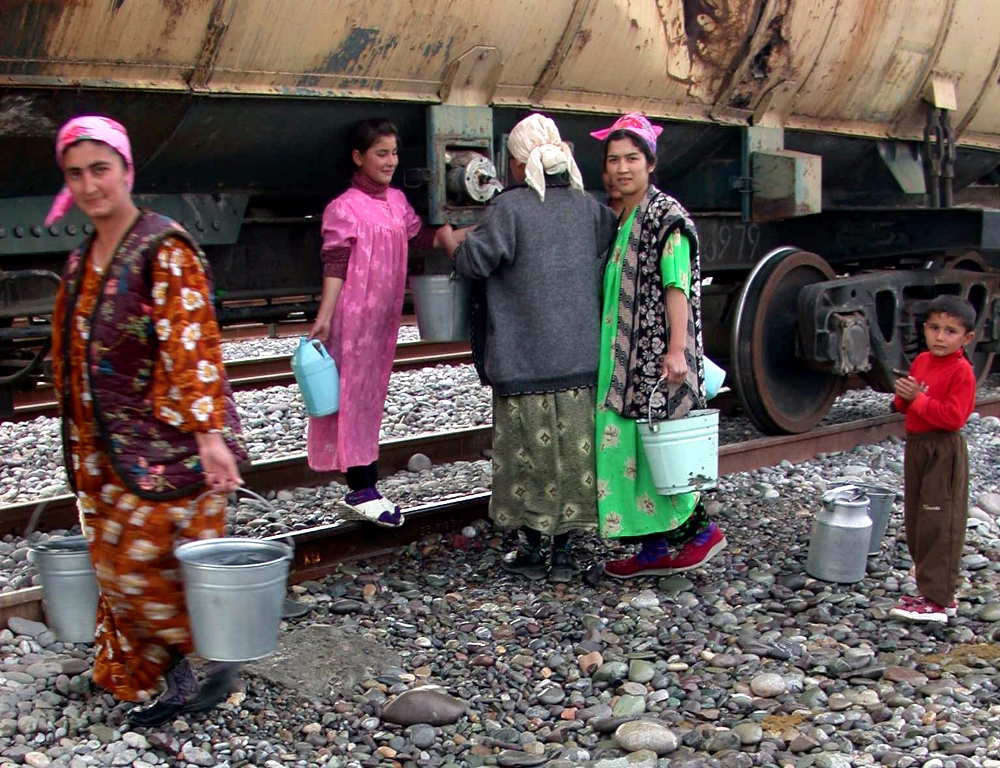
Households, schools and health clinics in the poorest regions of southern Tajikistan will gain access to improved water supply and sanitation services, thanks to the Rural Water Supply and Sanitation Project, according to the World Bank Country Office for Tajikistan.
The World Bank’s Board of Executive Directors approved $58 million in grant financing for the project from the International Development Association on February 28.
“Safe drinking water and sanitation are among the most unequally distributed services in the country,” says Jan-Peter Olters, World Bank Country Manager for Tajikistan. “A renewed focus on investments in high-quality water and sanitation services, along with adequate maintenance, will foster good health among the population and help prevent many children from experiencing bouts of diarrhea that can stunt physical growth and mental development.”
According to a recent study, only 36% of rural households in Tajikistan had access to safe drinking water in 2016, compared to 87% of urban households. More than one in five residents in rural areas rely on surface water as their main drinking water source. In three out of four households, women and girls are solely responsible for water collection, which is physically challenging, and comes at the expense of education or employment.
Many rural schools have no funds for sanitation and hygiene activities, resulting in poor maintenance of water supply and sanitation facilities. Only half of rural schools have access to piped water, with almost 60% using pit latrines with slabs as toilets.
Thanks to the Rural Water Supply and Sanitation Project, over 400,000 people will gain access to cleaner drinking water and around 100,000 people, mainly children, will benefit from investments in sanitation facilities and hygiene training in schools. Sanitation facilities in about 200 schools and health clinics will be constructed or rehabilitated.
In partnership with UNICEF and the Ministry of Education and Science of Tajikistan, the project is will provide comprehensive extracurricular activities to promote the adoption of improved hygiene practices. Grants will be provided to about 1,000 of the poorest households to help improve sanitation conditions in their homes.
The project will finance infrastructure improvements to connect rural households in the Khatlon region to basic water supply services and improve the quality of water supply services for existing connections. The project focuses on the southern region because it is home to the highest proportion of people living in poverty and deprived of clean water, sanitation, and hygiene (WASH) conditions. Seven districts in the southern Khatlon province are covered by the project: Vakhsh, Levakand (formerly Sarband), Kushoniyon (formerly Bokhtar), Dusti (formerly Jilikul), Balkhi (formerly Rumi), Jayhun (formerly Qumsangir) and Vose.
The World Bank’s active portfolio in Tajikistan includes 16 projects, with net commitments of $625 million. The World Bank remains committed to supporting Tajikistan as it strives to improve the lives of its people and meet the aspirations of its young and growing population.