FAO, jointly with national partners, conducted a 4-day regional training to introduce Self-evaluation and Holistic Assessment of climate Resilience of farmers and Pastoralists (SHARP) methodology in Dushanbe, aimed at improving the resilience of farmers and pastoralists to climate change risks, according to FAO Country Office in Tajikistan.
Representatives from Central Asian countries and Turkey, including researchers, representatives from the national ministries and committees, universities and research institutes, as well as from non-profit organizations participated in the regional training of trainers that concluded yesterday.
SHARP is a participatory survey-based instrument. Its application can help assess vulnerability of rural communities, farmers, and pastoralists towards climate shocks, and develop relevant agricultural production strategies supporting adaptation to weather variabilities. Farmer organizations and specialists can engage with rural communities by using it. It covers all five facets of farm system resilience: governance, practices, environment, social, and economy.
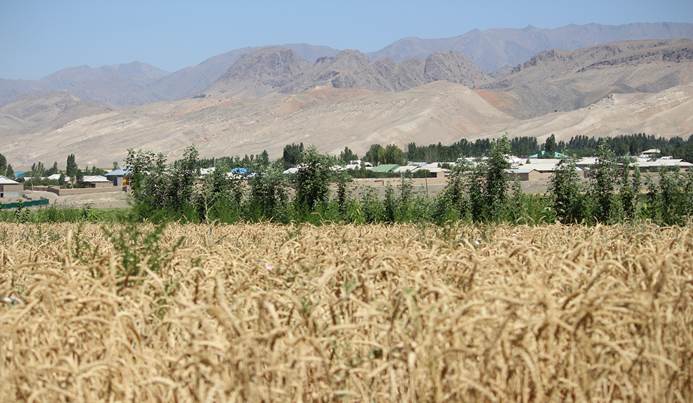
“As food production mostly relies on irrigated agricultural practices in Central Asia, negative effects of climate change are serious challenges to their agricultures,” said Oleg Guchgeldiyev, FAO Representative in Tajikistan. “Also, agricultural production is one of the main source of income for rural populations.”
Regular climate shocks such as droughts, unpredicted flooding and extreme temperatures may damage yields and decrease productivity considerably. “The SHARP tool can be useful to identify key issues of agriculture producers to mitigate climate change and develop farm-level strategies to better cope with climate variabilities,” Guchgeldiyev added.
The four-day training of trainers training workshop introduced the SHARP tool and the questionnaire adapted to country conditions to the participants. They have learned using SHARP on tablets, interpretation of the data collected, and doing analysis and reporting on the tablet. The program included a field visit to the field in Vahdat district to meet farmers and allow workshop participants to gain practical experiences on sampling and primary data collection.
The FAO training was organized under a regional project on integrated natural resource management in drought-prone and salt-affected agricultural production landscapes of Central Asia and Turkey, CACILM2 in short, funded by the Global Environmental Facility. The project supports five Central Asian countries to reduce emissions and to rehabilitate degraded land areas.
“SHARP was developed and introduced by FAO in 2015. The good feature of it, is the availability of the application easy to install on a smartphone or tablet,” said Mahmoud Shaumarov, the regional coordinator of the project. “It can easily be translated into local languages to ease access to its main functions. We hope that this would help the successful introduction in the region.”
Upon returning to their home countries, the 20 experts, including those from Tajikistan, are expected to share their knowledge with colleagues and other key experts and professionals, who work on climate change issues and natural resource management at district and farm levels. In this regard, FAO will organize a series of follow-up national workshops to further application of SHARP in the region. So that the SHARP tool can also be used for project planning and for monitoring by first identifying areas of poor resilience and providing a baseline upon which changes can be assessed and to use it for baseline assessment and monitoring of the project results.
Since 2015, SHARP has already been applied successfully by FAO in several countries in Latin America, Africa and Asia.