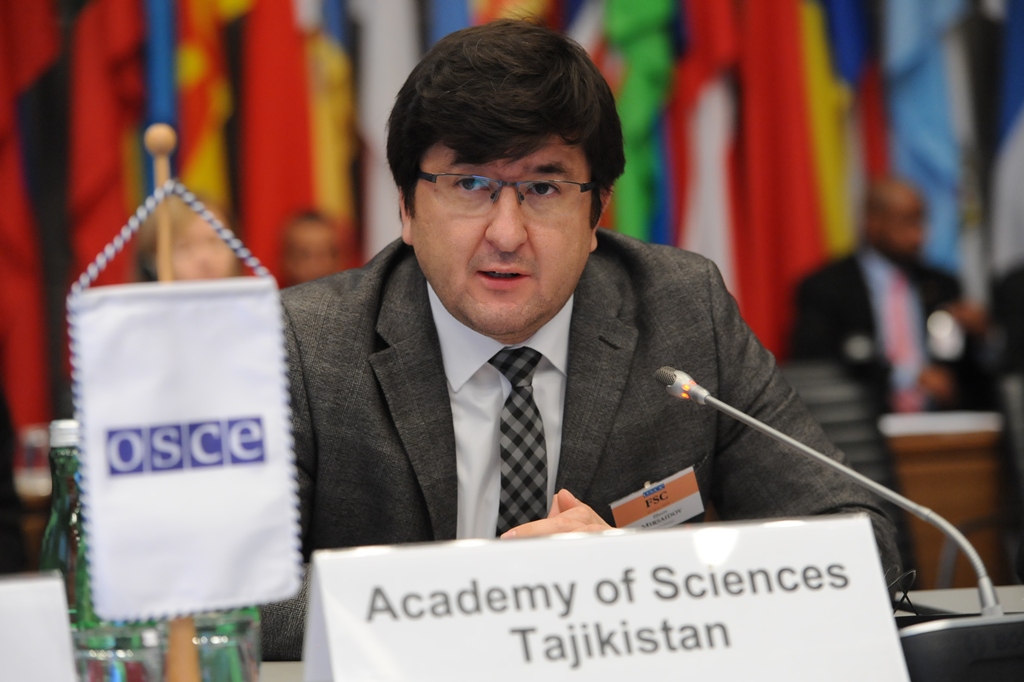
The second plenary session of the OSCE Forum for Security Cooperation under the Chairmanship of Tajikistan took place in Vienna on May 15, according to the Tajik MFA information department.
The session was reportedly dedicated to the process of implementation of the UN Security Council resolution 1540 (non-proliferation of weapons of mass destruction).
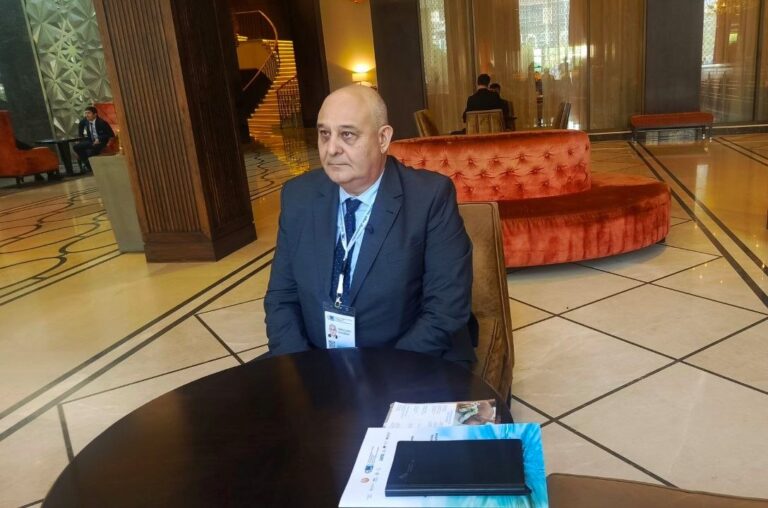
Director of the Nuclear and Radiation Safety Agency of the Academy of Sciences of Tajikistan, Ilhom Mirsaidov, delivered presentation on the process of implementation of the provisions of the UN Security Council Resolution 1540 in Tajikistan.
In addition, Mr. Mirsaidov has informed the session participants on the ongoing projects on the non-proliferation of weapons of mass destruction and export control implemented by the Government of Tajikistan in close cooperation with international partners.
The plenary session participants reportedly discussed the current state and prospects of joint actions on non-proliferation of weapons of mass destruction, including nuclear, chemical and biological weapons, their delivery technologies, as well as the ways of overcoming problems and challenges in this process.
Recall, the first Plenary Meeting of the OSCE Forum for Security Cooperation (FSC) under Tajik Chairmanship took place in Vienna on May 8.
Tajikistan will hold the chairmanship of the OSCE Forum for Security Cooperation (FSC) from May to August 2019.
The Forum for Security Co-operation is one of the OSCE’s two main regular decision-making bodies. Leaders at the 1992 Helsinki Summit of the Conference for Security and Cooperation in Europe – the OSCE’s predecessor – established the Forum for Security and Co-operation to strengthen the focus on politico-military security by providing for negotiations and consultations on military security and stability in the OCSE area.
The Forum provides a unique platform for the 57 OSCE participating States to discuss topical security challenges on an equal footing. The agenda for the weekly Forum meetings in Vienna always includes security dialogue, allowing participating States to raise and discuss security concerns and challenges. These discussions regularly lead to initiatives and measures to strengthen politico-military security.
The Forum Chairmanship rotates among the OSCE participating States, with each State holding the FSC Chairmanship for four months. A so-called Troika, comprising the former, present and incoming Chairmanships, ensures continuity in the Forum’s work. The Forum approves documents and decisions by consensus. The OSCE Secretariat’s FSC Support Section supports participating States’ efforts to implement FSC commitments, which – like all OSCE commitments – are politically binding.