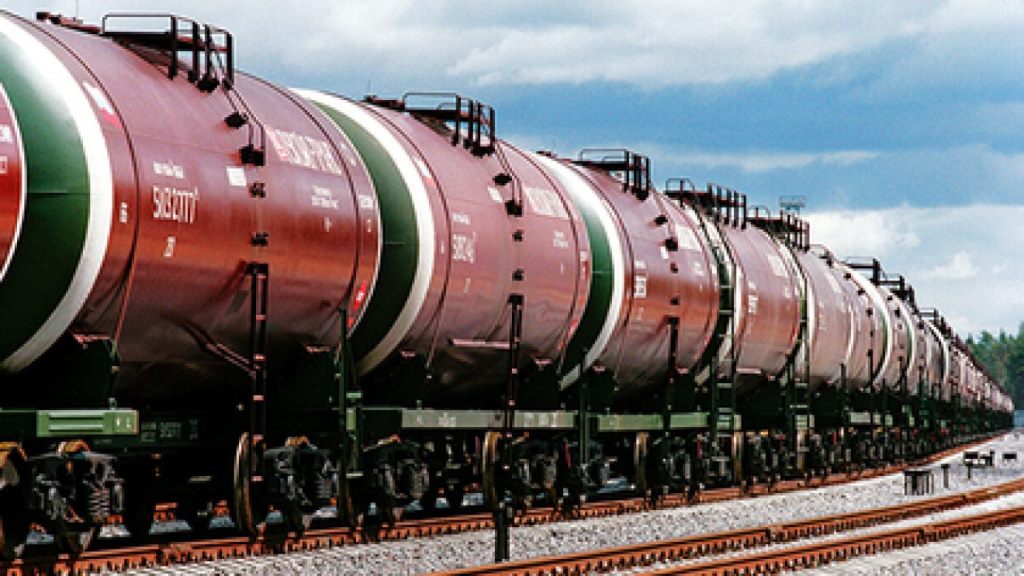
Over the first five months of this year, Tajikistan has imported 206,000 tons of petroleum products, which was more than 111 percent of the January-May 2018 level or 21,000 tons more, according to the Antimonopoly Agency under the Government of Tajikistan.
An official source at the Antimonopoly Agency says gasoline and diesel fuel accounted for about 85 percent of the country’s petroleum product imports over the report period – some 75,000 tons and nearly 100,000 tons respectively.
According to him, the price for one ton of gasoline was US$547.00 and the price for one ton of diesel fuel was US$645.00.
The main supplier of petroleum products to Tajikistan over the report period was Gazpromneft-Tajikistan, accounting for some 45 percent of gasoline imports and nearly 50 percent of diesel fuel imports.
Over the report fine-month period, Russia has provided the bulk of Tajikistan’s petroleum product imports, accounting for 85 percent of the total volume of petroleum products imported into the country in January-May this year.
Recall, Tajikistan was exempted from paying Russian tariffs on oil and gas exports from 1995-2010 and Russia cancelled Tajikistan’s tax exemption on May 1, 2010 that resulted in gasoline prices rising in the country.
Construction of small and medium-sized oil refineries began in various regions of the country. However, those enterprises have not been introduced into operation, while domestic production of petroleum products decreased from nearly 4,000 tons in 2010 to little more than 2,800 tons in 2015. Current domestic production of petroleum products reportedly covers only 0.4 percent of Tajikistan’s requirements in oil products (700,000 tons).
In 2013, Tajikistan and Russia signed a government-to-government agreement on fuel supply cooperation.
Under this agreement, the sides consider and endorse the indicative fuel balance for the next calendar before October 1 of each year. Fuels delivered in addition to the indicative fuel balance will be liable to export duty.
The agreement prohibits re-export of Russian duty-free oil products to the third countries.
The indicative fuel balance for 2014 provided for supplying up to 1 million tons of duty-free oil products to Tajikistan. Tajikistan, however, managed to import only 576,000 tons of oil products
In 2015, Tajikistan imported only 560,000 tons of duty-free petroleum products from Russia though the indicative fuel balance for 2015 provided for supplying 830,000 tons of duty-free petroleum products to the country.
Last year, Tajikistan reportedly imported only some 500,000 tons of duty-free products from Russia.
Meanwhile, current Tajikistan’s annual requirements in petroleum products are estimated at 1.5 million tons.