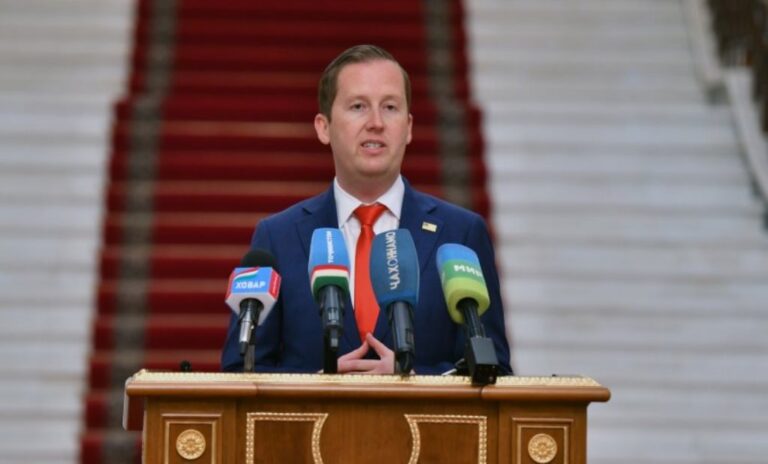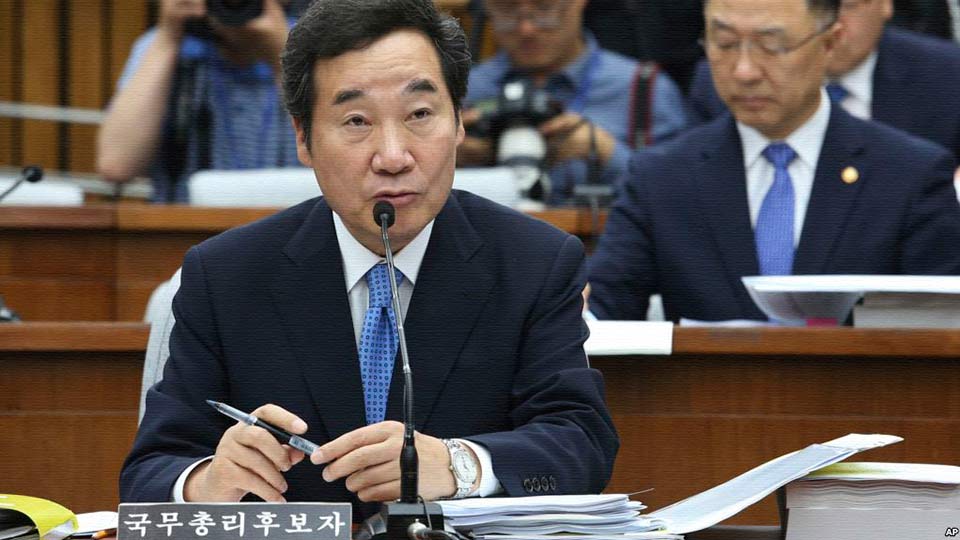
South Korean Prime Minister Lee Nak-yeon will arrive in Tajikistan on a first-ever official visit on July 15.
He will arrive in the country at the invitation of the Tajik Prime Minister Qohir Rasoulzoda, according to the Tajik MFA information department.
During the visit that will run through July 17, Lee is scheduled to hold talks with Tajik President Emomali Rahmon and Dushanbe Mayor Rustam Emomali.
Negotiations between the government delegations of the two countries will focus on state and prospects of further expansion of bilateral cooperation between Tajikistan and South Korea in various areas. The sides are also expected to discuss a number of regional international issues being of mutual interest.
The visit of South Korean Prime Minister Lee Nak-yeon will result in a signing of a number of cooperation documents.
Meanwhile, Korean media reports say South Korean Prime Minister Lee Nak-yon will visit Bangladesh, Tajikistan, Kyrgyzstan and Qatar from July 13-21.
Citing the Prime Minister's Office, Korean media outlets noted on Wednesday that Lee’s travel to the four countries is aimed at strengthening diplomatic ties with Central Asia and Southwest Asia and pursuing a balanced diplomacy in the Middle East under Seoul's diplomatic diversification strategy.
In particular, Prime Minister’s trip to Tajikistan and Kyrgyzstan will complete South Korea's summit diplomacy with five Central Asian countries, the cornerstone of the Moon Jae-in government's New Northern Policy, following Moon's visit to Turkmenistan, Uzbekistan and Kazakhstan in April, according to Yonhap news agency.
The Korea Herald reports that between Monday and next Wednesday, Lee will meet with President of Tajikistan Emomali Rahmon and hold talks with Prime Minister Qohir Rasoulzoda to discuss closer bilateral ties for Tajikistan’s industrial diversification and social infrastructure expansion. Lee and Rasoulzoda will together attend a briefing session on KOICA's power grid project in the Romit area and discuss diversified bilateral cooperation in health, medical, forestry and education fields.
The Prime Minister of the Republic of Korea (informally referred to as PMOSK or PMOTROK) is appointed by the President of South Korea, with the National Assembly's approval. The officeholder is not required to be a member of the National Assembly. The Prime Minister is not the head of government but rather serves in a role similar to that of a vice president.
The Prime Minister is the principal executive assistant to the President, while the president is the actual head of government, but not the Prime Minister. The Prime Minister holds the second position after the President in the State Council of South Korea, which is the nominal cabinet of South Korea. The Prime Minister assists the President by supervising ministries, making recommendations for ministers, and serves as the Vice-Chairman of the Cabinet. The Prime Minister is the first in the order of succession to discharge the duties of the office of the President as the Acting President should the president be unable to discharge her or his office.
The Prime Minister's Office is supported by two deputy prime ministers.
After the Republic of Tajikistan gained its independence, the Republic of Korea was among the first countries to recognize Tajikistan. Officially, the diplomatic relations between Tajikistan and South Korea were established on April 27, 1992.
The Embassy of the Republic of Korea in Dushanbe has been operating since June 20, 2008.
The political and trade-economic relations between the two countries are based on agreements in the field of trade, mutual protection and encouragement of investments, rejection of mutual requirements for obtaining visas for holders of official and diplomatic passports.
Tajikistan intends to use the experience of Korea, equipment and new technologies to establish domestic production of household appliances, hygiene products, household chemicals and high-quality competitive light industry products based on local raw materials.