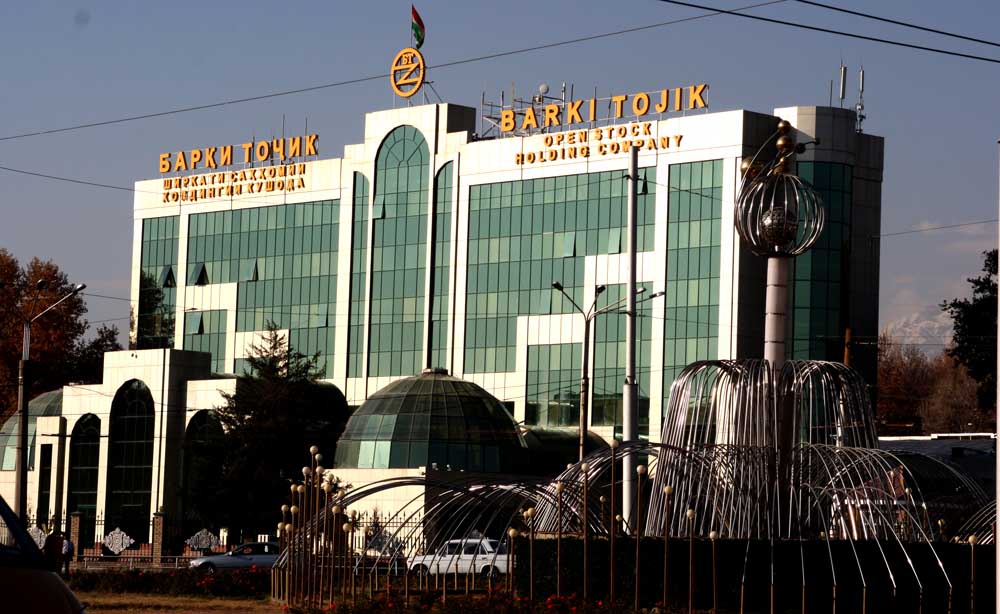
In a report released at a news conference in Dushanbe, the Deputy Minister of Energy and Water Resources, Jamshed Shoimzoda, noted yesterday that the process of restructuring of Barqi Tojik (Tajikistan’s state-owned power utility company) is still going on.
“The restructuring of Barqi Tojik has not yet been fully completed,” said the deputy minister. “The third final stage of the restructuring process is going on. One of the main directions of work at this stage is ensuring regular work of two new enterprises established on the basis of the country’s power holding.”
To-date, they are still controlled by Barqi Tojik, Shoimzoda said.
According to him, the main objective of the restructuring of Barqi Tojik is in providing transparency in the system.
It is to be noted that Tajikistan’s power utility company is now in a difficult financial state. As of January 1, 2019, Barqi Tojik’s total debts reportedly amounted to 23.1 billion somoni (equivalent to some 2.5 billion U.S. dollars).
The process of restructuring of Barqi Tojik that began in 2012 is still under way and Barqi Tojik is expected to be divided into three independent companies already this year: (i) generation; (ii) transmission business; and (iii) distribution.
Tajikistan’s power sector is comprised of the vertically integrated energy company, Barqi Tojik, three independent power producers (IPPs), and a concession in Gorno-Badakhshan Autonomous Region (GBAO) combining power generation and distribution.
Barqi Tojik is fully owned by the Government. It owns and operates most of the electricity generating plants and is also responsible for electricity transmission, dispatch, and distribution services to around 8 million people in all regions of the country except for GBAO.
Two of the IPPs – Sangtuda-1 and Sangtuda-2 hydropower plants (HPPs) – were constructed with investments from Russian and Iranian state-owned companies, and supply electricity to Barqi Tojik under 20-year power purchase agreements (PPAs). Third IPP – Roghun HPP – is under construction.
Pamir Energy Company (PEC) generates and supplies electricity to around 200,000 people in GBAO under 25-year concession agreement.