The ministry of energy urges Barqi Tojik to repay its debts to miners

The Ministry of Energy and New Technologies (MoINT) of Tajikistan urges Barqi Tojik (Tajikistan’s state-owned power utility company) to repay its debts to the country’s coal mining enterprises.   An official source at a MoINT says that since Barqi Tojik fails to repay its debts opportunely, the coal mining enterprises cannot begin developing new coal seams. […]

The Ministry of Energy and New Technologies (MoINT) of Tajikistan urges Barqi Tojik (Tajikistan’s state-owned power utility company) to repay its debts to the country’s coal mining enterprises.  

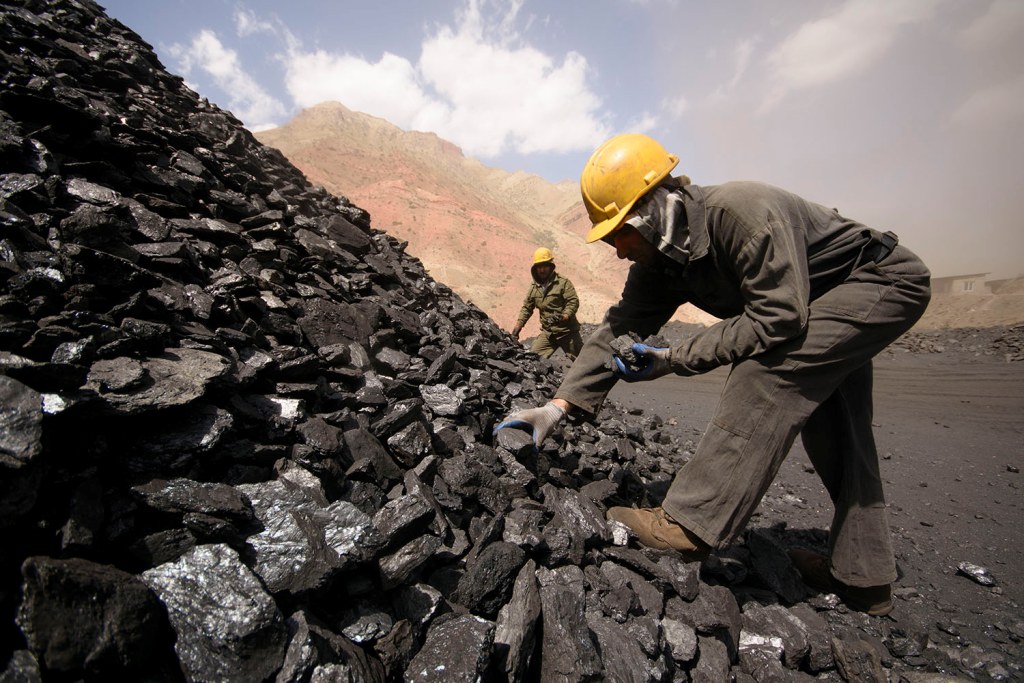
An official source at a MoINT says that since Barqi Tojik fails to repay its debts opportunely, the coal mining enterprises cannot begin developing new coal seams.

“Over the first six months of this year, Barqi Tojik’s debts for coal has increased by 13.1 million somoni (equivalent to some 1.4 million U.S. dollars),” the source said.  

As of July 1, 2019, Barqi Tojik owes 31 million somoni (equivalent to nearly 3.3 million U.S. dollars) to Fon-Yaghnob Mine and 21.3 million somoni (equivalent to more than 2.2. million U.S. dollars) to the Tajik Metallurgical Plan LLC. 

Barqi Tojik acquires coal for the coal-powered Dushanbe-2 combined heat and power (CHP) plant. 

It is to be noted that Tajikistan’s power utility company is now in a difficult financial state.  As of January 1, 2019, Barqi Tojik’s total debts reportedly amounted to 23.1 billion somoni (equivalent to some 2.5 billion U.S. dollars).

Tajikistan’s power sector is comprised of the vertically integrated energy company, Barqi Tojik, three independent power producers (IPPs), and a concession in Gorno-Badakhshan Autonomous Region (GBAO) combining power generation and distribution.

Barqi Tojik is fully owned by the Government.  It owns and operates most of the electricity generating plants and is also responsible for electricity transmission, dispatch, and distribution services to around 8 million people in all regions of the country except for GBAO.

Two of the IPPs – Sangtuda-1 and Sangtuda-2 hydropower plants (HPPs) – were constructed with investments from Russian and Iranian state-owned companies, and supply electricity to Barqi Tojik under 20-year power purchase agreements (PPAs).  Third IPP – Roghun HPP – is under construction.

Pamir Energy Company (PEC) generates and supplies electricity to around 200,000 people in GBAO under 25-year concession agreement.
 

Join us on social media!

Article translations:

Related Article

Оби зулол
Оби зулол
Tenisi

Most Read

Коммерсбонк Точикистон

Recent Articles

RZD announces the restoration of passenger services between Moscow and Dushanbe

Direct rail services between the capitals of Russia and Tajikistan were suspended in March 2020 due to the COVID-19 pandemic.

#AP30/Stories. “Selam! Heller nichek?” How Tatars live today in Sughd province

On the 30th anniversary of "Asia-Plus," we continue to publish reports that remain relevant even after years. This story was told in 2021, and since then, little has changed in the life of the Tatar community in Tajikistan.

15,000 cameras, drones, and robots: how technology monitors pilgrims in Mecca and Medina

During Hajj 2026, Mecca and Medina were under unprecedented digital control.

Another child in Dushanbe removed from family and sent to boarding school

The Ministry of Internal Affairs reports that the parents did not pay adequate attention to the child.

Emomali Rahmon instructs to address issues in seed production following criticism of the industry

Issues have been noted with certification, seed quality, and the material and technical base of the industry.

Water, climate, and a $130 billion deficit: seven key outcomes of the Water Conference in Dushanbe

At the forum, countries and international organizations discussed new mechanisms for cooperation, investments, and technologies that are essential for addressing the global water crisis.

Eskhata Bank introduces a new generation children’s wallet

"Eshkata Bank" has created a full-fledged digital platform that helps children aged 7 to 16 learn how to manage money.