Uzbek president orders to cut VAT rate

  Uzbek President Shavkat Mirziyoyev held a video conference on September 11 to discuss issues related to further development of small business and private entrepreneurship, as well as the guaranteed provision of revenues to the national budget. Uzbek media reports say that it was noted that a completely new system is being developed in the […]


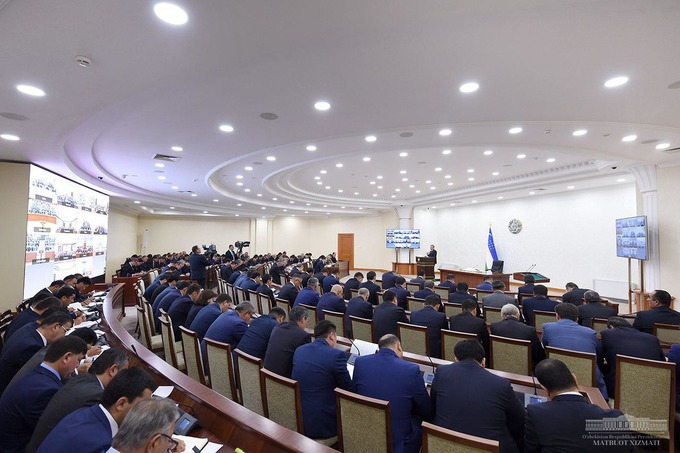
Uzbek President Shavkat Mirziyoyev held a video conference on September 11 to discuss issues related to further development of small business and private entrepreneurship, as well as the guaranteed provision of revenues to the national budget.

Uzbek media reports say that it was noted that a completely new system is being developed in the country to ensure development of small business and private entrepreneurship. 

Instructions were reportedly given to provide assistance to about 30,000 farming units, which are switching to the payment of value added tax (VAT) beginning on October 1, 2019.

UzDaily says the Ministry of Finance was tasked to develop concrete substantiated proposals for reducing the VAT rate.

Mirziyoyev reported pointed to the necessity of carefully studying the draft revised tax code taking into account the proposals voiced during discussions with participation of entrepreneurs, experts and representatives of research institutions.

Speaking at the meeting, Uzbek leader noted that it is necessary of improve collection of fixed tax from individual entrepreneurs and legalize informal employment in order to increase receipts to the national budget.     

In many countries, business entities are divided into three categories (small, medium-sized and large business), the state implements a separate support policy for each category. However, in Uzbekistan, the concept of medium-sized business is completely absent, which today plays a special role in development of the economy, according to the Uzbek president’s press service.
Join us on social media!

Article translations:

Related Article

Tenisi
Оби зулол
Оби зулол

Most Read

Коммерсбонк Точикистон

Recent Articles

President of Tajikistan instructed to develop measures for stabilizing the cement market within a week

Despite the increase in the production of this building material in the country, the domestic market faced a shortage, supply disruptions, and a sharp rise in the price of the building material.

Gusty winds and mudslides damage houses, roads, and cars in Dushanbe and some other regions

At least 9 vehicles were damaged, including three in Dushanbe and six in Vahdat.

The US struck military facilities in Iran. Trump expressed dissatisfaction with Tehran’s proposals and threatened Oman.

Earlier, Iran's state TV reported receiving a draft unofficial framework agreement between Tehran and Washington to settle the conflict.

How much did Tajikistan’s budget earn from the “Google tax”?

The law is already 5 years old, but the Tax Committee provided data only for the last 2 years.

The bilateral trade between Tajikistan and Iran increased by 8% in Q1 2026

Another meeting of the joint intergovernmental commission of the two countries took place in Dushanbe.

Russia and Taliban government sign military-technical cooperation agreement

The document may open up opportunities for the exchange of weapons, military technologies, and other types of defense cooperation.

“Hit with fists on the lower back and abdomen.” A teacher from Nurobod, claiming he was beaten by a student’s brother, details the attack

According to him, he is being threatened with murder, and law enforcement agencies have not yet detained the attacker.

International internet starts coming back in Iran after long shutdown 

Western media reports says Iranians ​isolated by a long...

Tajikistan listed among countries with low generative AI usage

Among the Central Asian countries, Kazakhstan has the highest rate.

Prices in Tajikistan rise almost 2% in January-April: apples, fuel, and utilities become particularly more expensive

In April, inflation was 0.6%: food products became more expensive, non-food products increased in price comparatively less, and tariffs for paid services remained unchanged.